Morocco is one of the most rewarding bird watching countries within easy reach of Europe and North America, and one of the least crowded. In a single journey you can move from Atlantic estuaries full of waders to cedar forests, from snowfields above 2,600 metres to stony steppe where larks sing at dawn, and finally to the dunes of the Sahara. Each of these landscapes has its own birds, and many of them are species that visiting birders cannot find anywhere else so easily.
This guide explains where to go birding in Morocco, what you are likely to see, when to come, and how to plan a trip that works whether you are keeping a serious list or simply want to enjoy storks, flamingos and desert birds as part of a wider journey.
Why Morocco is special for birds
Morocco sits where Europe, Africa and the Atlantic meet. Its birdlife reflects that: Mediterranean species in the north, true Saharan specialists in the south and east, mountain birds in the High and Middle Atlas, and millions of migrants passing between Europe and sub-Saharan Africa every spring and autumn. The Strait of Gibraltar, just 14 kilometres wide, funnels soaring birds that avoid crossing open sea.
Distances are also manageable. The classic birding circuit—Marrakech, the High Atlas, the southern steppe, the Sahara and the Atlantic coast—follows roads many travellers already take on a first visit. That makes Morocco unusually good for mixed trips, where one partner is a birder and the other is more interested in medinas, kasbahs and food.
The best places for bird watching in Morocco
1. Souss-Massa National Park and Tamri: the Northern Bald Ibis
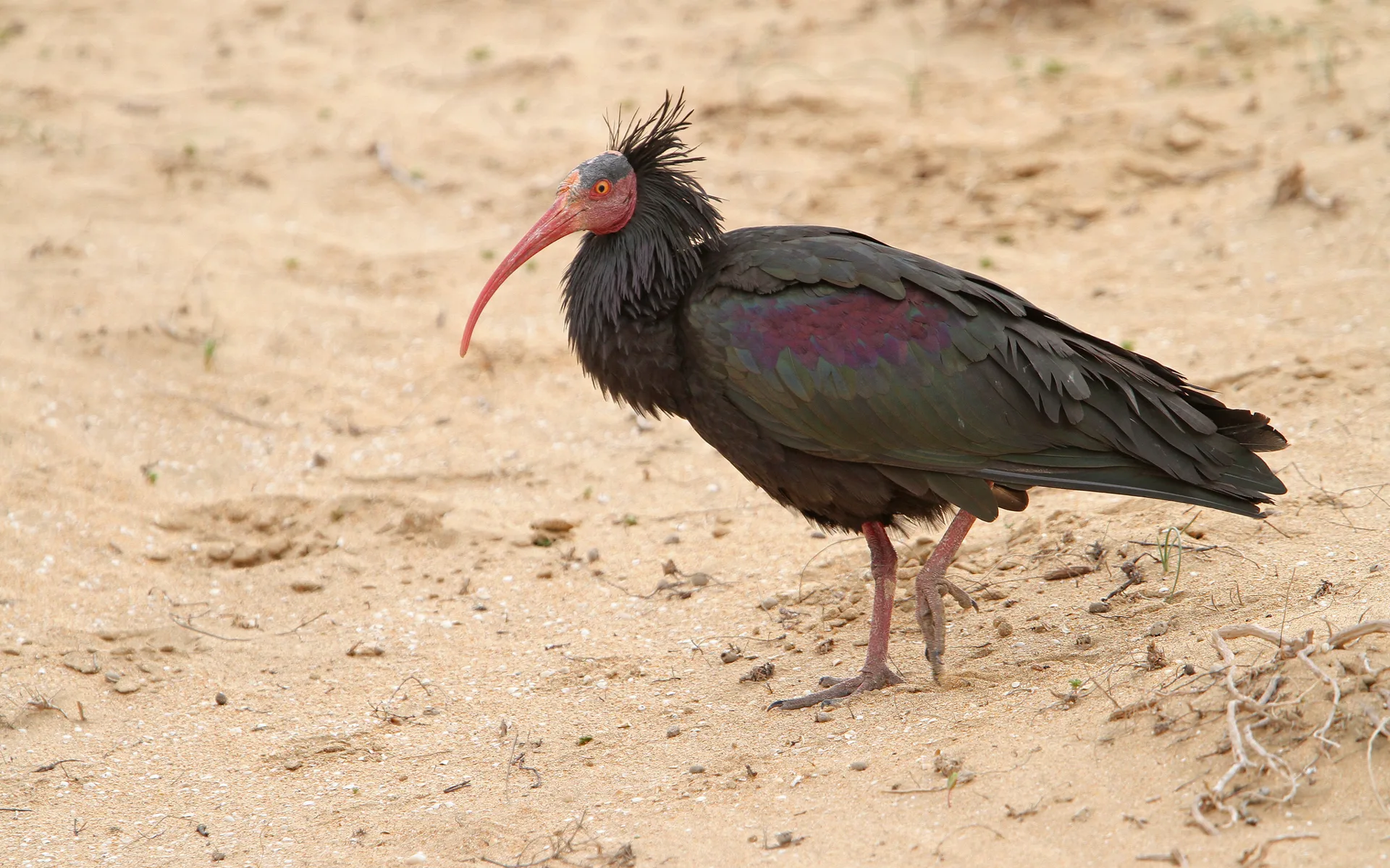
If one bird defines Morocco for birders, it is the Northern Bald Ibis. Once widespread across North Africa, the Middle East and central Europe, it disappeared from most of its range. Morocco's Atlantic coast holds the last substantial wild population—around 700 birds by recent scientific estimates—breeding on sea cliffs in and near Souss-Massa National Park and at Tamri, north of Agadir. Conservation work here helped the species move from Critically Endangered to Endangered on the IUCN Red List in 2018.
The ibises feed in small flocks on coastal steppe and fields, often close to the road between Agadir and Tamri or around the Massa area. Please watch from a respectful distance: the breeding colonies are protected and must never be approached.
The Oued Massa estuary itself is excellent, with herons, spoonbills, flamingos in some seasons, Marbled Duck, Black-crowned Tchagra, Barbary Partridge and the lovely Moussier's Redstart. Nearby, the Oued Souss estuary at Agadir is good for waders, terns and gulls, including Audouin's Gull. The region fits naturally into our southern coastal journey from Marrakech to Mirleft.
2. Merzouga and Erg Chebbi: Sahara desert birds
The dunes and stony desert around Merzouga are Morocco's best-known place for Sahara desert birds. The most sought-after is the Desert Sparrow, a pale, sandy-plumaged bird found around a few oases and camps. Other species to look for include Fulvous Babbler, African Desert Warbler, Desert and White-crowned Wheatears, Brown-necked Raven, Hoopoe Lark, Trumpeter Finch and sandgrouse coming to drink. In the warmer months, Blue-cheeked Bee-eaters and the localised Egyptian Nightjar breed in the area.
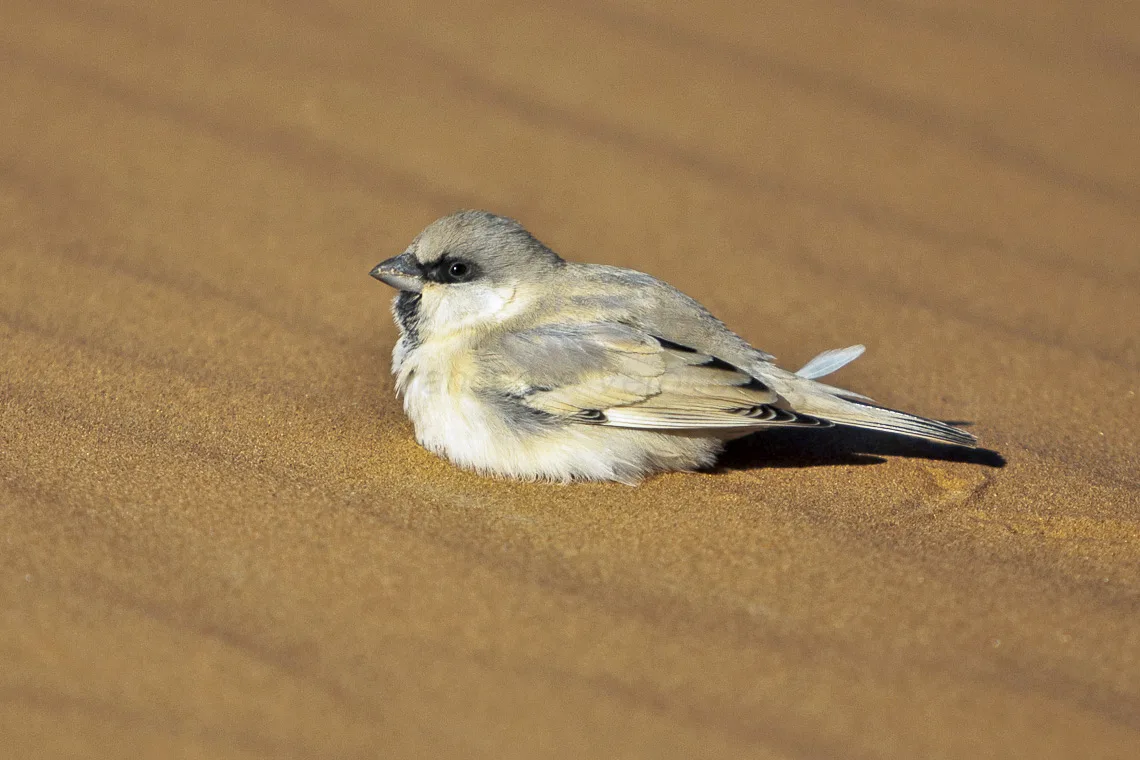
After good rains, the seasonal lake of Dayet Srij can fill and attract flamingos, ducks and waders—an extraordinary sight beside the dunes. In dry years it may be empty. Local desert guides know where species have been seen recently, which is far more reliable than coordinates from old trip reports. Both our Marrakech to Fes desert journey via Erg Chebbi and the Fes to Marrakech desert tour cross this area. If you are still choosing between Morocco's two great sand seas, our comparison of Erg Chigaga and Erg Chebbi will help.
3. The Tagdilt steppe near Boumalne Dades: larks and coursers
East of Ouarzazate, the stony plateau around Boumalne Dades has long been known among birders as the Tagdilt track. It looks empty, but in spring it can hold Thick-billed, Temminck's, Bar-tailed and Greater Short-toed Larks, Red-rumped Wheatear, Cream-coloured Courser and sandgrouse. Parts of the classic area have changed with new building, so birding here now means exploring the wider steppe rather than following one old track. Go early: the light and the birds are at their best in the first hours after sunrise.
4. Oukaïmeden and the High Atlas: mountain specialities
About an hour and a half from Marrakech, the high plateau of Oukaïmeden (around 2,600 metres) is the easiest place to see High Atlas birds. The star is the Crimson-winged Finch, joined by Alpine Accentor, Red-billed and Alpine Choughs, Rock Sparrow, Seebohm's Wheatear and the distinctive Atlas form of Horned Lark. On the way up, wooded valleys can hold Levaillant's Woodpecker, African Blue Tit, Barbary Partridge and Moussier's Redstart.
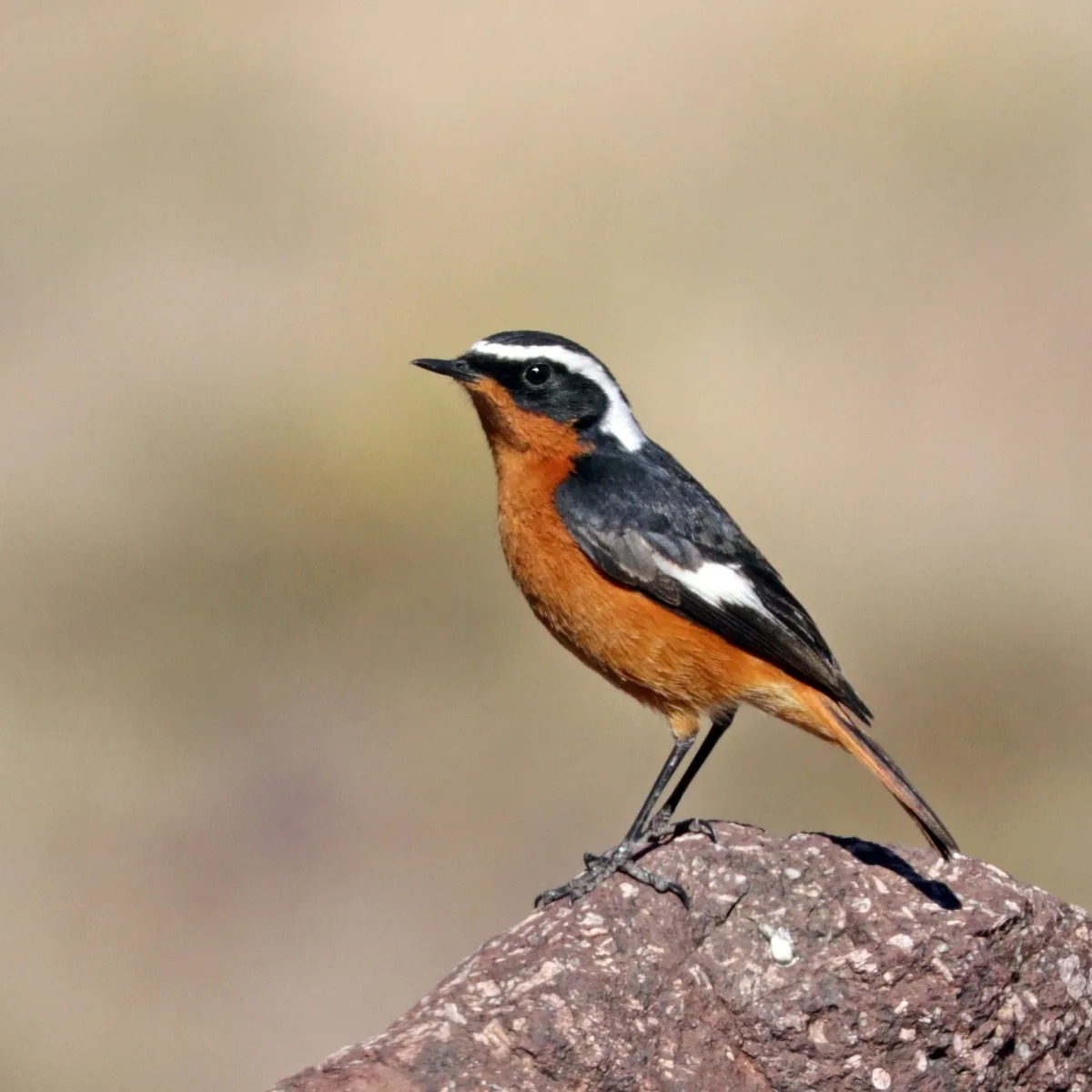
Snow can close the plateau in winter, so conditions need checking. Trekkers can also combine mountain birding with a longer walk; our Atlas trekking and Erg Chigaga journey shows how mountain and desert can sit in one trip.
5. The Middle Atlas: cedar forests and lakes
Around Ifrane and Azrou, cedar and oak forests hold Atlas Flycatcher in the breeding season, Levaillant's Woodpecker, Firecrest, Short-toed Treecreeper and Hawfinch. The plateau lakes can host Red-knobbed Coot, Ruddy Shelduck, Black-necked Grebe and other waterbirds, depending on water levels. The Middle Atlas sits between Fes and the south, making it an easy addition to a route heading to the Sahara.
6. Merja Zerga at Moulay Bousselham: Atlantic wetlands
This large coastal lagoon north of Rabat is one of Morocco's most important wetlands, especially in winter. Expect flamingos, spoonbills, large numbers of waders, gulls and terns, and with luck Marsh Owl hunting at dusk. It also has a sad place in ornithological history: it was one of the last places where the Slender-billed Curlew, now feared extinct, was reliably seen in the 1990s. Local boatmen offer lagoon trips, which are the best way to see the birds.
7. The Strait of Gibraltar: raptor and stork migration
From the hills around Jbel Moussa and east of Tangier, you can watch one of the great bird migrations of the Western Palearctic. White and Black Storks, Black Kites, Honey Buzzards, Booted and Short-toed Eagles and many other soaring birds cross here, mainly from March to May and August to October. Wind direction determines everything: on the right day the sky can be full of birds. The north pairs well with our Northern Morocco tour.
8. Khnifiss and the deep south
Further south, the lagoon of Khnifiss National Park is a remarkable wetland on a desert coast, with flamingos, waders and wintering birds. Beyond it, the region around Dakhla and the Aousserd road is known for species at the northern edge of their range, such as Cricket Warbler and Sudan Golden Sparrow. This is a specialised, remote expedition that needs careful planning and local knowledge; see our Agadir to Western Sahara journey for how the deep south can be travelled.
Birds anyone will notice
You do not need binoculars to enjoy Morocco's birds. White Storks nest on ramparts, minarets and palace walls from Marrakech to Rabat's Chellah. House Buntings sing in medina courtyards, Common Bulbuls chatter in gardens, and swifts scream over the old cities on summer evenings. In the oases of the Draa Valley and the Dades, bee-eaters and hoopoes brighten the palm groves. These everyday birds are part of what makes a Moroccan journey feel alive.
When to go birding in Morocco
| Season | What to expect | Best areas |
|---|---|---|
| March–May | Peak season. Residents singing, desert birds breeding, spring migration, pleasant temperatures. | Everywhere: Sahara, steppe, Atlas, Souss-Massa, the Strait |
| June–August | Hot inland. Summer breeders such as Egyptian Nightjar and Blue-cheeked Bee-eater. Autumn raptor passage begins in August. | High Atlas, Middle Atlas, Atlantic coast; desert only at dawn |
| September–November | Autumn migration, comfortable temperatures, wintering birds start arriving. | The Strait, Souss-Massa, Merja Zerga, Sahara |
| December–February | Wetlands at their best, mild coast, cold nights inland, snow in the Atlas. | Merja Zerga, Oued Souss and Oued Massa, Khnifiss |
For weather beyond birds, see our month-by-month guide to the best time to visit Morocco.
A sample birding route
A varied 10-day birding journey might look like this, adjusted to season and your interests:
- Marrakech — arrival, gardens and storks on the ramparts.
- Oukaïmeden — High Atlas specialities, return to Marrakech or stay in the mountains.
- Over the Tizi n'Tichka to Ouarzazate — mountain and oasis birds along the way.
- Boumalne Dades — dawn on the steppe for larks, wheatears and coursers.
- Merzouga — two nights for desert birds, dunes and a night in a desert camp.
- Back west through the Draa or Anti-Atlas — oases and quieter roads.
- Agadir and Souss-Massa — two nights for the Northern Bald Ibis, Oued Massa and Oued Souss.
- Return to Marrakech or fly home from Agadir.
Driving times are real: Boumalne to Merzouga is around four hours, and the south is best travelled with time to stop whenever something flies across the road. Our Morocco itinerary guide explains realistic pacing in more detail.
Responsible birding in Morocco
- Keep your distance from breeding sites, especially Northern Bald Ibis colonies, nightjar roosts and raptor nests.
- Avoid sound playback for owls and nightjars in the desert; several sites receive a lot of attention from visitors.
- Use local guides. Desert and park guides depend on respectful birders and know where birds are without disturbing them.
- Ask before photographing people, homes or farmland, and stay off cultivated fields in oases.
- Share your sightings on platforms such as eBird; records from Morocco help researchers and future visitors.
Practical tips
Bring binoculars and, if wetlands matter to you, a telescope. A field guide covering North Africa, such as the Collins Bird Guide, is useful. Mornings in the Atlas and desert can be cold even in spring, while afternoons can be hot, so pack layers, a hat and plenty of water. Birding days start early: plan to be out at sunrise and rest during the middle of the day. For general travel matters—money, dress, safety and getting around—see our Morocco travel guide.