Planning a trip to Morocco can look deceptively simple on a map. Marrakech, Fes, Chefchaouen and the Sahara may all fit neatly onto one screen, but distances, mountain roads and the rhythm of travel matter far more once you are here.
We have been planning and operating journeys across Morocco for years, and many questions travelers ask before arriving are remarkably similar: How many days do I really need? Should I fly into Casablanca or Marrakech? Is the Sahara worth the drive? How much cash should I carry? What should I wear? Are riads comfortable? And how much can realistically fit into one trip without spending the entire vacation in a vehicle?
This Morocco travel guide answers those questions from a practical local perspective. It is designed to help you build a trip that works geographically as well as on paper—whether you travel independently, join a group, or arrange a private journey.
When is the best time to visit Morocco?
There is no single answer because Morocco contains two coasts, the Rif, the High and Middle Atlas, inland cities and Saharan regions. The best date depends on the route, not just the country name.
Spring: March to May
Spring is one of the easiest all-round periods. Cities are usually pleasant, southern valleys can be green after good winter rain, and the Atlas may still hold snow at altitude. It is an excellent road-trip season, although mountain conditions still deserve checking.
Autumn: September to November
Autumn is another strong window. Inland heat generally eases, the Sahara becomes more comfortable, and the light in the south is excellent. Early September can remain very hot away from the coast.
Winter: December to February
Marrakech and southern Morocco can be beautiful by day, but nights inland—and especially in the desert—can be genuinely cold. Northern Morocco is wetter, and snow can affect High Atlas roads. Heating matters when choosing a riad.
Summer: June to August
Summer favors the Atlantic, Mediterranean and northern routes. Marrakech, Fes and the Sahara can become extremely hot. Travel remains possible, but the route should move with the climate rather than forcing a standard circuit. See our detailed month-by-month guide to Morocco's seasons.
How many days do you need in Morocco?
- Five to seven days: choose one region—Marrakech with the Atlas and south, or northern Morocco with Fes—rather than attempting the whole country.
- Seven days: a cross-country route is possible, especially if time in Marrakech sits outside those seven days, but it involves substantial driving. Our seven-day route from Marrakech shows the trade-offs honestly.
- Ten days: a useful first-trip length, allowing imperial-city culture and the Sahara if the route is carefully designed. See the ten-day Casablanca journey.
- Twelve to fourteen days: the sweet spot for many first visits combining the north, Fes, desert, southern oases and Marrakech without rushing every day. Compare our twelve-day Tangier route and fourteen-day Grand Morocco Tour.
- Fifteen or more days: enough for a slower national journey or a meaningful Atlantic extension.
The crucial rule is to remove geography when time is short, not compress every stop. Our separate Morocco itinerary guide compares seven, ten, twelve and fourteen days in more detail.
Where should you start your Morocco trip?
Casablanca
Casablanca is the principal long-haul gateway for many travelers and a logical start for Rabat and the north. Hassan II Mosque is the principal first-time sight. Unless the city itself is a priority, we normally use it as a well-paced arrival rather than allocating several sightseeing days.
Marrakech
Marrakech is the most convenient start for trips focused on the city, High Atlas, southern Morocco, Sahara or Atlantic coast. It also has the widest selection of leisure-oriented accommodation.
Tangier
Tangier is an increasingly useful northern gateway and a natural beginning for Tetouan, Chefchaouen, Volubilis, Meknes and Fes.
Fes
Fes works well when flight options suit, particularly for northern and central Morocco or a one-way route through the Middle Atlas toward the Sahara.
Getting around Morocco
Trains are comfortable and useful between Tangier, Rabat, Casablanca, Marrakech, Meknes and Fes. Al Boraq provides high-speed service on the Tangier–Kenitra–Rabat–Casablanca corridor; check live schedules with ONCF. Rail does not reach the High Atlas, the main dune regions or most southern oases.
Intercity buses are economical and reach many more towns, though fixed schedules make a complex multi-stop itinerary harder.
A rental car suits confident independent travelers. Main roads are generally manageable, but city traffic, medina parking, night driving and mountain weather need thought. Navigation-app shortcuts are not always roads a standard vehicle should use.
A private driver is most useful when flexibility and rural access matter. A proper private journey means the vehicle is for your party only, luggage stays with you, scenic stops are possible and the route can respond to conditions. Morocco Shiny Days works with experienced English-speaking drivers and adds licensed local guides where specialist city or site guiding is valuable; the two roles are not interchangeable.
How long are the drives really?
Map estimates do not include a mountain pass, a market slowing traffic, lunch, viewpoints or visits en route. These are sensible planning ranges in normal conditions—not promises. Weather, roadworks and where your accommodation sits can change them.
| Route | Typical direct driving | Plan as a travel day |
|---|---|---|
| Marrakech → Aït Ben Haddou / Ouarzazate | 4–5 hours | 6–8 hours with the Atlas and stops |
| Marrakech → Skoura | 5–6 hours | Most of a day |
| Skoura → Merzouga | 5–6 hours | 7–8 hours with valley stops |
| Fes → Merzouga | 7–8 hours | A full day |
| Chefchaouen → Fes | 4–5 hours | Half to most of a day |
| Casablanca → Rabat | 1–1.5 hours | Allow more around traffic |
| Marrakech → Essaouira | 2.5–3 hours | A comfortable half-day |
A six-hour transfer should not necessarily mean six hours trapped in a car. A well-designed road trip uses the route itself—mountain views, villages, lunch and historic sites—as part of the experience. Equally, an honest itinerary must label long days clearly.
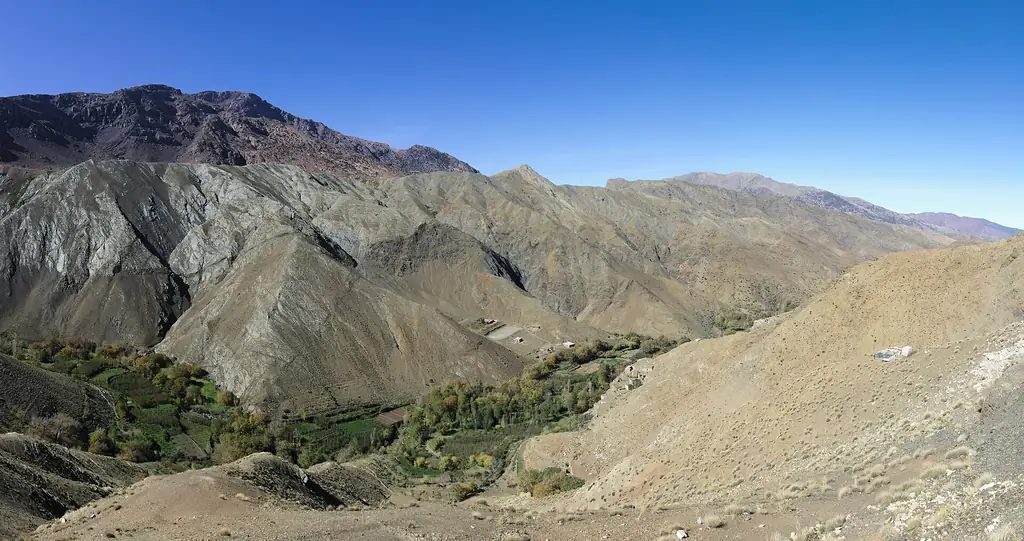
Morocco's main regions: what should you actually see?
Marrakech
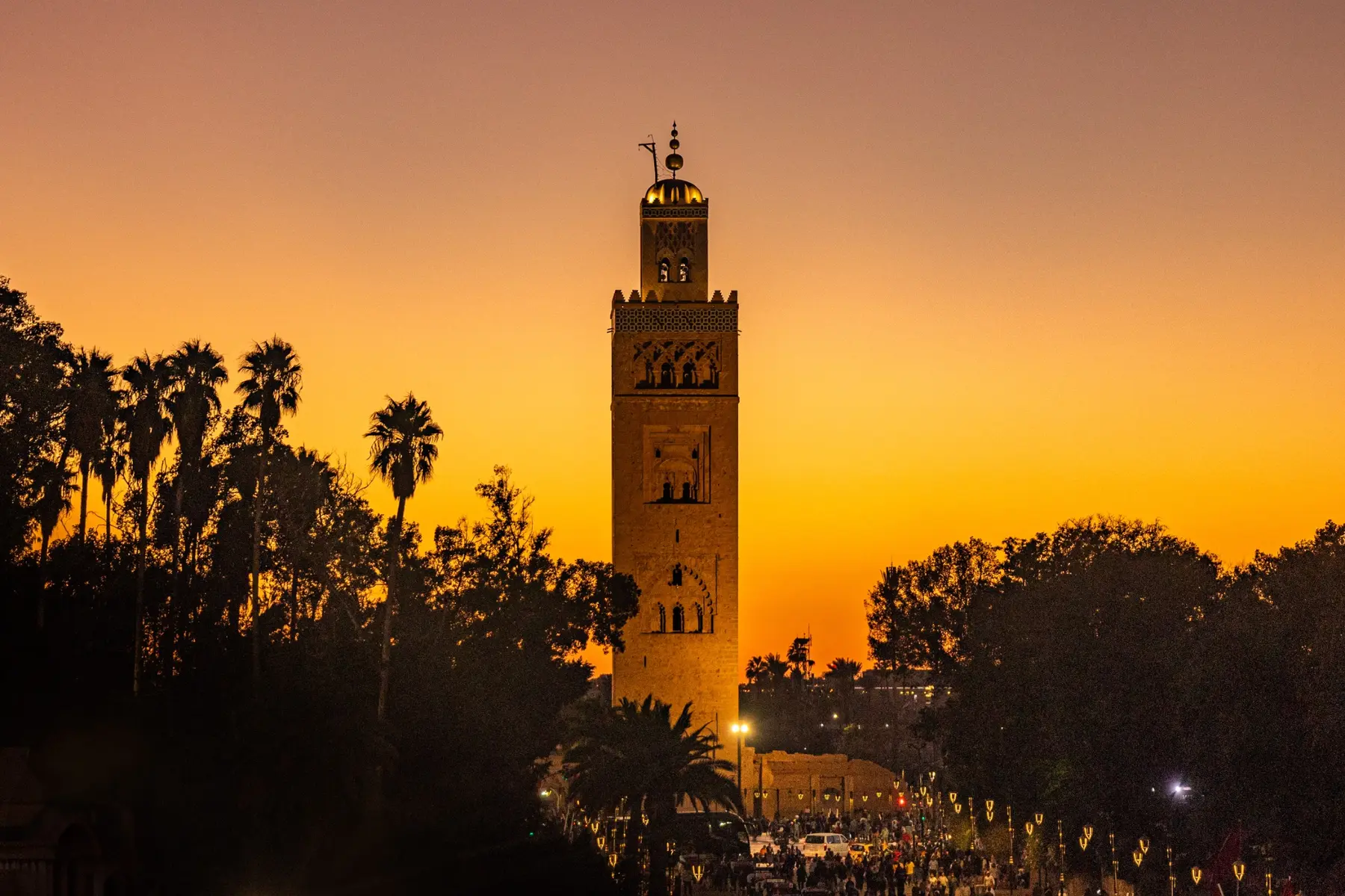
Choose Marrakech for energy, history, food, crafts, gardens and easy access to the Atlas. The medina rewards a guided first morning, followed by time to wander independently.
Fes
Fes offers the deepest historic medina experience: craft workshops, madrasas, food traditions and an urban fabric that takes time to understand. One full day is a minimum; two is better.
Chefchaouen
The blue medina sits in the Rif Mountains and moves at a gentler rhythm. It fits naturally into a northern route, not as a rushed detour from Marrakech.
Rabat and Salé
Rabat combines major monuments with a calmer modern capital. Across the river, Salé offers historic lanes and a less-touristed counterpoint. Together they deserve more than a motorway pause.
Volubilis and Moulay Idriss
Volubilis provides the clearest Roman archaeology in Morocco; nearby Moulay Idriss adds the sacred and living Moroccan context that ruins alone cannot.
High Atlas
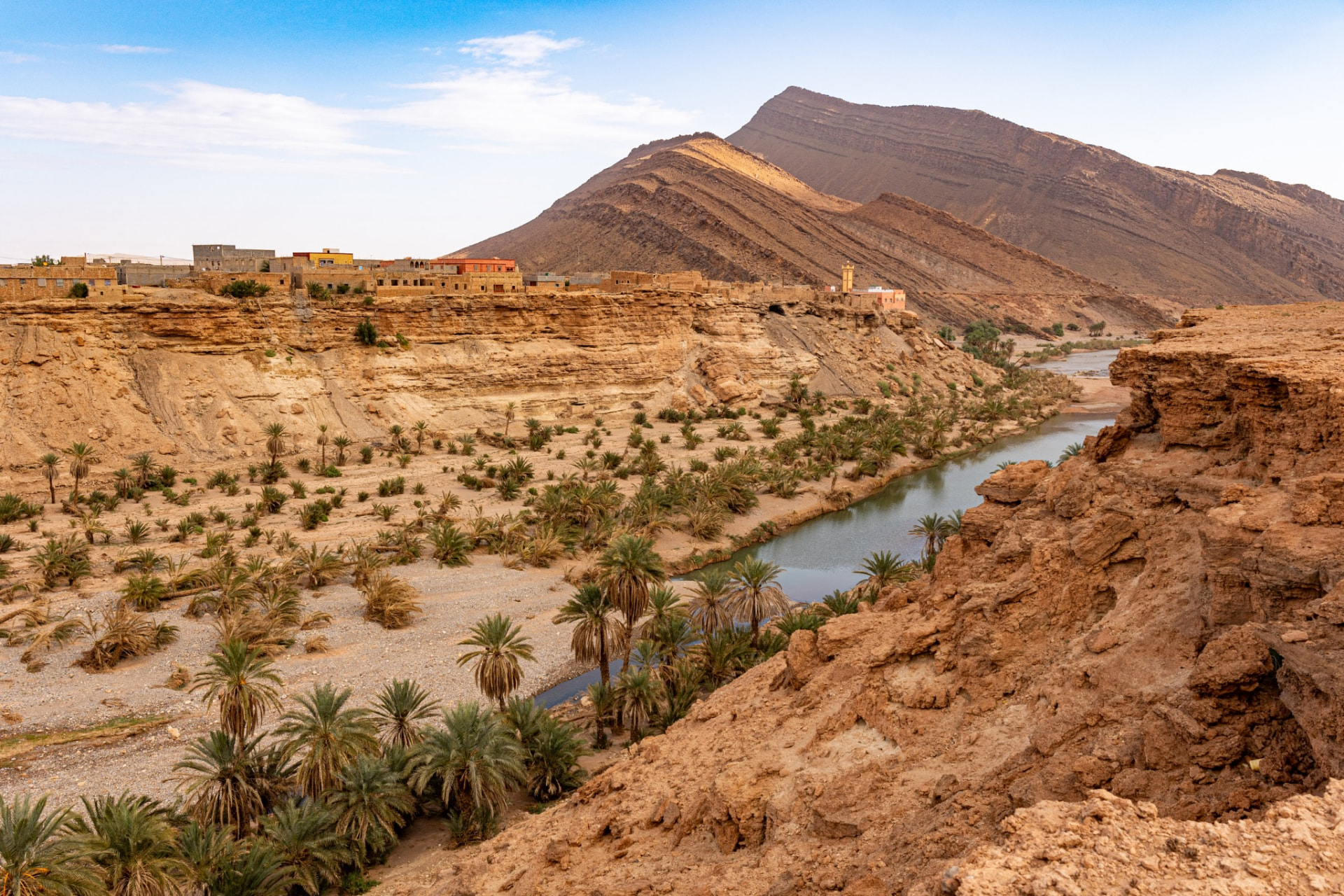
The mountains bring villages, valleys, walks and large seasonal changes. A day trip gives a glimpse; an overnight lets the landscape set the pace. Read our High Atlas planning guide.
Skoura Oasis
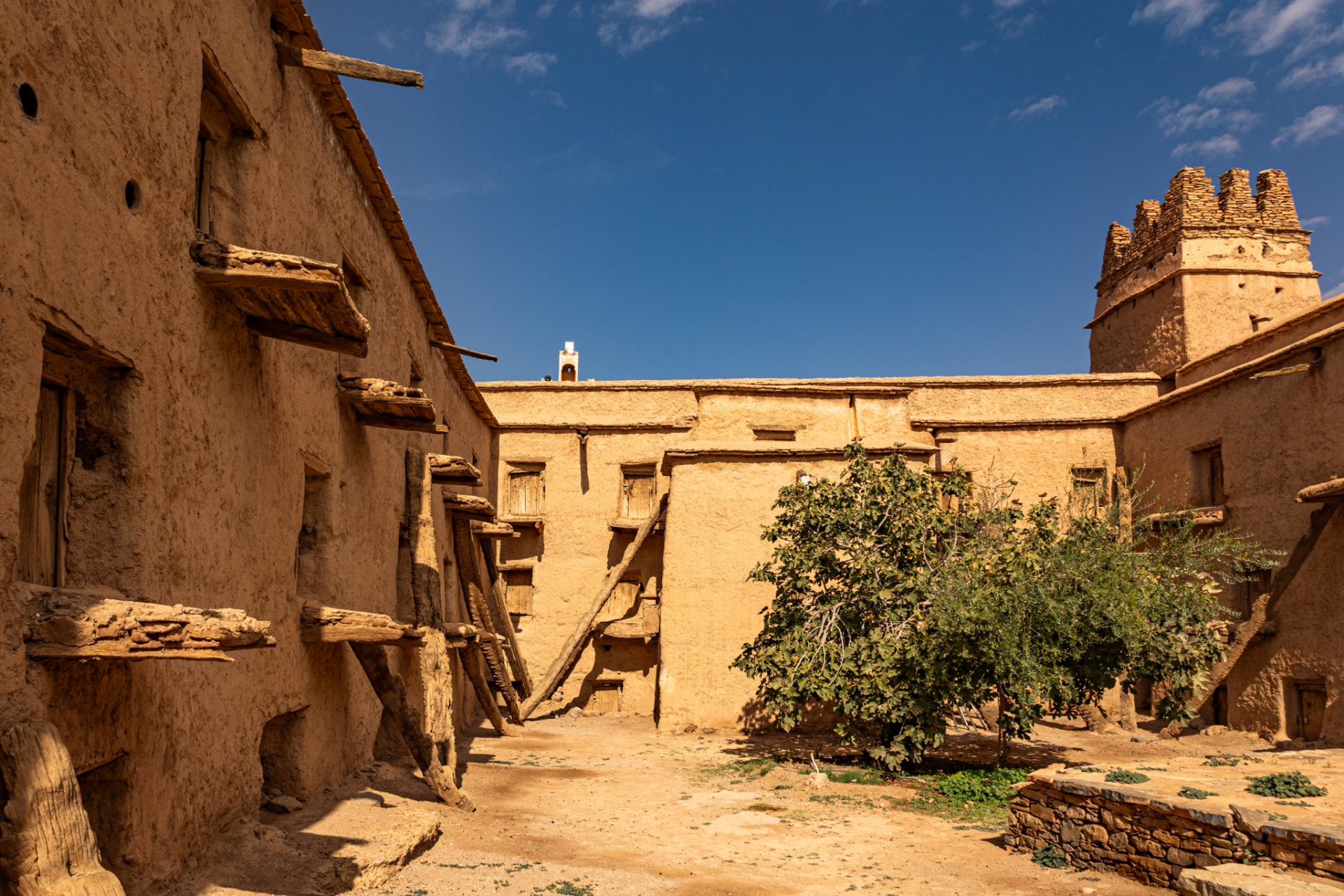
Skoura's palms, earthen villages and Kasbah Amridil make it one of the best places to slow down between the Atlas and desert. It is more rewarding as a night than as a photograph from the road.
The Sahara
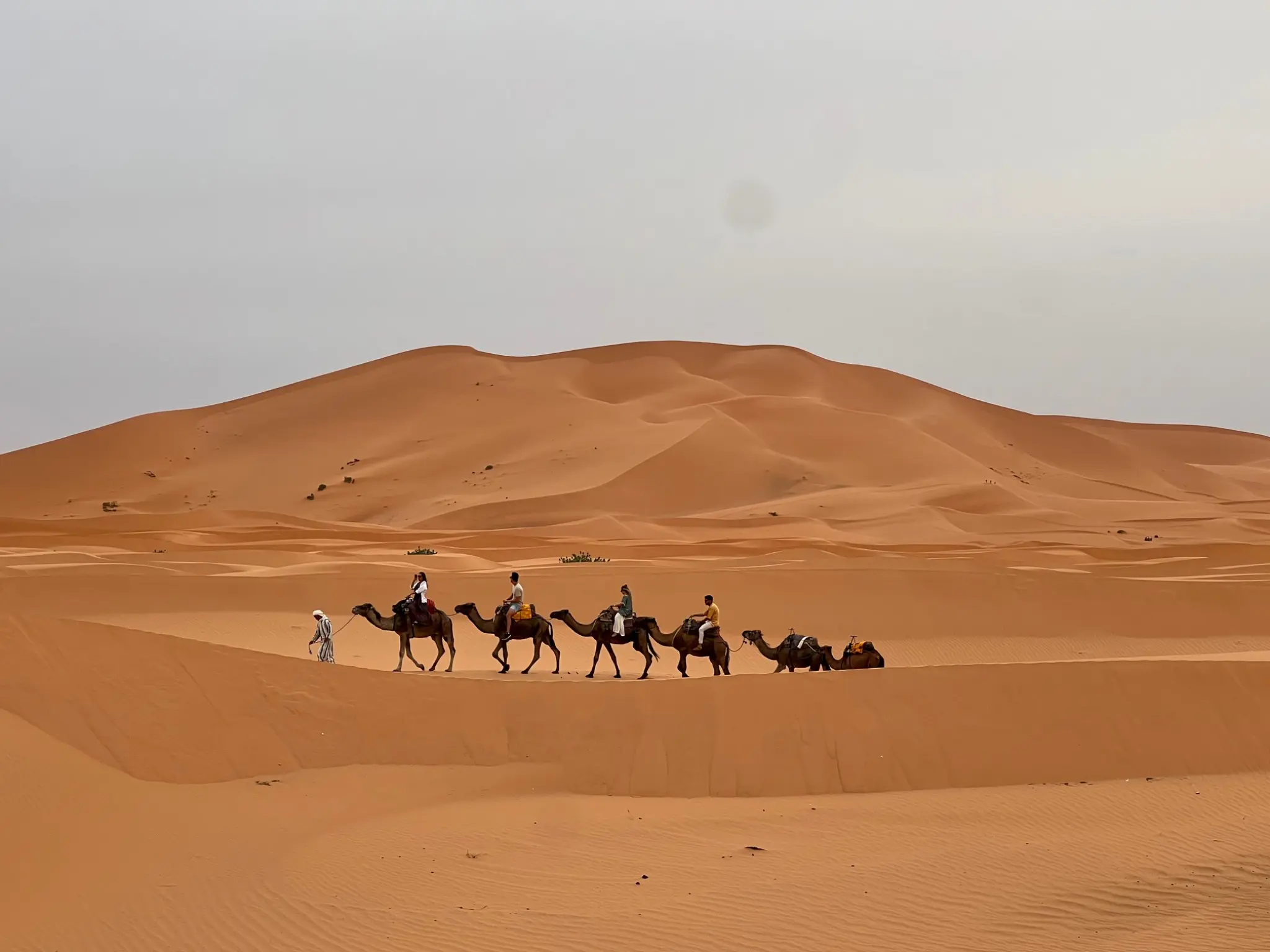
Erg Chebbi near Merzouga offers monumental dunes with easier road access. Erg Chigaga is more remote and reached by a substantial off-road approach from the M'Hamid direction. Our Sahara travel guide explains the wider region.
Essaouira and the Atlantic
Essaouira combines a compact medina, fishing port, seafood and a wind-cooled coast. Farther south, the Atlantic and Anti-Atlas suit return visitors seeking quieter roads and longer distances; start with our off-the-beaten-track guide.
Erg Chebbi or Erg Chigaga?
Erg Chebbi fits efficiently between Fes and southern Morocco, has more accommodations and activities, and delivers spectacular high dunes. Popular zones can feel busy, though thoughtful timing and camp choice reduce that.
Erg Chigaga is more isolated and requires a long off-road approach. It suits travelers who value remoteness and adventure over efficiency, but it does not connect naturally onward to Fes.
Neither is universally better. The right choice depends on the rest of the route. Read the full Erg Chebbi versus Erg Chigaga comparison.
Where do you stay? Riads, hotels, kasbahs and desert camps
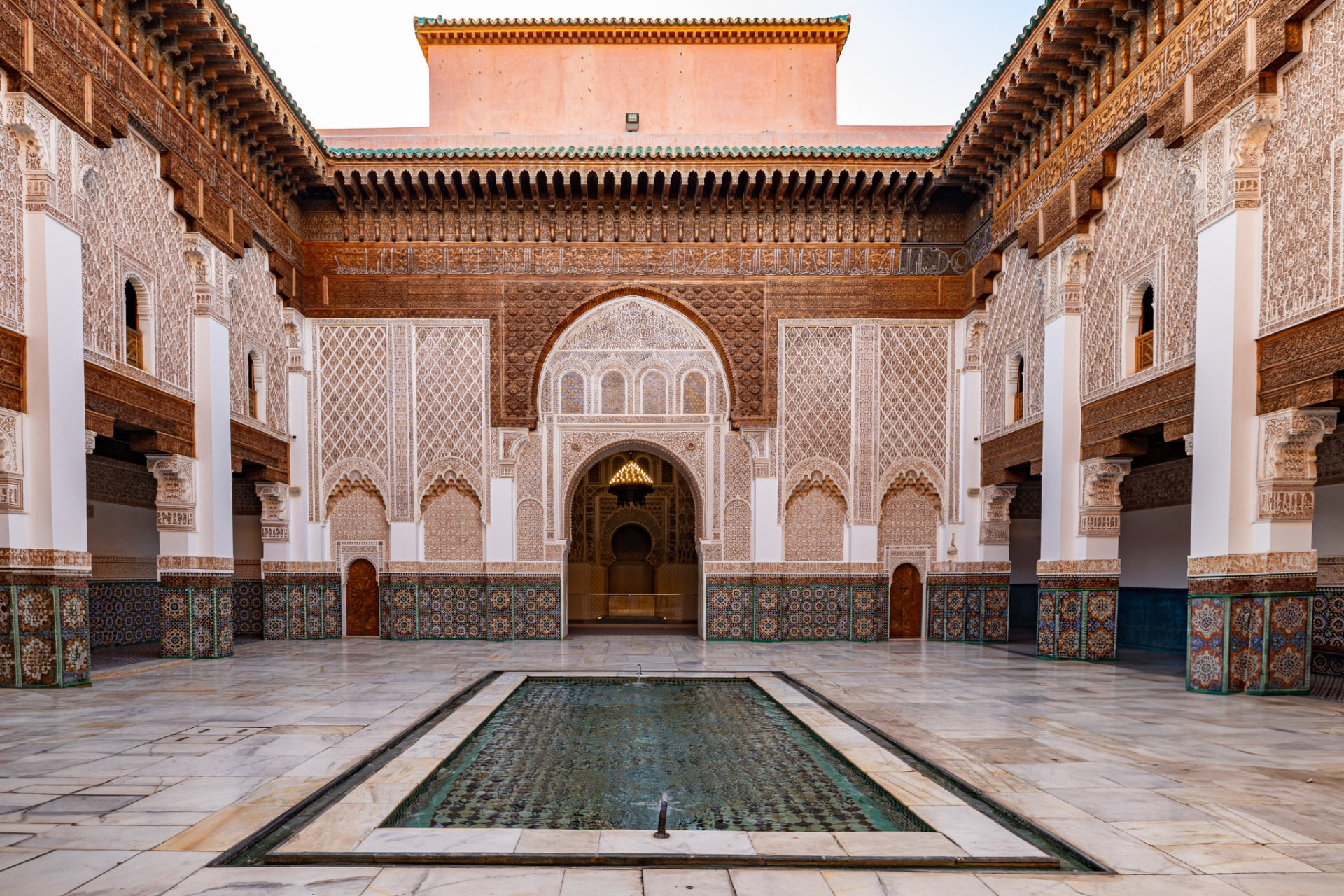
A riad is traditionally an inward-facing Moroccan house arranged around a courtyard. A dar is also a traditional house, often smaller, though commercial naming is inconsistent. A kasbah can describe a fortified residence or quarter, while a ksar is a fortified settlement; hotel names do not always use these words precisely.
Hotels range from international properties to Moroccan boutiques and often provide easier vehicle access, lifts and full-sized pools. Riads offer atmosphere and medina location but may involve narrow lanes, stairs and small rooms.
“Luxury camp” has no consistent standard. Before choosing one, ask whether bathrooms are private, hot water and electricity are reliable, heating or air conditioning actually exists, how many tents share the site, how close it is to a road or settlement, and whether the camp stands among dunes or merely faces them. Our guide to choosing a Moroccan riad covers the accommodation trade-offs in depth.
Money in Morocco: cash, cards and ATMs
The currency is the Moroccan dirham (MAD). ATMs are common in cities and larger towns; cards are increasingly accepted by hotels, larger restaurants and modern shops. Cash remains useful for small businesses, souks, rural restaurants, tips and much of southern travel.
US dollars, euros and pounds can be exchanged at authorised banks and exchange offices, but daily purchases are normally in dirhams. Use a card plus a reasonable amount of cash, withdraw before remote stretches, and do not carry the entire trip budget.
Tipping in Morocco
Tipping is customary in tourism and hospitality, but there is no single compulsory national rate. Restaurants may add service; if they do not, a tip can reflect the meal and service. Riad staff, porters, local guides and drivers are commonly thanked separately when service has been good. Because expectations and trip inclusions change, ask your operator or accommodation for current context rather than treating an old online figure as a rule.
What should you wear in Morocco?
Travelers do not need Moroccan clothing. Light breathable layers, comfortable walking shoes and sun protection work well. Shoulders and knees reasonably covered are a useful default in medinas, villages and conservative settings; coastal resorts and modern city neighborhoods are more relaxed. Women generally do not need to cover their hair.
Bring warmer layers for winter, desert nights and mountain stays. Many mosques do not admit non-Muslim visitors; Hassan II Mosque in Casablanca is a notable exception under its current visitor arrangements.
Is Morocco safe to visit?
Morocco receives large numbers of international visitors, and most trips are trouble-free. That is not the same as saying risk does not exist. Secure valuables in crowded medinas, ignore unsolicited “guides,” use licensed guides for formal visits, take care around traffic and arrange reliable transport after late arrivals.
Security conditions can change. Check your own government's live advice—such as the US State Department or UK Foreign Office—rather than relying on an advisory level copied into an article.
Morocco for solo female travelers and women
Women travel independently in Morocco every day, and experiences vary. Unwanted attention can occur, especially in busy tourist areas. Clear boundaries, declining unsolicited help, arranging reliable transport for late arrivals and asking a riad for assistance can make unfamiliar places easier.
Respectful clothing may reduce attention in some settings, but harassment is never justified by what someone wears. A licensed guide or private transport can add confidence without implying that independent travel is unsafe.
Traveling Morocco with children
Morocco often works very well for families: camels, dunes, pools, cooking, markets, animals, beaches and hands-on crafts all give children something tangible to do. The challenge is pace. Reduce consecutive long drives, allow downtime, confirm family-room layouts, request car seats in advance and check whether a pool is open and usable in the season you travel. Our family travel guide goes deeper.
Food and water in Morocco
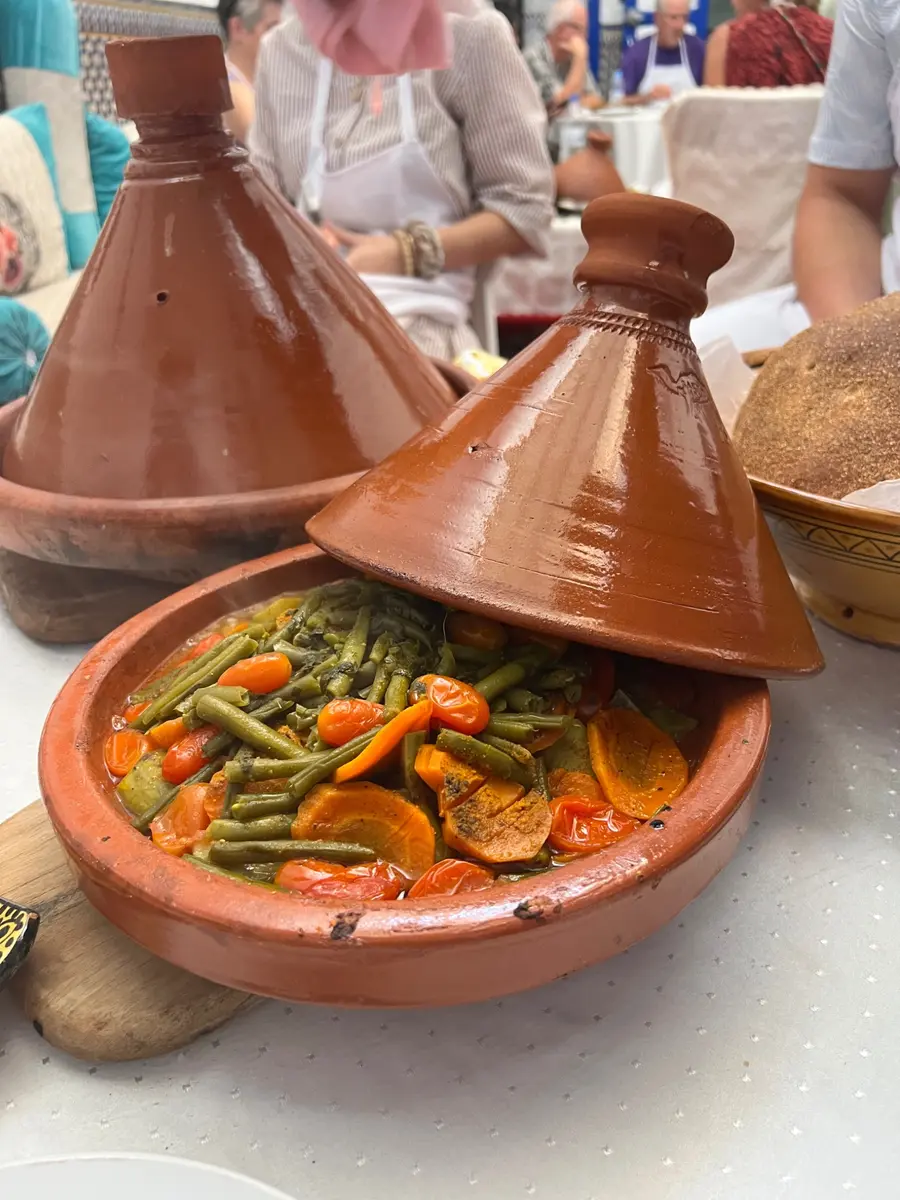
Moroccan food extends well beyond tagine. Look for couscous, pastilla, harira, brochettes, medfouna, regional salads, breads and mint tea, with recipes changing between coast, mountains, cities and desert.
Water quality and individual tolerance vary; travelers with sensitive stomachs often use sealed bottled or properly filtered water. Vegetarian travel is generally manageable. Serious allergies need to be communicated clearly and repeatedly because ingredient understanding and cross-contamination standards vary between kitchens—tell an operator before the trip, not only at the table.
Shopping and haggling in Morocco
Haggling is common for many souk goods, not universal. Restaurants, supermarkets and fixed-price boutiques are different. Ask the price, decide what the object is worth to you, negotiate politely and walk away if you are uncomfortable.
SIM cards, Wi-Fi and staying connected
Maroc Telecom, Orange Morocco and inwi operate mobile networks. Coverage is good across much of populated Morocco and weaker in remote mountain and desert areas. Tourist SIM and eSIM offers change frequently, so compare current official options when you arrive rather than choosing from an old price list.
Wi-Fi is common in hotels and riads but quality varies. WhatsApp is widely useful for communicating with drivers, accommodations and local contacts. Download offline maps before rural travel.
Ramadan in Morocco: should you travel?
Yes. Visitors are not expected to fast, but the daily rhythm changes. Some businesses adjust hours, daytime dining can be limited outside tourist areas, evenings become lively, monument schedules can shift, and traffic before the sunset meal can be unusually busy.
Eat and drink with sensitivity in strongly local public settings without assuming you must fast. Ramadan follows a lunar calendar and its start is confirmed by moon sighting, so verify dates and local arrangements shortly before travel.
Language: do you need Arabic or French?
No. Moroccan Arabic (Darija) and Amazigh languages are everyday languages; Modern Standard Arabic is used formally, French remains widespread, and English is increasingly common in tourism. “Salam alaikum” (peace be upon you), “shukran” (thank you) and “la, shukran” (no, thank you) cover the most useful courtesy. A greeting before a request matters more than perfect pronunciation.
Morocco travel for visitors from the United States
Casablanca is often the most practical long-haul gateway, but current nonstop routes and schedules should be checked with airlines when booking. After an overnight flight, keep arrival day light; adding a major guided visit and a long onward drive usually looks better on paper than it feels.
Day-to-day payments are in dirhams, not dollars. US devices normally need a Type C/E plug adapter, though most phone and laptop chargers accept Morocco's 220V supply—check the label. WhatsApp is useful, comprehensive travel insurance is sensible, and current passport and entry guidance belongs on the official US travel page, not in a permanent promise here.
Common Morocco planning mistakes
- Trying to see too much. Morocco looks smaller on a schedule than it feels on the road.
- Rushing Marrakech–Merzouga–Marrakech. Real dune country deserves enough time for the journey and the desert itself.
- Choosing hotels before building the route. Geography first, accommodation second.
- Thinking every “desert” is the Sahara. Agafay is a beautiful rocky landscape near Marrakech, not the Erg Chebbi or Erg Chigaga dune Sahara.
- Underestimating temperature changes. Coast, mountains, desert and cities can differ enormously on the same trip.
- Planning every hour. Morocco rewards room for a market, weather change, invitation or unplanned stop.
- Accepting compulsory shopping stops. Ask whether commercial relationships shape the day's route.
- Buying the cheapest “luxury camp.” Verify location, facilities, tent count and access.
- Not allowing enough time for Fes. A quick overnight does not reveal the medina.
- Adding Chefchaouen to a short southern route. Its map position hides the time required to reach it.
Private tour, group tour or independent travel?
Independent travel suits experienced travelers who enjoy arranging logistics and adapting along the way. Group tours can be economical and social, with a fixed itinerary and pace. Private travel costs more but gives couples, families and friends control over timing, comfort, stops and route changes.
None is universally correct. Morocco Shiny Days specializes in private, tailor-made Morocco journeys rather than mixed group departures, so our role is to explain that option honestly—not to pretend it is the only way to travel.
A first-time Morocco itinerary that actually works
A strong twelve-to-fourteen-day route is Casablanca → Rabat → Chefchaouen → Fes → Middle Atlas → Sahara → Skoura → High Atlas and Aït Ben Haddou → Marrakech. It moves in one direction, alternates cities and landscapes, and makes the long desert crossing meaningful.
With more time, add Essaouira or another Atlantic stay. With less, remove the north or the Sahara rather than shaving every stop to one night. Compare the options in our Morocco itinerary guide, see the complete Grand Morocco Tour, or browse all private journeys.
Morocco travel FAQ
Is Morocco safe for tourists?
Most visits are trouble-free, but use normal city precautions: secure valuables in crowds, decline unsolicited guides, arrange reliable late-night transport, and check your own government's current travel advice before departure.
How many days do I need in Morocco?
Ten days is a useful first-trip length. Twelve to fourteen days is better for combining the north, Fes, the Sahara, southern oases and Marrakech without turning most days into transfers.
What is the best month to visit Morocco?
April, May, October and November are broadly comfortable for many routes, but there is no single best month for every region. Coast, mountains, cities and desert have very different climates.
Do I need a visa for Morocco?
Requirements depend on your nationality and can change. Check the Moroccan consular authority and your own government's Morocco travel page before booking; do not rely on an old article or forum answer.
What currency should I take to Morocco?
Use Moroccan dirhams for daily spending. Bring a bank card and obtain reasonable amounts of cash from an ATM or authorised exchange office rather than carrying your whole trip budget.
Can I use US dollars in Morocco?
US dollars can be exchanged at authorised banks and exchange offices, but shops, restaurants and local services normally expect Moroccan dirhams.
Are credit cards accepted in Morocco?
Cards are increasingly accepted by hotels, larger restaurants and modern shops. Cash remains important in souks, small cafés, rural areas and for tips.
How much cash should I carry?
Carry enough dirhams for the next day or two and replenish in towns. The right amount depends on what is prepaid and whether you are heading into a remote area; avoid carrying the full trip budget.
Should I tip in Morocco?
Tipping is customary in tourism and hospitality but not a fixed national charge. Tip according to the service and ask your operator or accommodation for current context rather than treating an online amount as compulsory.
What should women wear in Morocco?
There is no special tourist uniform. Breathable clothing with shoulders and knees reasonably covered is comfortable and respectful in medinas, villages and conservative settings.
Do women need to cover their hair in Morocco?
No. Visitors generally do not need to cover their hair. A light scarf is still useful for sun, wind and dust.
Can you drink alcohol in Morocco?
Licensed hotels, restaurants and specialist shops sell alcohol, especially in larger cities and tourist areas. Availability is limited elsewhere, and drinking discreetly and only in permitted places is appropriate.
Can you drink tap water in Morocco?
Water quality and individual tolerance vary. Travelers with sensitive stomachs often choose sealed bottled or properly filtered water, particularly outside major cities.
Is Morocco good for families?
Yes. Morocco is welcoming to children, but family trips work best with fewer consecutive long drives, planned downtime, suitable room arrangements and car seats requested in advance.
Is Morocco good for senior travelers?
It can be, with honest planning. Private transport, accessible accommodation and a measured pace help; medina lanes, stairs and uneven surfaces should be discussed before rooms and activities are chosen.
Can I visit Morocco during Ramadan?
Yes. Visitors are not expected to fast, but some opening hours and daytime dining options change, evenings become livelier, and traffic before the sunset meal can be busy.
Is Marrakech or Casablanca better to fly into?
Marrakech is convenient for the Atlas, south and Atlantic coast. Casablanca is often the stronger long-haul gateway and starts a north-to-south route efficiently. An open-jaw trip can arrive in one and leave from another.
Is the Sahara worth visiting?
Yes, if the itinerary gives the journey enough time. The roads through the Atlas, oases and valleys are part of the experience; a rushed out-and-back from Marrakech is not.
How many nights should I spend in the Sahara?
Two nights in the desert region gives time beyond arrival and departure. One night can work within a shorter route, but it leaves little margin for weather, rest or exploring away from camp.
Is Chefchaouen worth visiting?
Yes when it fits the geography, especially on a northern route with Tangier, Tetouan and Fes. It is a poor addition to a short southern itinerary because reaching it consumes too much of the trip.
Can I travel Morocco without a tour?
Absolutely. Trains, buses and rental cars support independent travel. A private driver is most useful when a route includes mountains, oases, desert and places public transport connects inefficiently.
What is the difference between a riad and a hotel?
A riad is traditionally an inward-facing house arranged around a courtyard, usually in a medina. A hotel is purpose-built accommodation and more likely to offer lifts, parking, larger pools and uniform room access.
Does Morocco use European electrical plugs?
Morocco uses 220V electricity, and Type C and E plugs are common. Travelers from North America generally need a plug adapter and should check that devices accept 220–240V.
What language is spoken in Morocco?
Moroccan Arabic, or Darija, and Amazigh languages are widely spoken. Modern Standard Arabic and French are used in formal contexts, and English is increasingly common in tourism.
Is Morocco expensive to visit?
Morocco accommodates very different budgets. The largest variables are accommodation standard, private transport, guided activities, route length and how remote the journey becomes.
Planning your own Morocco journey?
Morocco rewards travelers who give it enough time. Whether you have seven days or three weeks, the best itinerary is not necessarily the one that includes the most places—it is the one that gives you enough time to experience them.
If you would rather have the logistics handled privately, Morocco Shiny Days creates tailor-made journeys with private vehicles, English-speaking drivers, carefully selected accommodations and specialist local guides where they add real value.