Between Tan-Tan and Tarfaya, on a stretch of Moroccan coast where the Sahara runs straight into the Atlantic, a narrow channel cuts inland and opens into a wide tidal lagoon. Khnifiss — also written Naïla — is the only lagoon of its kind on this desert coastline, and it is one of the most important wetlands in the region: a place where saltwater, sand and desert meet, and where flamingos feed within sight of dunes.
It is also, deliberately, not a developed attraction. There is no ticketed entrance experience, no boardwalk system, no guaranteed programme. This guide explains what Khnifiss is, what the ecology actually consists of, how to plan a visit honestly, and how it fits into a journey down Morocco's southern Atlantic coast — without pretending the birds will be there on the morning you arrive.
Where Khnifiss is, and what it consists of
Khnifiss National Park lies on the Atlantic coast of southern Morocco, along the road that runs south-west from Tan-Tan towards Tarfaya and Laâyoune. Its centrepiece is a large lagoon connected to the ocean by a narrow inlet, so that tidal water floods and drains an extensive system of shallow flats, channels and sabkha (salt flat) twice a day.
The park is best understood as several habitats pressed together within a few kilometres:
- The lagoon and tidal flats. Shallow, saline, and hugely productive in invertebrates — the food source that draws wading birds.
- The inlet and open coast. Where ocean swell meets the channel, with beaches and low cliffs beyond.
- Sabkha and salt pans. Flat, crusted, glaringly bright surfaces at the lagoon's inland margins.
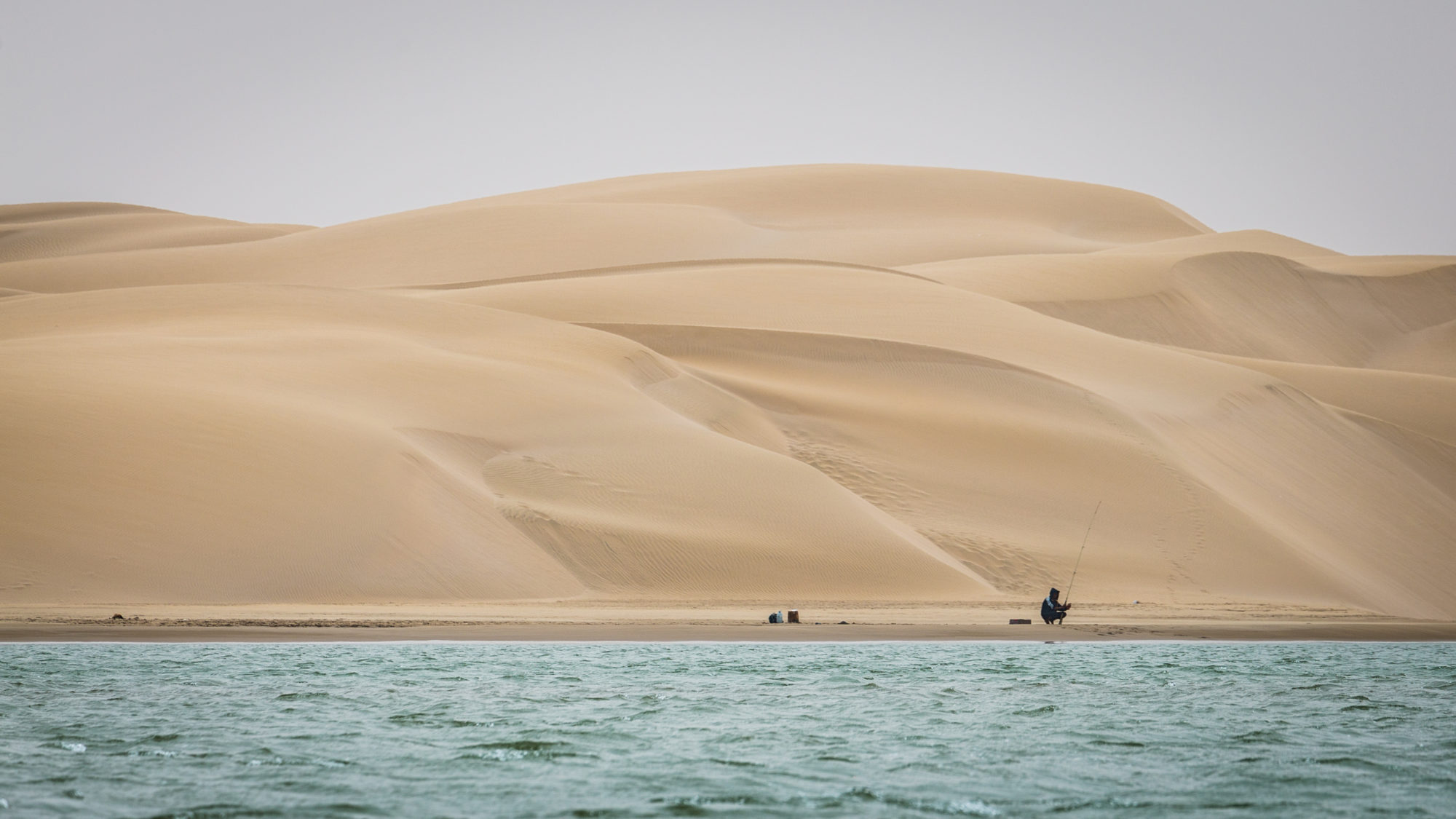
- Coastal dunes and desert steppe. Sand and sparse hardy vegetation running back from the shore into genuine Saharan terrain.
The lagoon is recognised internationally as a wetland of importance for waterbirds; Morocco has designated it a national park and it is listed under the Ramsar Convention. That status reflects its role on a migration corridor rather than any visitor infrastructure.
Why the ecology matters
The Atlantic coast of North-West Africa is a flyway. Birds moving between European and African breeding and wintering grounds follow it, and along hundreds of kilometres of dry, harsh coastline there are very few places where shallow, food-rich water is reliably available. Khnifiss is one of them, which gives it an importance out of proportion to its size.
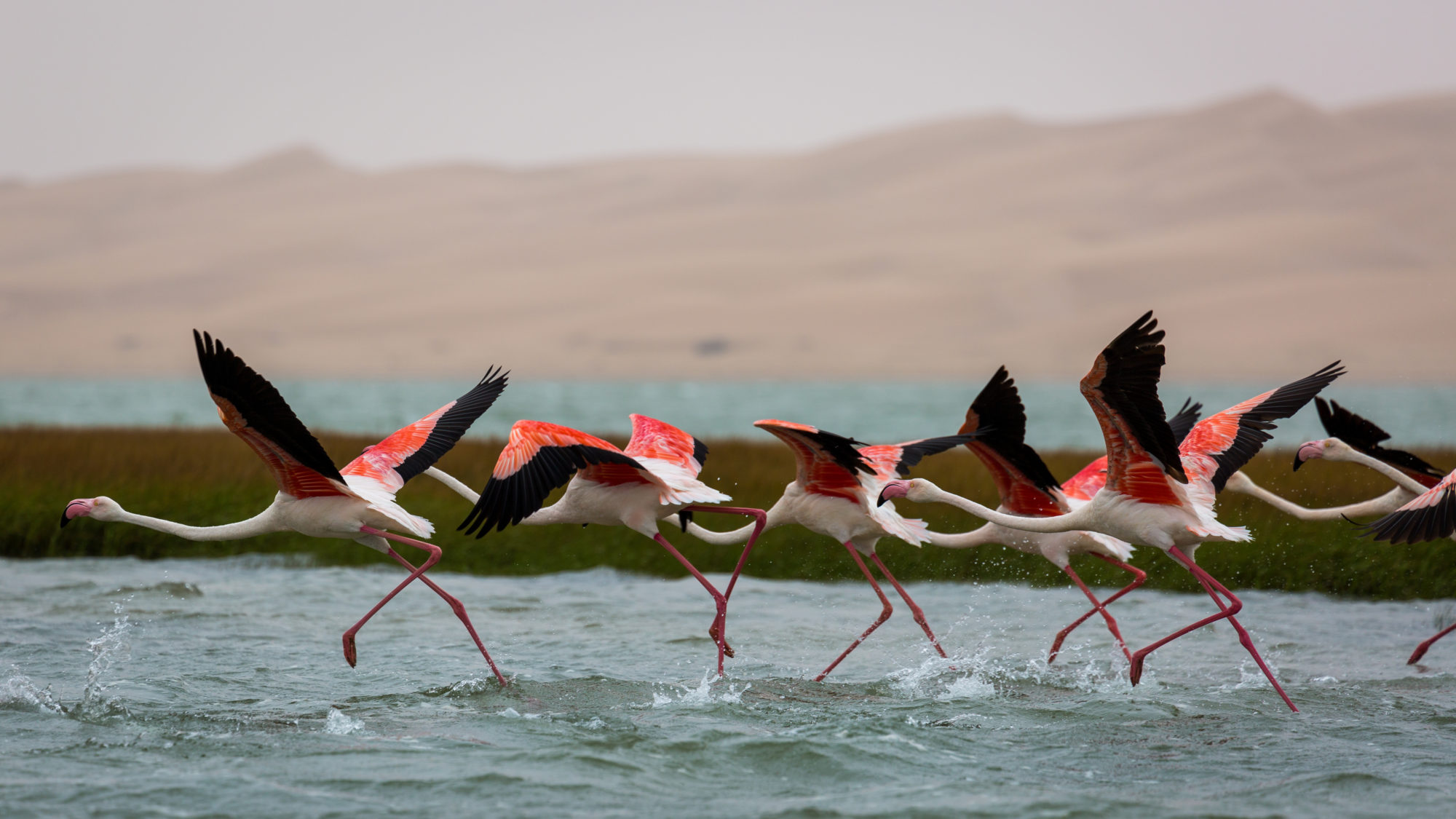
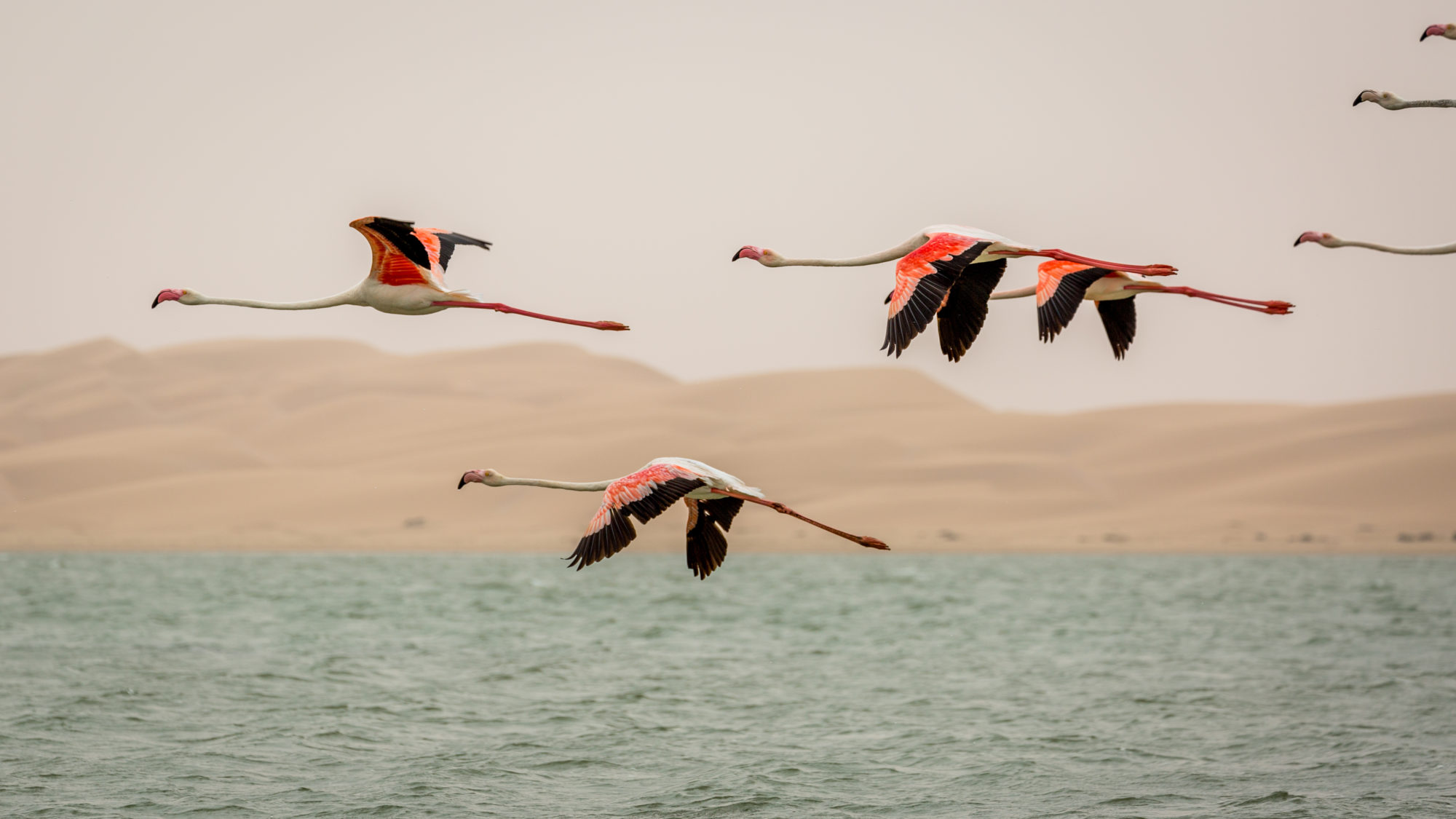
What that means on the ground is a lagoon where tidal flats are exposed and re-flooded daily, concentrating invertebrates and, with them, waders and waterbirds. Greater flamingos are the species most associated with Khnifiss and the most photographed, but the wider interest is in gulls, terns, herons, spoonbills, and a long list of migratory waders that use the flats at different points in the year. The nearby ocean also supports marine life, and the desert edge holds its own sparse fauna — reptiles, small mammals, raptors overhead.
Two honest caveats. First, no sighting can be promised. Bird numbers at Khnifiss vary enormously with season, tide, weather and disturbance; a lagoon that holds hundreds of birds one week can look nearly empty the next. Second, birds move within the lagoon system through the tidal cycle. Arriving at the wrong state of tide, at the wrong end of a very large body of water, is the most common reason visitors see little.
The landscape
Khnifiss is a place of very few elements and enormous scale. Sand, salt crust, shallow water, sky and the line of the Atlantic. Colour comes from the light rather than from the terrain: pale gold and white through the middle of the day, and much richer at each end of it. Fog is a real feature of this coast, rolling in off the cold Canary Current and sometimes sitting over the lagoon well into the morning — atmospheric, and occasionally the reason visibility is poor for hours.
The human landscape is equally spare: a small fishing settlement, occasional nomadic encampments inland, salt extraction, and the coastal road with long empty stretches between fuel stops. This emptiness is the point. Travellers who need a viewpoint, a café and a marked trail will find Khnifiss underwhelming. Travellers who value space and silence often rank it among the most memorable places they visit in Morocco.
Responsible wildlife viewing
Because there is little infrastructure, visitor behaviour matters more here than in a managed reserve. The core principle is simple: never make a bird move.
- Keep your distance and use optics. Binoculars or a long lens, not a closer approach. Flamingos and waders that flush repeatedly burn energy they need for migration.
- Watch from the vehicle or from cover where possible. A stationary car is far less disturbing than a person walking towards the water.
- Move slowly and quietly, and stay low. Avoid skylining yourself on a ridge above feeding flats.
- No drones. They are highly disturbing to birds and may be restricted; do not assume permission.
- Do not play calls to attract birds.
- Stay on existing tracks. Vehicle marks on sabkha and dune surfaces persist for years and damage habitat. Never drive on the flats.
- Take everything out. There is no waste collection here.
- Respect people. Fishing settlements and nomadic camps are homes and workplaces; ask before photographing, and do not enter camps uninvited.
If you visit with a local guide who knows the lagoon, all of this becomes easier — they know where to stop, when the tide will expose the flats, and how to see more while approaching less.
Access and planning caveats
This section is deliberately cautious. Conditions on this coast change, and specifics that were true last season may not be true now.
- The main coastal road between Tan-Tan and Tarfaya is the access corridor, and the lagoon is reached by side tracks from it. Track conditions vary with wind, sand movement and rain.
- A 4x4 with a driver who knows the area is strongly advisable for anything beyond a roadside stop. Soft sand and salt crust both trap vehicles, and recovery is a long way away.
- Do not assume rules or facilities. Protected-area regulations, permitted access points, camping rules and drone restrictions may apply and can change. Check locally, close to your travel dates.
- Services are sparse. Plan fuel, water and food around the towns at either end. Mobile coverage is patchy.
- Distances are long and the road is monotonous. Fatigue is the practical safety issue on this stretch.
- Tide timing matters more than arrival timing. Ask your guide to plan the visit around it.
We do not publish opening hours, fees or permit requirements for Khnifiss, because we cannot verify that they would still be accurate when you read this. When we include the park in a journey, access and any current requirements are confirmed at planning time with local partners.
Best seasons
The climate is mild by Saharan standards because of the ocean, with cool water offshore keeping air temperatures far lower than they would otherwise be. Wind and fog, not heat, are the defining conditions.
- Autumn through spring is generally the most comfortable window for travel on this coast, and it also spans the periods when migratory birds are moving along the flyway or wintering in North Africa.
- Summer is workable at the coast itself but hot inland, and the coastal road journey becomes harder work.
- Fog can occur in any season and is more common in the mornings.
- Wind is close to constant. Plan for it rather than hoping it will drop.
Bird numbers follow migration and local conditions rather than a published schedule, so it is more useful to think in terms of comfortable travel seasons than in terms of guaranteed wildlife months. Our best time to visit Morocco guide places this in a national context.
Where Khnifiss fits on an Atlantic route
Khnifiss makes sense as part of a southbound Atlantic journey rather than as a destination in itself. The coast from Agadir south through Mirleft, Sidi Ifni, Guelmim and Tan-Tan changes character steadily — surf beaches and arches give way to open desert coast — and Khnifiss sits at the point where the transition is complete. Continuing south leads towards Tarfaya, Laâyoune and eventually Dakhla, which shares the lagoon-and-Atlantic geography in a very different, more populated form.
Inland, the Anti-Atlas is close enough to combine: Amtoudi and the granary country around Aït Kine offer the mountain-oasis counterpoint to the coast's emptiness. For a structured version of this region, see our Agadir and Western Sahara journey or the wider Atlantic coast collection. Travellers wanting to pair the coast with dunes can look at the Sahara collection.
Realistically, reaching Khnifiss requires committing several days to the far south. It is not an add-on to a Marrakech-and-desert loop, and treating it as one produces long driving days and a rushed hour at the lagoon.
What to bring
- Binoculars — the single most useful item here.
- A long lens if you photograph wildlife; anything shorter will not reach the birds ethically.
- Windproof layers, including for warm days.
- Sun hat, high-factor sunscreen and polarised sunglasses. Glare off salt and water is severe.
- Closed shoes you do not mind getting salty and wet.
- More water than you expect, plus food for the day.
- Dust protection for cameras and a lens cloth for salt spray.
- A paper map or offline maps, and a fully charged phone with a car charger.
- A rubbish bag to carry your own waste out.
Photography notes
The lagoon rewards patience and early starts. Light at both ends of the day is far kinder than the flat, white midday glare, and the low angle brings out the texture of sabkha and dune. A polariser helps with water surface and haze; a long lens is essential for birds and, just as importantly, keeps you far enough away not to disturb them. Do not walk out onto the flats to get closer — it damages the surface, flushes birds and can be genuinely dangerous as the tide returns. Fog can ruin a planned shot and produce a far better unplanned one; build in more than one visit to the same spot if photography is your priority.
Conservation
Khnifiss is protected because it is fragile and because it is regionally rare. The pressures are the familiar ones for coastal wetlands: disturbance of feeding and roosting birds, vehicle damage to salt flats and dunes, marine and plastic litter arriving on the tide, pressure on fish stocks, and the cumulative effect of unmanaged visits to a place with no visitor management to speak of. Climate change and shifting water regimes add a longer-term uncertainty to a system that depends on a precise balance of salinity and tidal exchange.
Visitors help most by being unobtrusive, by using local guides and local services so the area's protection has local economic value, by removing litter — including litter that is not theirs — and by treating the absence of rules on the ground as a reason for more care, not less. The Ramsar Sites Information Service is a reliable starting point for understanding the site's designated status.
Frequently asked questions
Will I see flamingos at Khnifiss?
Often, but never guaranteed. Numbers depend on season, tide, weather and disturbance. Plan the visit around the tide and give yourself more than one attempt if birdlife is the main reason you are going.
Do I need a 4x4?
For roadside viewing from the coastal road, no. For the tracks towards the lagoon and its shores, a 4x4 with a driver who knows current conditions is strongly advisable.
Is there an entrance fee or visitor centre?
We do not state fees, hours or facilities here because they cannot be reliably verified in advance. Confirm locally before you travel and do not assume services exist on site.
Can I camp at the park?
Do not assume camping is permitted. Protected-area rules apply and can change; ask locally rather than relying on what other travellers report having done.
How long should I allow?
A meaningful visit needs the better part of a day at the lagoon, within a southern coastal itinerary of several days. An hour on the way past is a photograph, not a visit.
Is it suitable for children?
Yes, with the right expectations. There is space, sand, water and birdlife, but no facilities, long drives either side, and strong sun and wind. It suits families who are comfortable with a wild, unserviced day out.
Can it be combined with Dakhla?
Geographically yes, on the same southbound coast road, but the distance is considerable and should be planned as several days rather than a connection.