On 12 October 2026, a rabbi's prayer opened a new museum in the heart of the Mellah of Fes. The Museum of Moroccan Jewish Culture is the first public institution in the city devoted entirely to the Jewish contribution to Morocco's religious, social and cultural life — and it sits in exactly the neighbourhood where much of that story was lived.
For travellers interested in Morocco's many layers, the opening matters. Fes has long been a place where you could walk past synagogues, the whitewashed tombs of the Jewish cemetery and the balconied houses of the Mellah and sense a history that was rarely explained in one place. The museum now gives that history a home, with objects, documents and voices that make the neighbourhood around it easier to read.
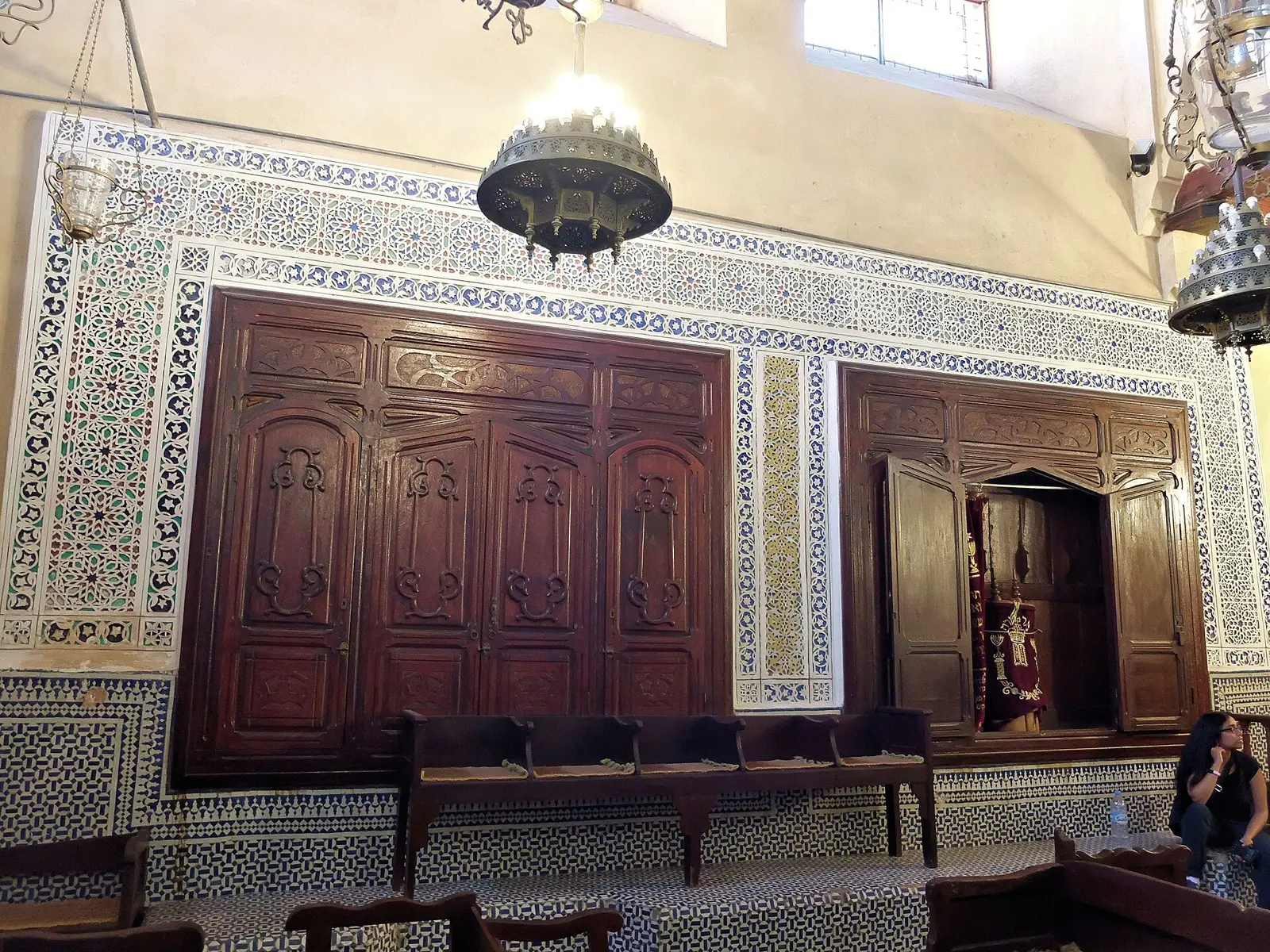
Lead photograph: the Ibn Danan Synagogue in the Fes Mellah — a nearby heritage site, not the new museum. R Prazeres / Wikimedia Commons, CC BY-SA 4.0. Resized and converted to WebP.
A museum dedicated to more than 2,500 years of history
Jewish communities have been part of Morocco for well over two millennia — long before the arrival of Islam, and long before the country took its present shape. Over the centuries they were joined by new arrivals, most famously the Sephardic Jews expelled from the Iberian Peninsula after 1492, and they became central to Moroccan trade, crafts, scholarship, music and urban life. Morocco's 2011 constitution names the Hebraic heritage among the elements that make up the national identity.
The new museum sets out to tell that story in full. As reported by Morocco World News, its ground floor opens with a timeline covering more than 2,500 years of Jewish presence in Morocco, through the founding of the Fes Mellah in 1438 and the arrival of Jews from Andalusia in 1492. According to Le360, the building covers about 1,700 square metres, of which around 1,200 are exhibition space, and the land was donated by the Jewish community of Fes.
The project began in April 2019, when King Mohammed VI launched its construction as part of the rehabilitation of the old medina — on the same day as the restoration of the Batha Palace, now the Museum of Islamic Arts, a short walk away. The pairing was deliberate: two neighbouring museums presenting two components of one Moroccan identity.
What visitors can discover inside
The permanent exhibition is arranged across two levels and, according to Le360, seven thematic sections running from the earliest historical traces of Jewish life in Morocco to the present day. The building itself draws on medina architecture, with zellige tilework, carved plaster, painted wood and a marble fountain. Published reports describe:
- Torah scrolls and ritual objects used in synagogue life and religious celebration.
- Manuscripts and archives documenting community institutions, learning and commerce.
- Ketubot — framed Jewish marriage contracts, often richly decorated.
- Clothing and jewellery, including traditional bridal garments, regional dress and silver ornaments.
- A reconstructed jeweller's workshop, recalling the major role Jewish artisans played in Moroccan jewellery-making.
- Musical instruments, woven textiles and archaeological pieces.
The upper floor turns more personal. A life-cycle section follows birth, circumcision, bar mitzvah, marriage and death, while another moves through the Hebrew calendar and the distinctly Moroccan ways its festivals were celebrated. Visitors also encounter the institutions that structured community life — the synagogue, the Hebrew school and the rabbinical court — and the professions traditionally practised in the Mellah. Windows look directly out onto the Jewish cemetery, linking the story told inside to the landscape of memory just beyond the walls.
The National Foundation of Museums, which supervised the project, says nearly three-quarters of the objects on display belong to its collection, through purchases and donations.
The historic Mellah of Fes
The Mellah of Fes, established in 1438 beside the royal palace of Fes el-Jdid, is one of the oldest organised Jewish quarters in Morocco. For more than five centuries it was home to rabbis, scholars, merchants, goldsmiths and families whose names still appear in Moroccan Jewish communities around the world. Its streets differ from those of Fes el-Bali: houses look outward with wooden balconies and windows, a style that set the neighbourhood apart.
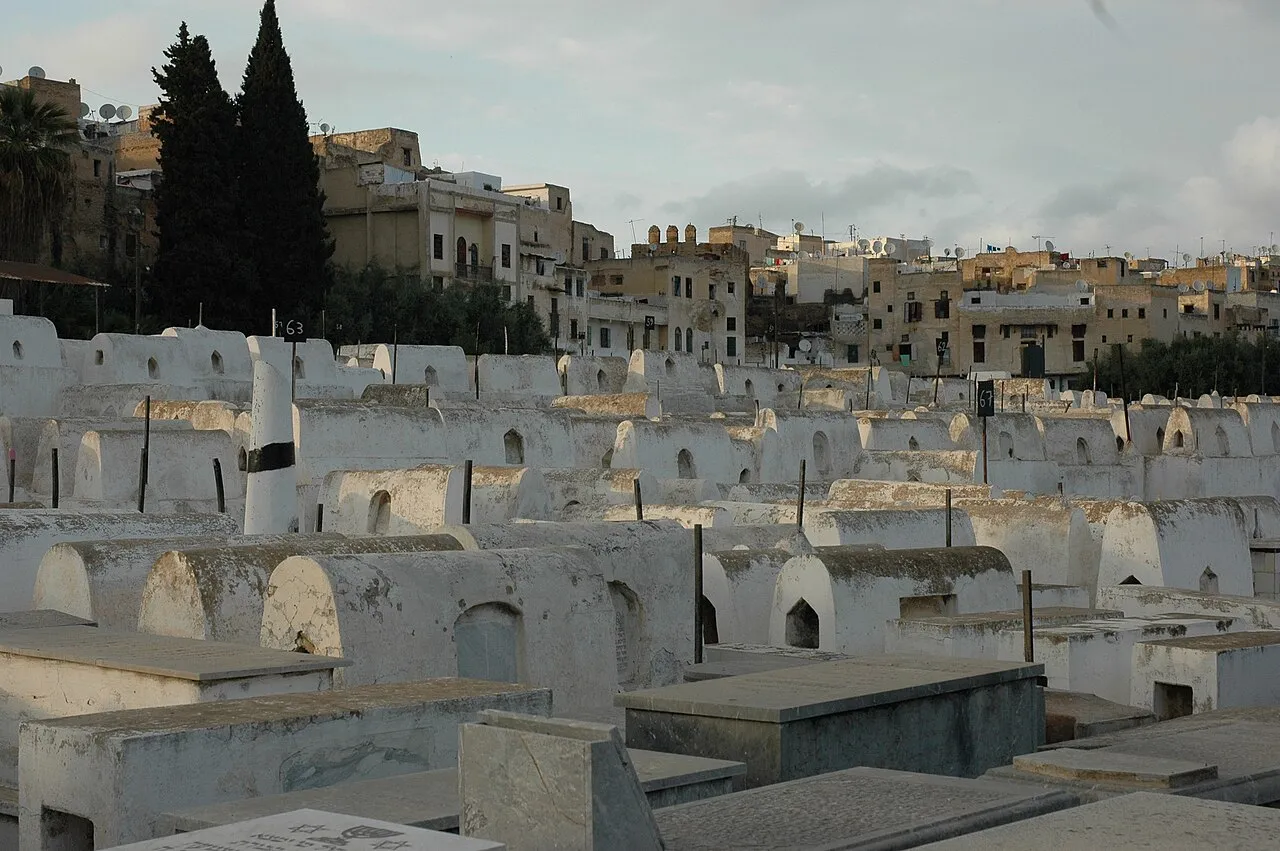
Most of the Jewish population left during the twentieth century, but the quarter keeps important landmarks close to the new museum. The Ibn Danan Synagogue, dating from the seventeenth century and restored in the 1990s, is one of the best-preserved historic synagogues in the country. The Jewish cemetery, with its rows of whitewashed tombs, is the resting place of generations of Fassi families and of figures such as Solica Hachuel, remembered as a martyr of the nineteenth century. Neither site is part of the museum itself, but together they give the visit its setting.
Jewish and Muslim heritage: a shared Moroccan story
Officials at the inauguration spoke of peace, fraternity and living together, and the museum's placement a short walk from the Museum of Islamic Arts reinforces that message. The shared story is real and visible: in the melodies of Andalusian music, in jewellery and embroidery techniques, in dishes such as dafina — the slow-cooked Sabbath stew — and in the architecture of houses and synagogues built by the same craft traditions.
That story is also more complex than a single word like "coexistence" can carry. Jewish life in Morocco knew long periods of closeness and exchange, legal distinctions and protections, moments of hardship and violence, and the great emigrations of the twentieth century that reshaped communities on both sides. A good museum — and a good visit — leaves room for all of it. What makes Fes moving is precisely that layered history, read in the streets of a quarter that still bears its name.
Exploring Fes Jewish heritage with a private guide
The Mellah rewards context. Without it, a visitor sees a cemetery, a synagogue and some unusual balconies; with it, the quarter becomes a story of families, trades, scholarship and departure. Our private Fes Jewish Heritage Tour explores the Mellah, the Ibn Danan Synagogue and the cemetery at your own pace with a knowledgeable local guide, and connects them to the wider medina of Fes el-Bali.
Once the museum's opening hours and admission arrangements are confirmed, it can be considered as part of that day. We will always check what is open before your visit, rather than promise entry in advance.
Discover Jewish heritage across Morocco
Fes is one chapter among many. Casablanca is home to the Museum of Moroccan Judaism and the country's largest remaining Jewish community; Rabat and Salé have their own mellahs; Marrakech keeps the Slat al-Azama synagogue and the Miaara cemetery; Essaouira, once majority-Jewish in parts of its medina, has restored synagogues and the house of memory Bayt Dakira. Smaller towns such as Sefrou and the southern oases hold quieter traces.
Our private Morocco Jewish Heritage Journey links these places into one unhurried route, with time for the people and stories behind each site.
Practical information for visitors
- Location: Historic Mellah, Fes, Morocco
- Inauguration: 12 October 2026
- Museum focus: Moroccan Jewish culture, history and heritage
- Opening hours: to be confirmed
- Admission fees: to be confirmed
- Photography policy: to be confirmed
- Guided visit arrangements: to be confirmed
Further reporting: European Jewish Congress.
Preserving a living heritage
Museums are often described as places that keep the past. The best of them also give it back — to the descendants of families who once lived in a quarter, to young Moroccans discovering a part of their own national story, and to travellers who arrive curious and leave understanding a little more. The new museum in the Mellah of Fes has the chance to do all three.
If you would like to explore Fes, or Morocco's Jewish heritage more widely, we can create an entire private journey just for you. Write to us about a tailor-made Jewish heritage itinerary, and we will shape it around your interests, your pace and the family stories you may be following.