December is a good time to visit Morocco if you want medinas, southern landscapes and the Sahara—not a promise of summer weather. You can enjoy a bright afternoon in Marrakech and need a warm jacket that same evening. A desert sunset may be beautiful, while the night that follows is genuinely cold. Snow in the Atlas can change the road you take.
The best winter journey is not a summer itinerary with a different departure date. It gives the road enough time, chooses accommodation for comfort after dark and leaves room to change mountain plans. Here is how to decide where to go, what to pack and whether December or January better suits your trip.
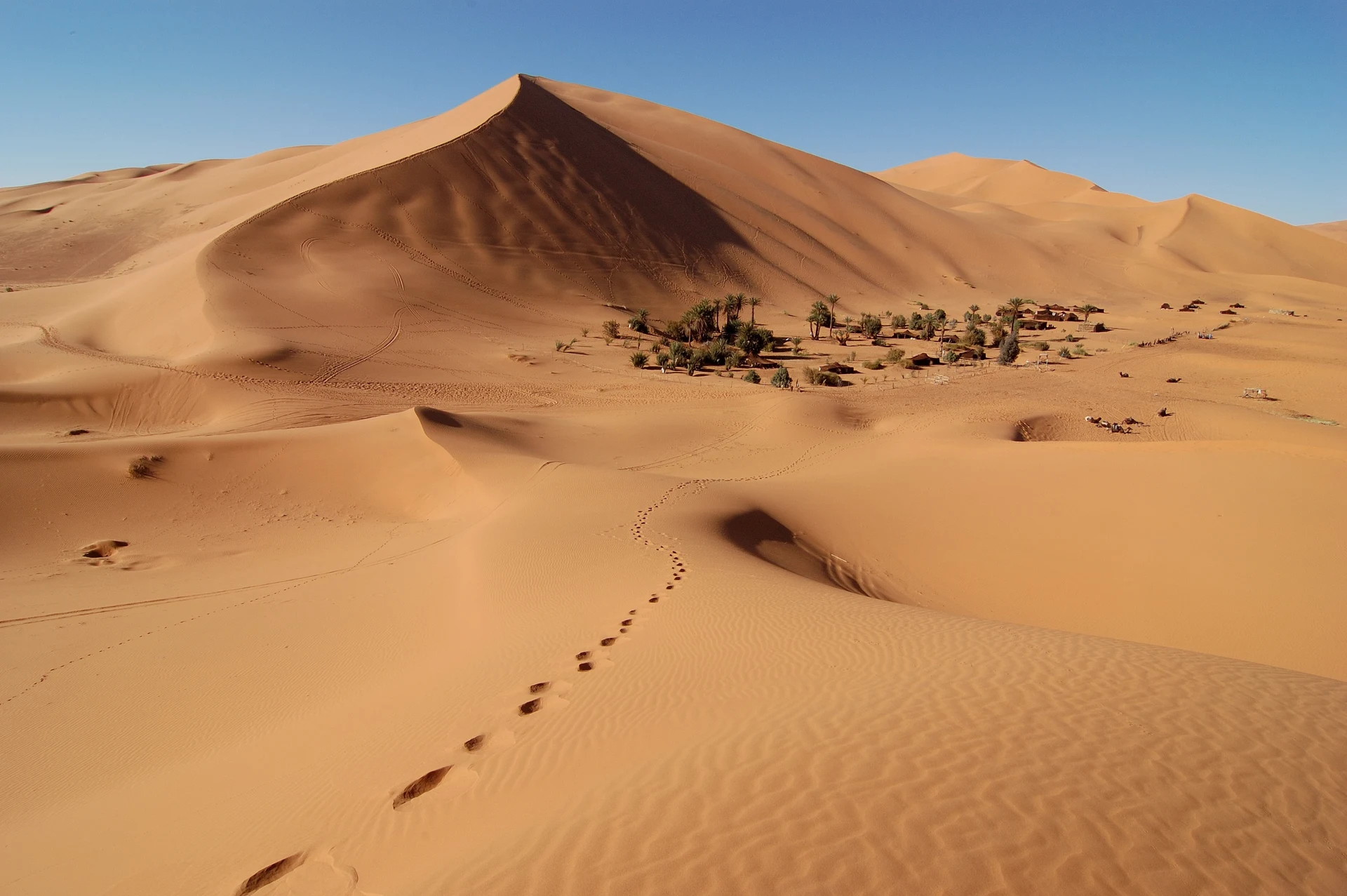
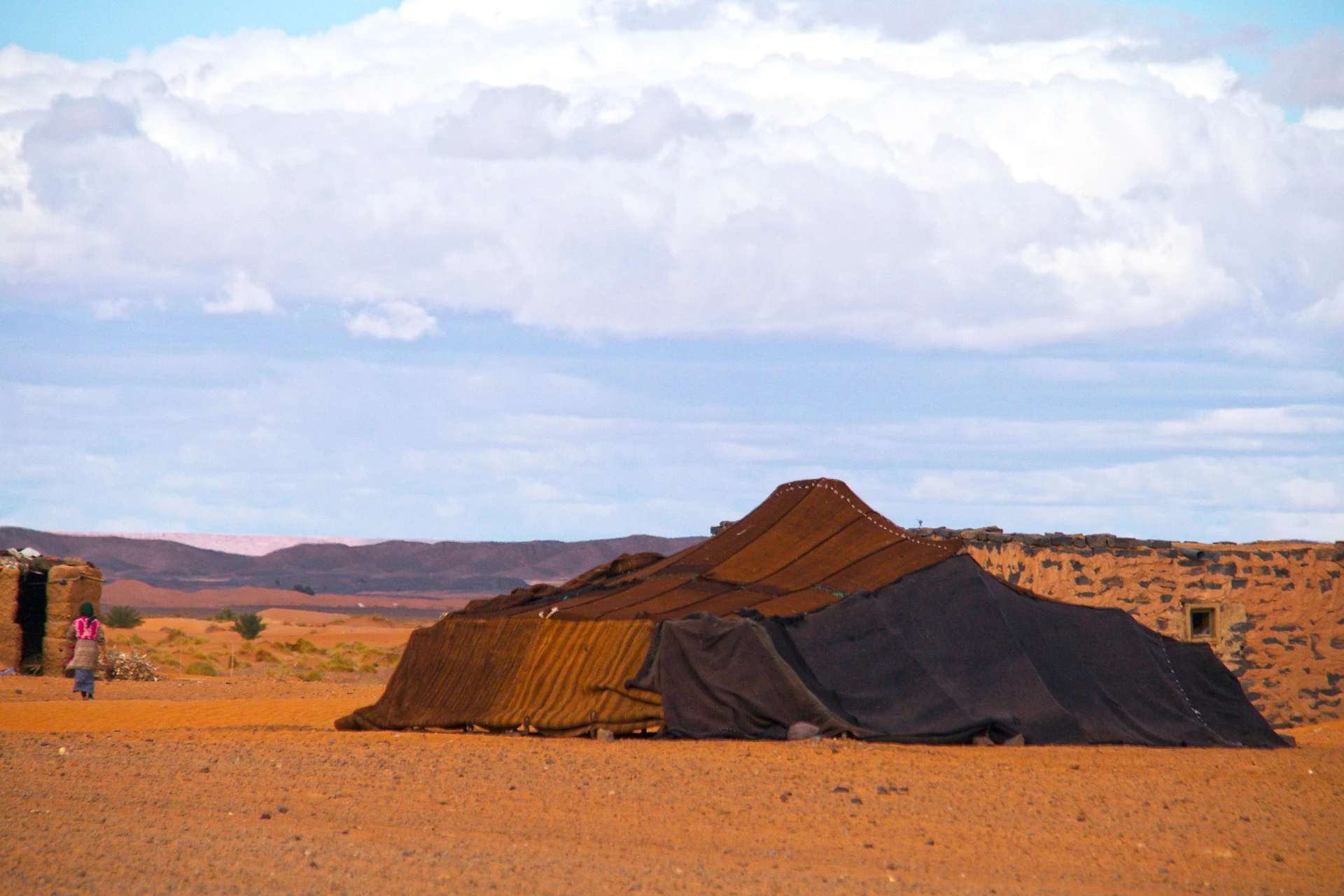
Lead photograph: Erg Chebbi on 30 December 2005, by Rosino / Wikimedia Commons, CC BY-SA 2.0. Resized and converted to WebP under the same licence; the displayed crop varies by screen. This is a landscape photograph, not a picture of a currently offered camp.
Morocco weather in December: think in regions, not one temperature
Morocco has Atlantic and Mediterranean coasts, high mountains, inland cities and desert landscapes. A single countrywide temperature is not useful for choosing your clothes or route. The Moroccan National Tourist Office describes these contrasts in its climate and seasons guide. The overview below describes typical planning concerns, not a forecast for your dates.
| Region | What December can feel like | What to plan for |
|---|---|---|
| Marrakech | Pleasant sunshine at times; cool mornings and evenings; rain possible | Layers, a rain option and confirmed room heating |
| Fes, Chefchaouen and the north | Cooler, with a greater chance of wet days | Closed shoes, indoor pauses and flexible sightseeing |
| High and Middle Atlas | Cold at altitude; snow and ice possible | Road checks, appropriate guides and alternatives to high routes |
| Merzouga and Erg Chebbi | Sunny daylight can be comfortable; much colder after sunset | Warm clothing, bedding checks and time to arrive before dark |
| Drâa Valley and Erg Chigaga | Winter days in the south; cold evenings and exposed desert tracks | A realistic approach through the valley and a suitable 4x4 transfer |
| Essaouira and Agadir | Milder coastal conditions at times, but wind, rain and cool evenings remain possible | Choose the coast for walks and atmosphere, not guaranteed swimming |
Check a local forecast shortly before departure. Climate averages cannot tell you whether a mountain pass will be open, whether your seaside afternoon will be windy or whether rain will affect a particular day. Our best time to visit Morocco guide compares winter with the other seasons.
Where to go in Morocco in December
Marrakech: a strong winter starting point
Marrakech works well when your interests are architecture, food, gardens and the medina. Plan walking visits during daylight and leave space for a café, a cooking experience or time in your riad. A sunny terrace can be inviting at lunch; dinner outdoors is a different decision.
Accommodation matters more than the photograph of its courtyard. Ask how the bedroom is heated, whether heating is included and whether breakfast or dinner can be taken indoors. Traditional riads vary considerably. Our Morocco riad guide helps you choose the setting; winter comfort needs checking with the individual property.
The south: oases, kasbahs and changing landscapes
The road beyond the High Atlas opens onto Aït Ben Haddou, Ouarzazate, Skoura and the southern valleys. December can be rewarding for travellers who prefer walking and sightseeing without midsummer heat, but the mountain crossing still needs a weather-aware plan.
For Erg Chigaga, the Drâa Valley is part of the experience, not merely the way to camp. For Erg Chebbi, allow time for the eastern route. Choose the dune destination first, then build the journey around it.
The Anti-Atlas: a quieter, longer southern journey
Tafraoute, Tata, Aït Kine and Amtoudi offer a different focus: granite landscapes, oasis settlements and collective granaries. This region deserves several days rather than a hurried detour after a desert night. Walking access, local visits and coastal additions should be arranged around current conditions and your interests.
Our 14-day Anti-Atlas, Sahara and Atlantic journey shows how Erg Chigaga and the deep south can fit into a Marrakech loop. It is a private itinerary to adapt, not a promise that every winter day or visit will unfold identically.
Fes and the north: go for culture, accept winter weather
Do not rule out Fes simply because the south may be warmer. Its medina, craftsmanship and heritage can be central to a first Morocco trip. Keep a rain layer handy, use indoor visits to break up outdoor walking and avoid treating wet, steep lanes as a reason to rush.
Chefchaouen and Tangier can also be worthwhile, but choose them for the places themselves—not as reliable winter-sun substitutes. A route that includes the north needs enough days to reach the desert without compressing the journey.
The Atlantic: a change of rhythm, not summer on demand
Essaouira suits harbour walks, its medina and an unhurried stay. Agadir can suit guests who prefer a beachfront hotel base. Wind and sea conditions are variable, and an unheated pool may feel too cold for your idea of a holiday. If swimming matters, ask whether the specific pool is heated and operating during your stay.
Morocco desert tours in December: the night matters as much as the sunset
Yes, you can visit the Sahara in December. The important questions are how you reach it, what happens after dark and whether the pace works for your party. Neither Erg Chebbi nor Erg Chigaga is a quick trip from Marrakech. A very compressed itinerary leaves long road days regardless of the season.
Read our Morocco desert tours guide for the different routes and our Erg Chebbi versus Erg Chigaga comparison before choosing. Agafay, close to Marrakech, is a rocky landscape; it is not a substitute for the Sahara sand dunes.
Before booking a winter camp, ask these questions
- What bedding and extra blankets are provided?
- Is there heating inside the tent, and what exactly does that mean?
- Where are dinner and breakfast served when it is cold or windy?
- What are the bathroom and hot-water arrangements?
- How long is the final transfer, and can we arrive with daylight to spare?
- What alternatives are available if someone does not want a camel ride?
A “luxury” label does not answer these questions. A campfire is not room heating, and facilities differ between camps. We confirm the chosen accommodation and inclusions in your personal proposal rather than promising identical arrangements everywhere.
One night or two?
One night gives you an evening and a morning in the dunes. Two nights can give you a full day without immediately packing for another long transfer. For guests who value a slower pace—and especially around a late New Year evening—the second night can make a substantial difference.
It does not remove the distance to the desert. Plan the approach and departure days as carefully as the camp stay. Browse desert journeys returning to Marrakech or journeys continuing from Marrakech to Fes according to your flights.
How much time do you need: seven, ten or fourteen days?
Count days on the ground, not just hotel nights. A late arrival and an early departure do not create two full sightseeing days. In winter, an ambitious list of roadside stops can also push the last part of a transfer into darkness.
| Time available | Best approach | What to avoid |
|---|---|---|
| Seven days | Choose a focused Marrakech-and-south trip, or a city-and-coast holiday if long drives do not appeal | Trying to include the north, both dune regions and the coast in one week |
| Ten days | A broader city-and-desert journey, with the route matched to your arrival and departure airports | Assuming a wider itinerary means short transfers every day |
| Fourteen days | More two-night stays, or a distinct Anti-Atlas and Sahara loop with time for the south | Adding every destination just because you have two weeks |
For a week, compare our seven-day desert journey from Marrakech. For a wider arrival through Casablanca, see the ten-day Morocco itinerary. For a fuller introduction, the 14-day Grand Morocco Tour is a different option from the deep-south loop. These are starting points to discuss, not automatic December recommendations for every traveller.
Winter road days and mountain alternatives
Leave room for road and weather checks before the Atlas crossing. If conditions make a pass or detour unsuitable, change the route, postpone the crossing or simplify the trip. Do not build a flight connection around a mountain transfer with no margin.
A village walk is not the same as a winter summit ascent. Snow and ice change the equipment, guiding and experience required. Discuss walking plans separately from the road itinerary; a scenic mountain photograph does not establish that a hike is appropriate for your dates.
Christmas and New Year in Morocco: separate early December from the holiday period
Morocco is not a countrywide Christmas-market destination. Some hotels and restaurants arrange festive meals or decorations; others operate normally. Confirm a particular venue’s programme rather than assuming a celebration is included.
Christmas and New Year can bring greater demand for popular riads and camps. Early December and the holiday week should not be treated as the same booking season. Prices depend on your dates and chosen accommodation; neither a universal winter discount nor a fixed holiday surcharge can be promised.
If your trip includes 31 December, read our New Year’s Eve in Morocco guide. It contains a separate private journey proposal for welcoming 2027. This winter guide does not add a fixed departure or guarantee entertainment, fireworks or a particular camp event.
Morocco in December or January: which should you choose?
Choose by your available dates, preferred atmosphere and route—not the expectation that January suddenly brings different weather. Both are winter months. Both can offer sunshine and both need preparation for cold evenings, rain and mountain conditions.
| Decision | December | January |
|---|---|---|
| Holiday atmosphere | Christmas and New Year arrangements may shape the end of the month | The first days can still be part of the New Year travel period |
| Quieter travel | Consider dates before the holiday rush, subject to local demand | Consider dates after the holiday period; quiet and lower prices are not guaranteed |
| Sahara nights | Warm clothing and specific camp checks are essential | The same checks remain essential; do not pack as though spring has arrived |
| Mountains | Snow and access changes are possible | Snow and access changes remain possible |
| Best reason to choose | Your December dates or a confirmed celebration you want | Your January dates or preference for travel outside the year-end holiday period |
If you can travel in either month, ask for a route and accommodation proposal for your actual dates. A well-heated room, a less hurried road day and the right desert stay are more useful than chasing a small difference in a monthly average.
What to wear and pack for Morocco in December and January
- Removable layers: a comfortable base layer, a sweater or fleece and a warm jacket.
- Rain protection: a light waterproof layer, especially for northern cities and the coast.
- Closed walking shoes: suitable for medina lanes, uneven ground and cool mornings.
- Desert-night extras: warm socks, a hat, gloves and a warm base layer if you feel the cold.
- Daytime protection: sunglasses and sunscreen; cool air does not remove sun exposure.
- Personal essentials: regular medication and a small day bag so warm layers stay accessible during transfers.
Choose clothing that works in the places you visit as well as in the weather. Covered shoulders and clothing that reaches below the knee are a practical, respectful choice for many cultural visits. A scarf can be useful for warmth, but visitors do not need to wear one everywhere as a head covering.
Do not bring specialist trekking equipment for an ordinary road trip unless your activities require it. Equally, do not assume ordinary trainers are enough for a snowy high-altitude walk. Confirm the activity and its requirements before packing.
Who will enjoy a winter Morocco journey?
December and January suit travellers drawn to culture, architecture, food and varied landscapes, who are comfortable with changing weather. They are less suited to a holiday that depends entirely on hot evenings, daily swimming or guaranteed high-mountain access.
For families, reduce consecutive long transfers and check room arrangements, heating and children’s needs before booking. Our family travel guide goes further into pace and practical choices. For costs, use our private Morocco trip cost guide as context and request a quotation for your winter dates.
Questions about Morocco in December
Is December a good time to visit Morocco?
Yes, for a cultural journey with winter expectations. Marrakech, southern oases and the Sahara can work well, but rain, cold evenings and mountain snow are possible. It is not a guaranteed hot beach holiday.
Is Morocco warm in December?
It can feel pleasantly warm in the midday sun in Marrakech and the south, but that does not describe the whole day or country. Fes and the north can be cooler and wetter; desert and mountain nights need proper warm layers.
Can you visit the Sahara in December?
Yes. Allow enough days to reach the dunes without rushing, check bedding and heating arrangements with the specific camp, and pack for cold nights. Erg Chebbi and Erg Chigaga need different routes; neither is a short outing from Marrakech.
Can you swim in Morocco in December?
Some travellers swim, but a winter trip should not depend on comfortable sea or unheated-pool temperatures. Ask whether your chosen pool is actually heated and operating on your dates; a pool photograph is not confirmation.
Does it snow in Morocco in December?
Snow is possible in the High and Middle Atlas. It can affect high road passes and walking routes, but it is not guaranteed on any particular day. Check conditions close to travel and keep mountain plans flexible.
What should I wear in Morocco in December?
Pack removable daytime layers, a warm jacket, closed walking shoes, a light rain layer and warm socks. For the Sahara or mountains, add a hat, gloves and a warm base layer. Clothing should suit both winter weather and the places you visit.
Is December or January better for Morocco?
Both can suit a winter cultural journey and both need cold-night planning. December includes the Christmas and New Year booking period; January after the holiday period may suit a quieter trip, but lower prices and better weather are not guaranteed. Choose by your dates and route.
How many days should I allow for Morocco in December?
A week works best with a selective route; ten days allow a wider journey but still include long transfers. Two weeks give more room for rest days, two desert nights and regional exploration. Count arrival and departure days honestly and plan winter road days around daylight.
Plan a winter journey around your own party
Tell us your dates, arrival and departure airports, number of travellers and whether the Sahara is essential. Mention children’s ages, how you feel about long drives and whether heating or a heated pool is a priority. We can then shape a private route around what matters to you.
Start planning your December or January Morocco journey with Morocco Shiny Days. Accommodation, activities, winter facilities and the final route are confirmed in your individual proposal.
Sources and photography
Regional climate background: Moroccan National Tourist Office: climate and seasons; mountain winter context: Ifrane and the Middle Atlas. Additional winter accommodation and holiday-planning context: kimkim’s December travel guide. These are background sources, not live weather forecasts or confirmation of services.
The two photographs were sourced specifically for this guide from the photographers’ originals, with commercial reuse permitted under their stated Creative Commons licences. Neither photograph depicts our guests or establishes the facilities of an offered camp. Attribution and changes are recorded above; Rosino’s resized photograph remains licensed CC BY-SA 2.0.