"Off the beaten track" is one of the most abused phrases in travel writing. It is used to describe places with a car park and a coach schedule, and it is often sold as an achievement rather than a choice. In Morocco the phrase is worth rescuing, because the country genuinely does have vast regions that receive almost no visitors — and reaching them involves real trade-offs in time, comfort and certainty that deserve to be stated plainly before anyone books.
This guide is about travelling beyond the obvious in Morocco honestly: what the phrase should actually mean, which regions repay the effort, how far and how long they really are, how to design a route around them, why local guides matter more here than anywhere else, and how to behave in places where visitors are still an event rather than an industry.
What "off the beaten track" should mean
It should not mean a competition to find somewhere no one has photographed. Morocco is inhabited; the places that feel remote to a visitor are somebody's home village. A more useful definition has three parts:
- Low visitor density — you are one of very few outsiders present, so encounters are not transactional by default.
- Intact local rhythm — the market, the harvest and the season set the day, not a tour schedule.
- Accepted uncertainty — a site may be closed, a track may be washed out, a guardian may be away. You travel expecting this rather than resenting it.
Everything below is written on that basis. If your priority is reliably seeing specific things at specific times, a highlights route is the better trip and there is no shame in it.
The Anti-Atlas: Morocco's quietest mountains
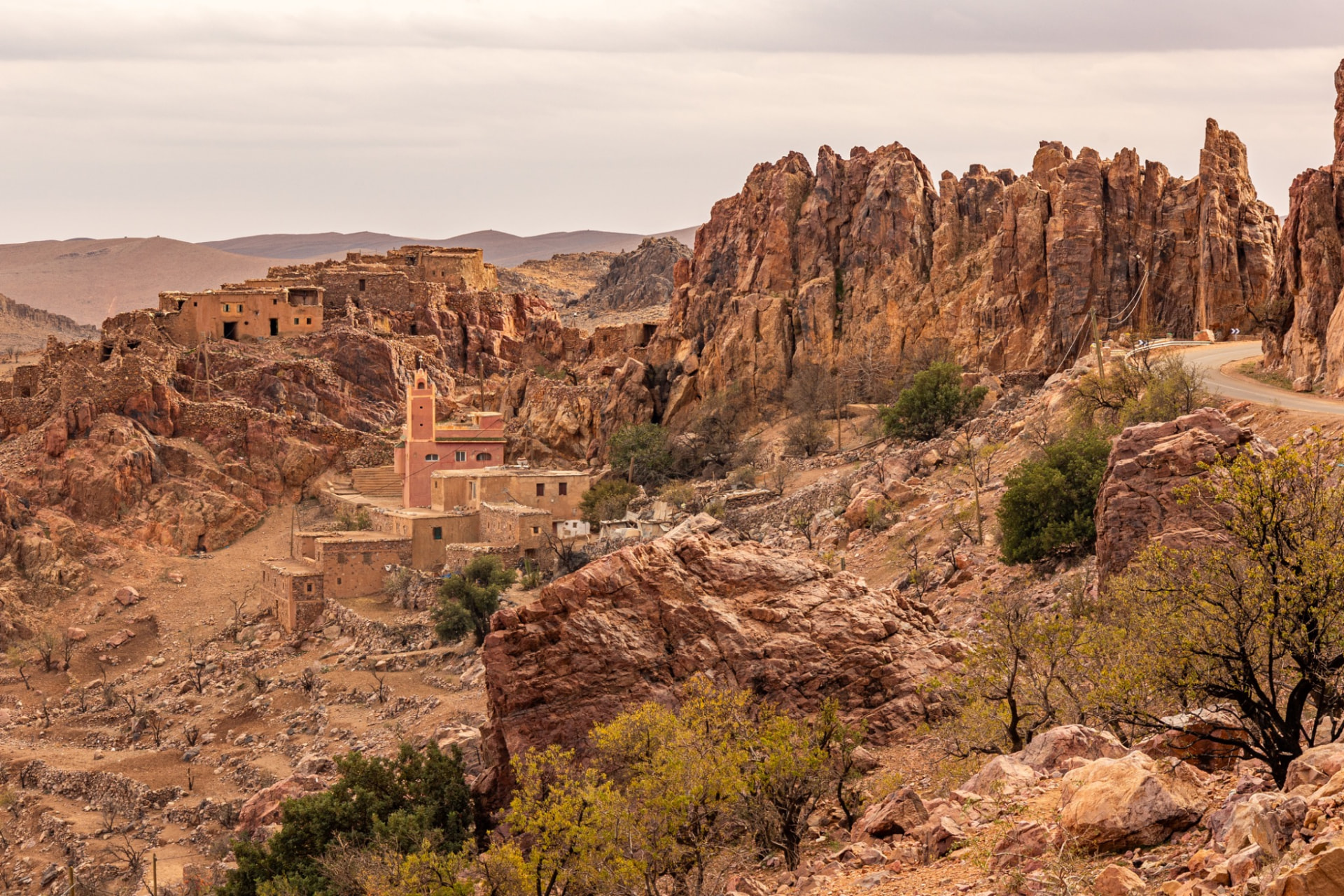
The Anti-Atlas runs across the south of the country, older and drier than the High Atlas and far less visited. Granite and limestone, terraced fields, almond and argan trees, villages of stone and earth stacked into slopes, and roads that take twice as long as they look.
Tafraoute and the granite country
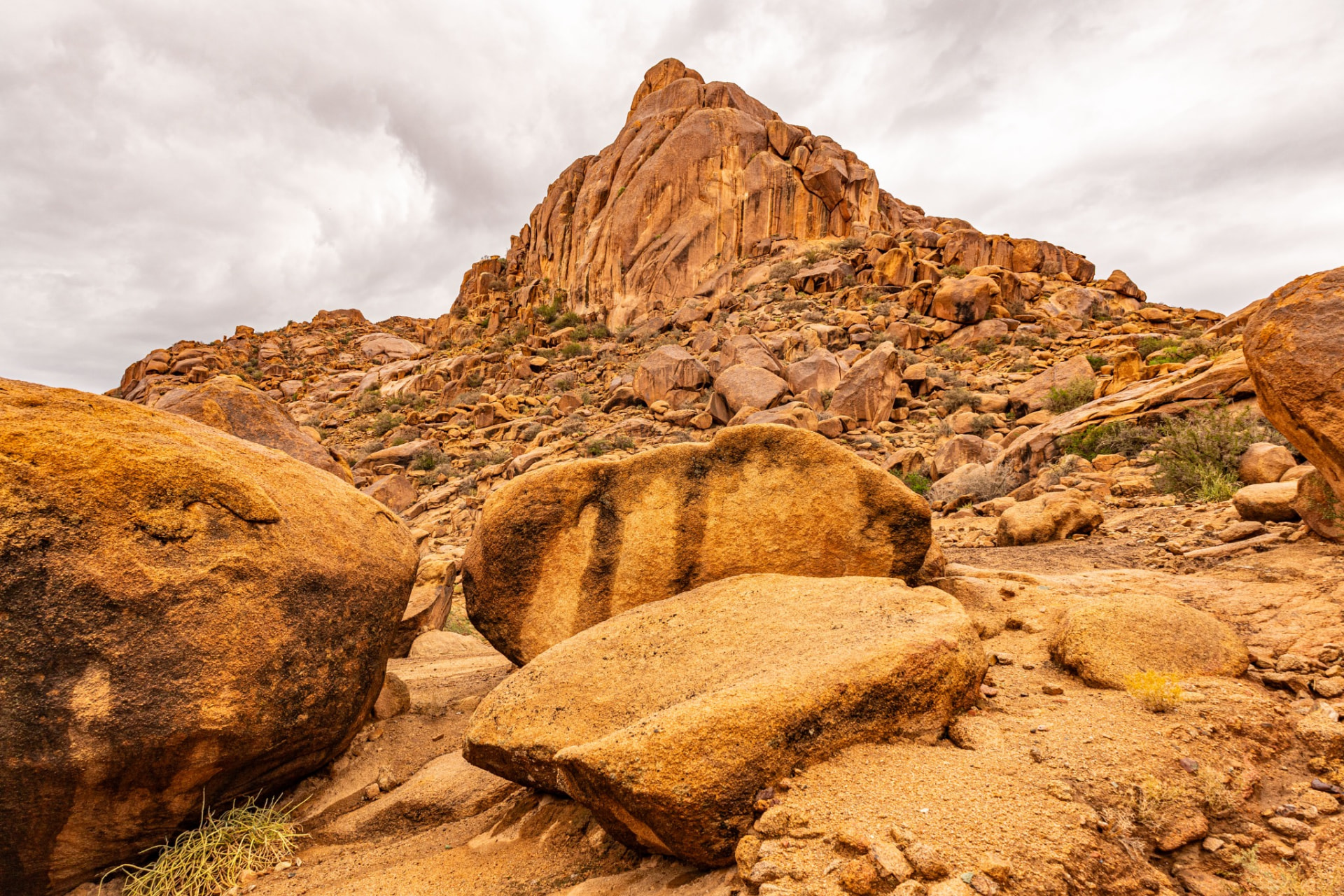
Tafraoute sits in a bowl of enormous rounded granite boulders — an extraordinary landscape that shifts colour through the day. The town is a base rather than an attraction: what matters is the valleys around it, the palm groves, the villages, the walking, and the drives over the passes. Spring almond blossom is a genuine phenomenon here, though its exact timing varies year to year and cannot be promised.
Amtoudi and the granary valleys
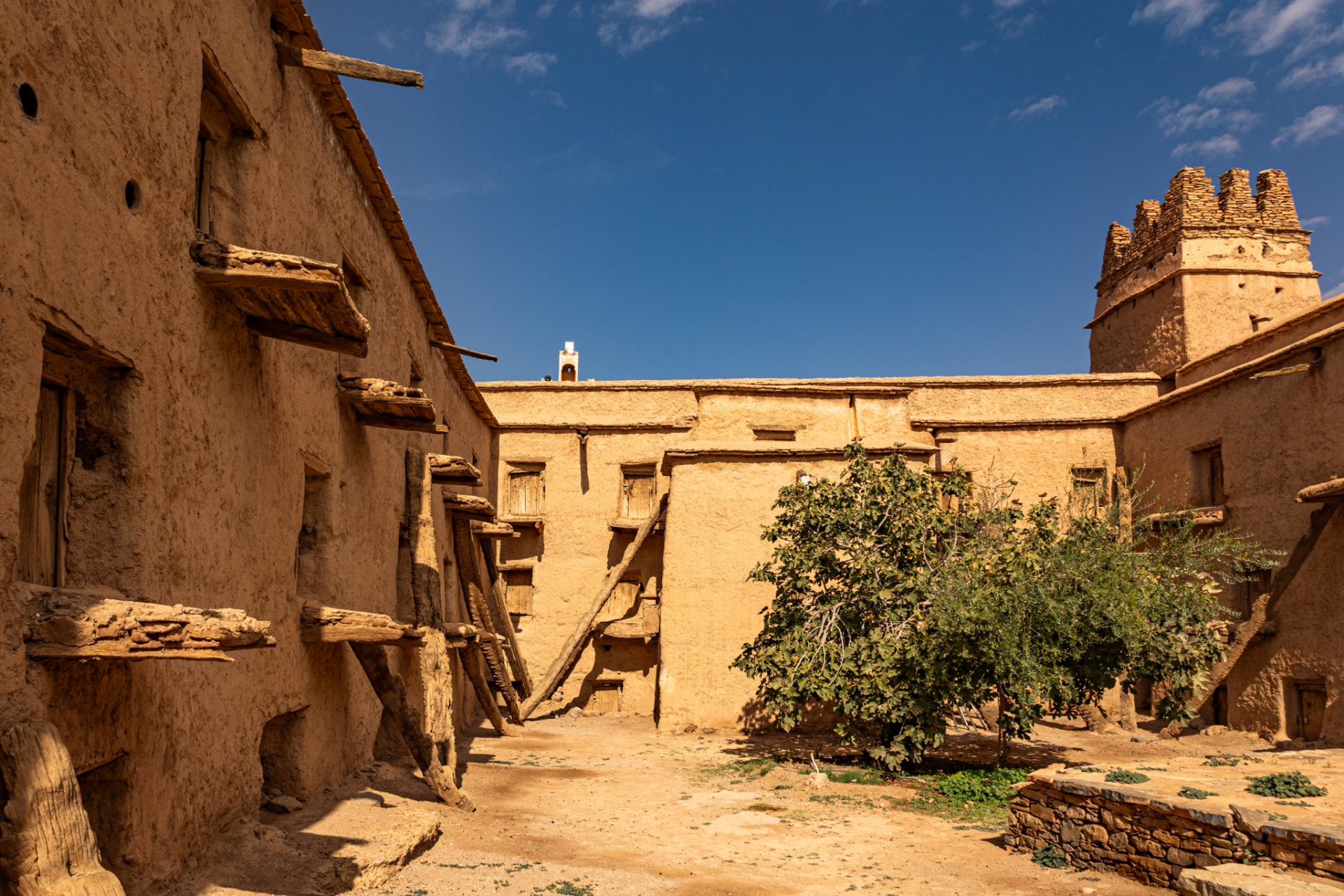
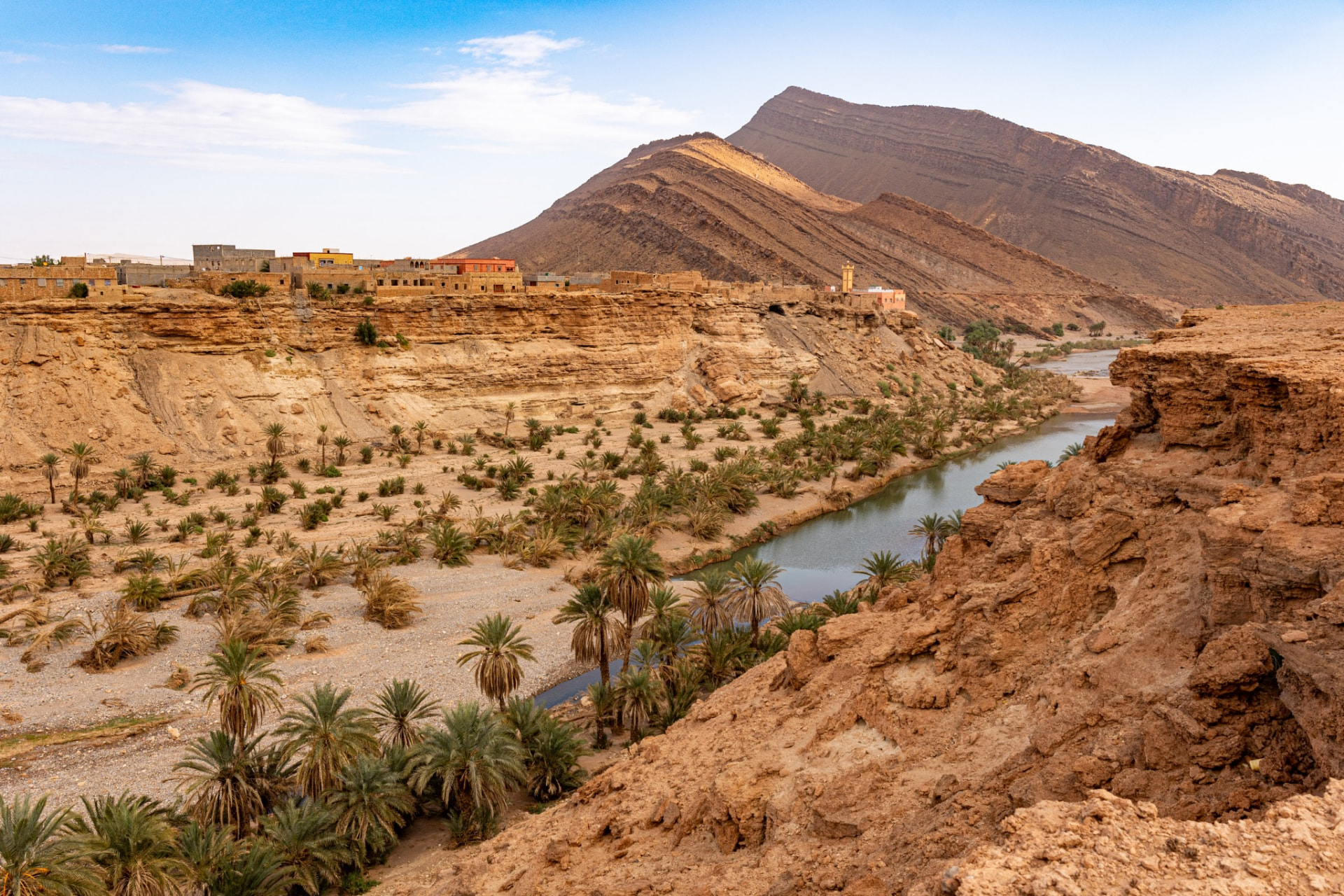
Further south-west, Amtoudi combines a spring-fed palm gorge with cliff-top fortified granaries — one of the clearest surviving illustrations anywhere in Morocco of how landscape, food security and architecture fitted together. It is a full commitment in driving terms and worth every hour.
Aït Kine and igoudar country
East towards Tata, the Aït Kine collective granary shows the same institution in a different form: dozens of individual family chambers behind a single gate, still tied to the community that built it. This is culture rather than scenery, and it needs someone to explain it — which is exactly why it stays quiet.
The southern oases and the desert margins
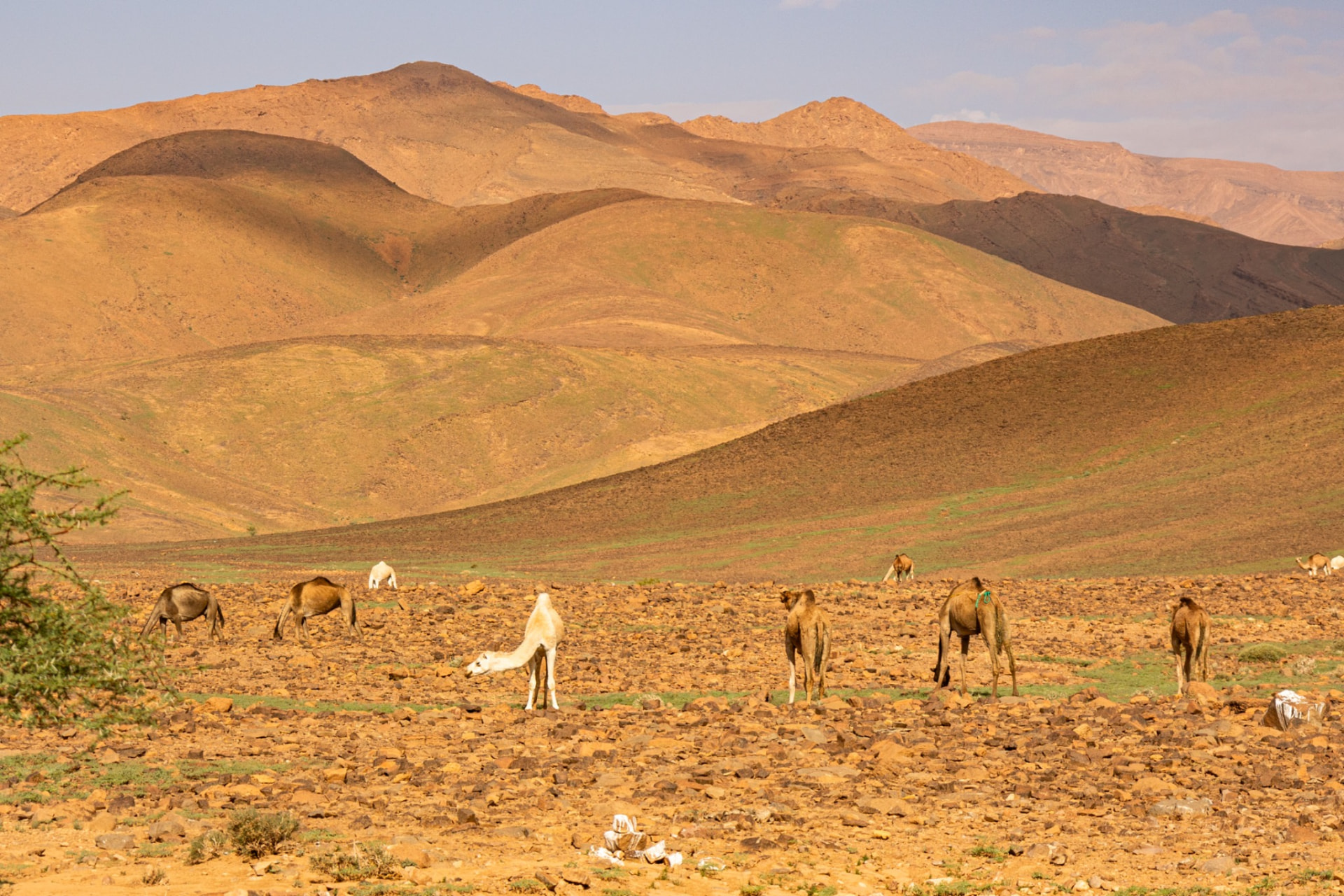
Beyond the well-travelled kasbah route, the south holds long oasis systems, palm valleys, salt and stone plains and small towns where nothing has been arranged for visitors. The Draa Valley is the best known of these and still, in its southern reaches, remarkably quiet. Further east and west lie the Tata and Foum Zguid corridors, the Iriqui basin, and stretches of stony hamada that are magnificent precisely because there is nothing in them.
The desert itself has a beaten and an unbeaten version. Erg Chebbi is reached on tarmac and has infrastructure; Erg Chigaga requires hours of off-road driving and rewards you with far more space. Our comparison of the two sets out the trade-off, and the Sahara collection includes routes built around the emptier option, including the Erg Chigaga journey.
The rural Atlantic coast
South of Agadir the coast empties out quickly. Mirleft, Sidi Ifni and the cliffs and arches around Legzira give way to long stretches of nothing at all, and then to the desert coast towards Khnifiss lagoon and, far beyond, Dakhla. Fishing villages, fog banks, wind, salt and space. It is the least "arranged" landscape in the country and the easiest one to underestimate in driving time. The Atlantic coast collection covers the practical versions of this route, including the southern coastal journey and the longer Agadir and Western Sahara circuit.
Other less-visited landscapes
- Mountain valleys off the main passes. Valleys reached by side roads from the Tichka or Tizi n'Test corridors are often almost empty a few kilometres from a busy route.
- The Middle Atlas. Cedar forest, lakes, plateau grazing and volcanic country between Fes and the south, usually driven past rather than stopped in.
- The eastern oases. Long palm belts and old ksour east of the classic circuit, with a completely different feel from the Draa.
- The Rif and the north's interior. Green, wet and largely unvisited beyond Chefchaouen.
These are not secrets. They are simply places without an industry, which is a different and more fragile thing.
Designing a route that actually works
Remote travel in Morocco fails for predictable reasons: too many places, too little slack, and a plan built from map distances. A route that works usually follows these principles.
- Go deep, not wide. One region properly beats three regions sampled.
- Two nights minimum wherever you want to see anything beyond the road.
- Anchor on market days. Rural weekly souks are the best single window into local life, and they are fixed points a route can be built around.
- Keep one flexible day per week for weather, closures and the things you did not know existed.
- Combine remote with familiar. A quiet week is more enjoyable with a comfortable city night at each end.
- Match the vehicle to the terrain. Rough tracks need a 4x4 and a driver who knows their current state, not optimism and a rental car.
Why local guides matter more here
In Marrakech a guide improves the day. In the Anti-Atlas or the southern oases, a guide is often the difference between seeing a locked door and being shown the inside of a granary by the person who holds the key. They know whether a track is passable this month, who to ask, when the market runs, which family is expecting visitors and which is not, and how to ask a question so it is welcome. They also make your presence legible to the community, which matters in places where an unexplained stranger with a camera is genuinely unusual.
Guiding is also the mechanism by which your visit produces local income — for the guide, the guardian, the café, the guest house, the cooperative. In regions with almost no tourism economy, that link should be deliberate rather than accidental.
Seasonality
- Spring is the standout for the Anti-Atlas and the southern oases: workable temperatures, green terraces, blossom in some years, and long light.
- Autumn is similarly comfortable, with harvest activity and clear air.
- Winter gives brilliant clear days in the south and genuinely cold nights; higher mountain routes can be affected by snow, and rain can close tracks quickly.
- Summer is severe inland and in the deep south. The coast and higher altitudes remain viable; the oases largely do not.
Rain is the practical wildcard. A single storm can make an unsurfaced track impassable for days, and flash flooding in dry valleys is a real hazard. This is a strong argument for local knowledge on the day rather than a plan fixed months earlier. See our seasonal guide for the national picture.
Photography and community etiquette
The further you get from tourism, the more your camera matters.
- Ask, every time. A refused photograph costs you nothing; an unwanted one costs someone their sense of privacy in their own village.
- Do not photograph children without a parent's explicit agreement.
- Put the camera down first. Greet, talk, accept tea. Photographs that come after a conversation are better in every sense.
- Avoid paying for portraits as a default; it converts hospitality into a transaction very quickly. If someone asks for payment, decide honestly whether you still want the picture.
- No drones over villages, people or protected areas; assume restrictions rather than permission.
- Send pictures back where you can. It is easy now, and it is remembered.
Beyond photography: dress conservatively in rural areas, accept hospitality graciously and in moderation, keep voices down, do not enter homes, gardens or granaries uninvited, and remember that a functioning village is not a heritage exhibit.
Honest trade-offs
Travelling beyond the obvious in Morocco costs you something, and it is fair to know what.
- Driving. A lot of it, on slow roads. This is the largest single cost.
- Comfort. Accommodation in remote areas is simple more often than luxurious. Heating, hot water and power may all be limited.
- Certainty. Sites may be shut, guardians absent, tracks impassable. Nothing can be guaranteed.
- Food choice. Excellent and limited in variety. Special diets need forward planning.
- Services. Fuel, ATMs, pharmacies and phone coverage are sparse. Distances to hospitals are long.
- Cost. Remote travel is not cheaper. Longer driving, 4x4 vehicles and specialist guides all cost more than a city-and-highlights route.
What you get in exchange is a country most visitors never see, and days that are genuinely yours.
Sample route ideas
These are shapes rather than products; every one is adjusted for season, pace and interests.
Anti-Atlas loop, around a week
Agadir or Marrakech to Tafraoute, granite valleys and villages, south-west to Amtoudi for the gorge and granaries, east towards Tata and Aït Kine, then north through the passes. Slow, dry, mountainous, almost no other visitors.
Deep south desert crossing, around a week to ten days
Marrakech over the High Atlas into the Draa, south to M'Hamid, off-road to Erg Chigaga for two nights, west through Foum Zguid and the Iriqui basin, and out towards the Anti-Atlas or the coast — a route with no backtracking.
Empty Atlantic, around a week
Marrakech or Agadir south through Mirleft and Sidi Ifni, inland to an Anti-Atlas night, back to the coast for the long stretch towards Khnifiss, with the option of continuing far south.
Return-visitor combination, two weeks
Skip the imperial cities you already know: Atlas valleys, the southern oases, Erg Chigaga, the Anti-Atlas and the rural coast, with a single medina night at each end for comfort.
Our signature journeys and private experiences can be recombined into any of these.
Frequently asked questions
Is off-the-beaten-track Morocco safe?
Rural Morocco is generally calm and hospitable. The genuine risks are practical rather than criminal: driving fatigue, flash flooding, heat, breakdowns and distance from medical care. Plan for those.
Do I need a 4x4?
For unsurfaced tracks, desert access and some Anti-Atlas routes, yes. For the surfaced roads that connect most of these regions, no — but a driver who knows current conditions is worth more than the vehicle.
Can I do this independently?
Yes, with time, patience, language ability or luck, and a tolerance for closed doors. What you will miss is access — the granary that opens, the family that invites you in, the guide who knows where the water is.
Is it suitable for families?
For older children who cope with long drives and simple accommodation, it can be excellent. For young children, mix remote days with easier bases rather than committing to a full remote circuit.
Will I be the only visitor?
Often close to it, particularly outside spring. That is the point, and it is also why behaving well matters so much.
How much time do I need?
A week for one region, done properly. Less than that turns into a driving holiday.