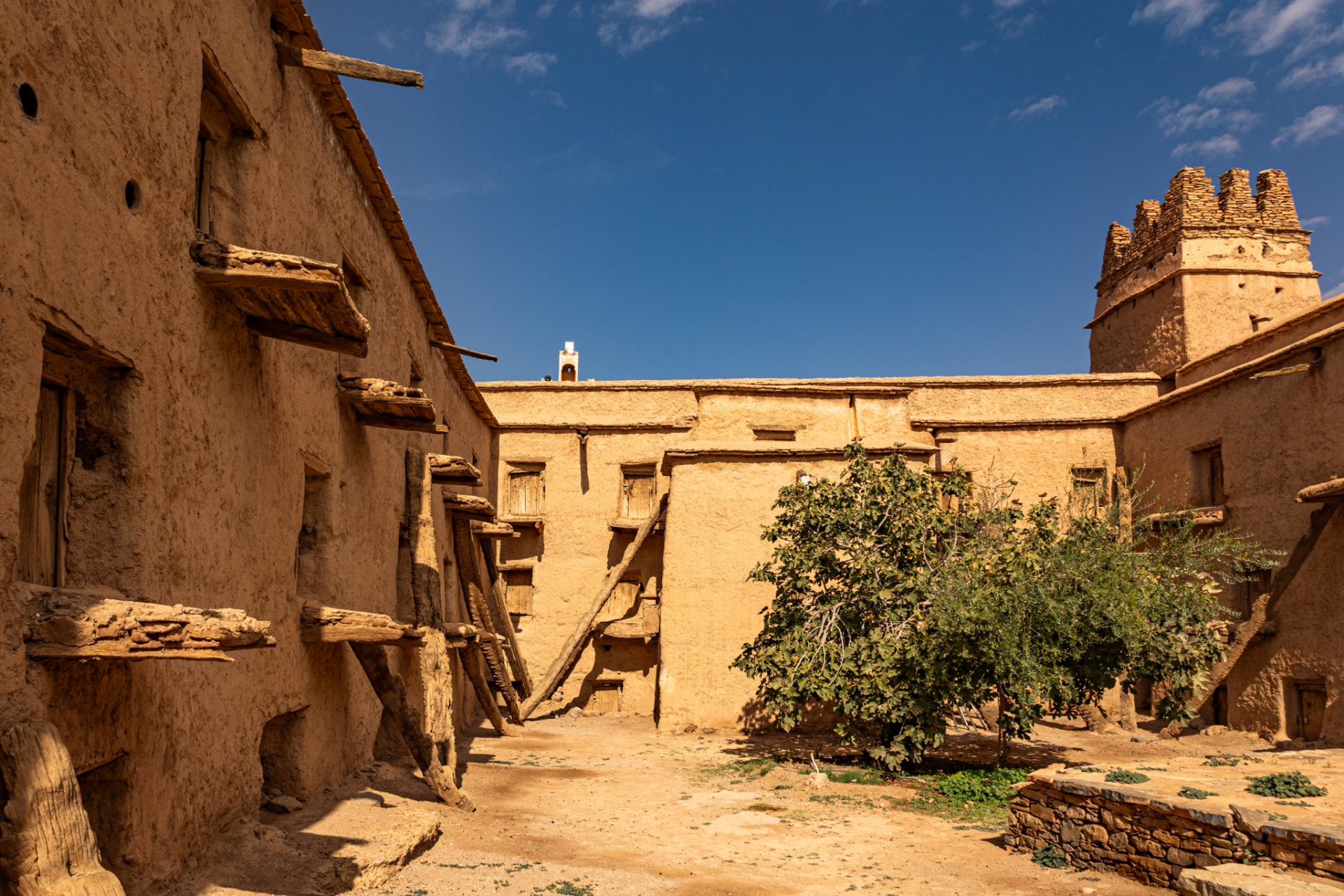
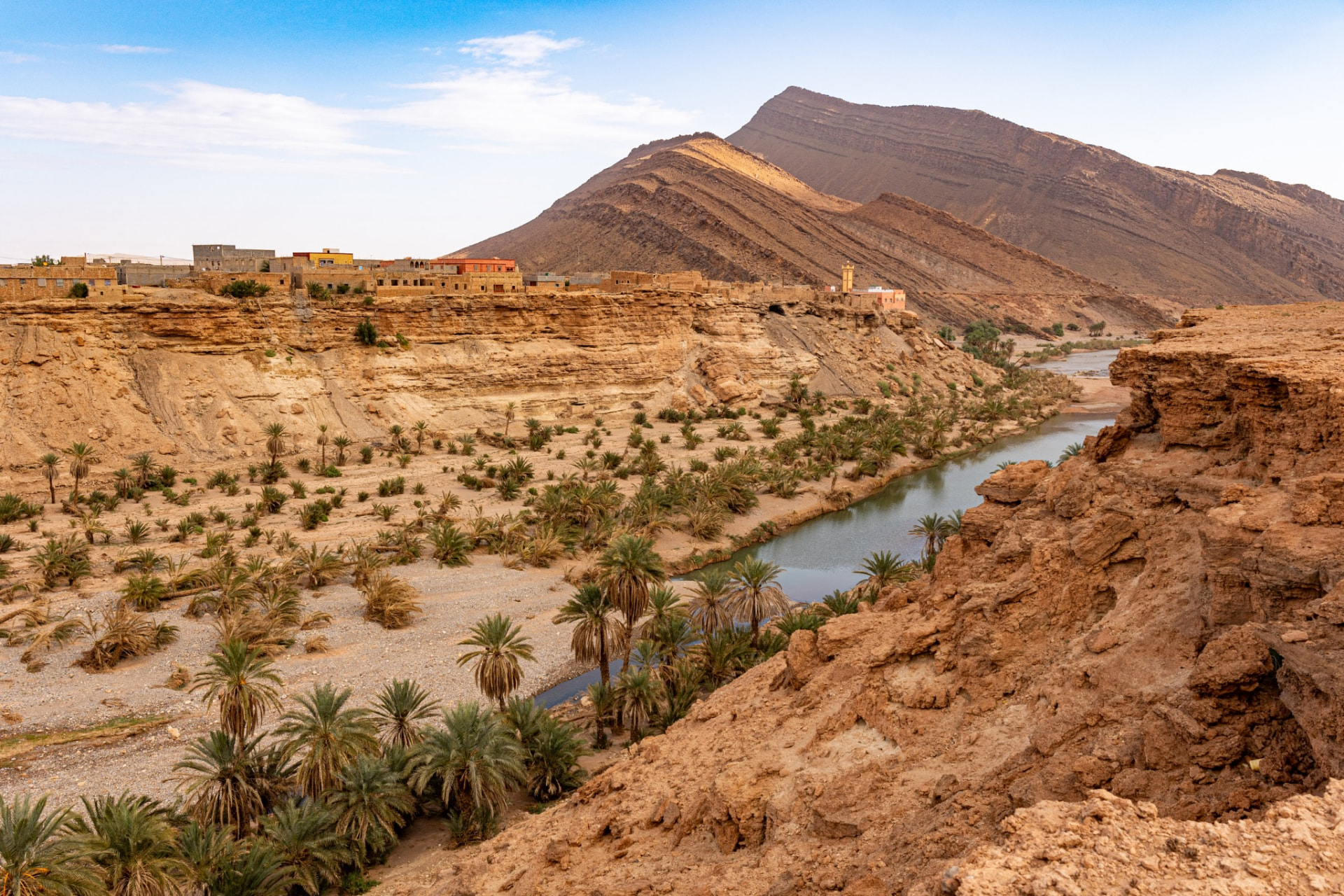
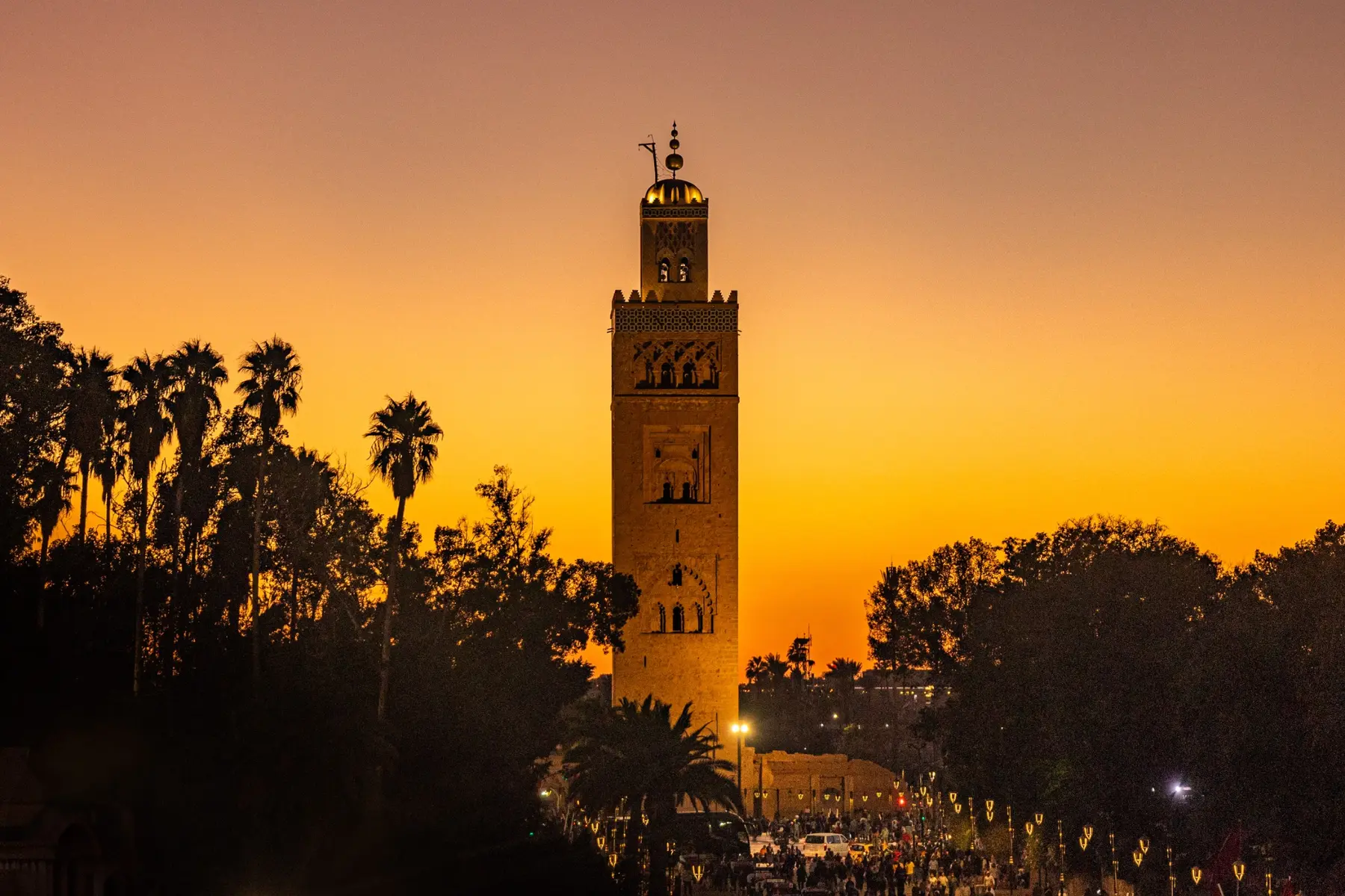
The Sahara is the largest hot desert on earth, and Morocco holds one of its most reachable and most beautiful corners. Two great sand seas — Erg Chebbi in the east, Erg Chigaga in the south — rise out of a stony plain that most travellers cross by road from Marrakech or Fes. Between them lie palm oases, black hammada, dry riverbeds, nomad tents, fossil beds, and the particular silence that people come back for.
This guide is the long version of the conversation we have with almost every traveller before a desert trip. It explains what the Moroccan Sahara actually is, the difference between Erg Chebbi, Erg Chigaga and Zagora, how to get there from each city, how many days you genuinely need, what a desert camp is like at every level, camels versus 4x4s, the best months, what to pack, what a night under the stars involves, and how to travel here without leaving a mess behind. No prices, no invented camp names — just what we would tell a friend.
What and where is the Moroccan Sahara?
The Sahara stretches across eleven countries and roughly nine million square kilometres. Morocco's share sits south and east of the Atlas Mountains, beginning where the last irrigated valleys give out. Most of it is not sand at all: the true desert here is hammada, a hard, stony, wind-scoured plain, punctuated by oases and cut by rivers that run once a year or once a decade.
The sand seas — ergs — are the exception rather than the rule, which is exactly why they feel so extraordinary when you reach one. Morocco has two of real size, and a third, lower dune field near Zagora that is often sold as the Sahara and is best understood as its doorstep.
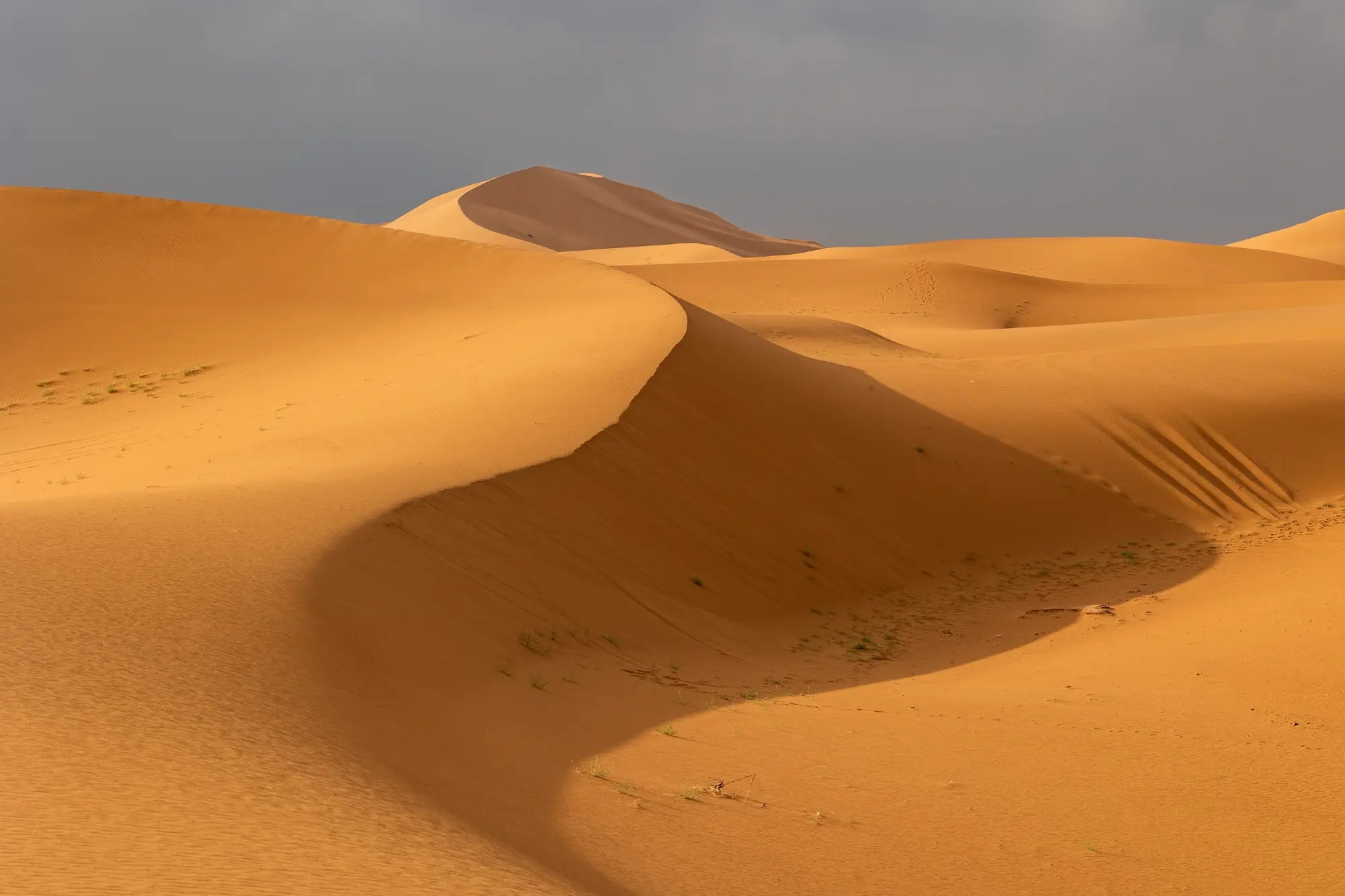
Erg Chebbi, Erg Chigaga or Zagora?
This single decision shapes the whole trip, so it is worth understanding properly.
Erg Chebbi (Merzouga)
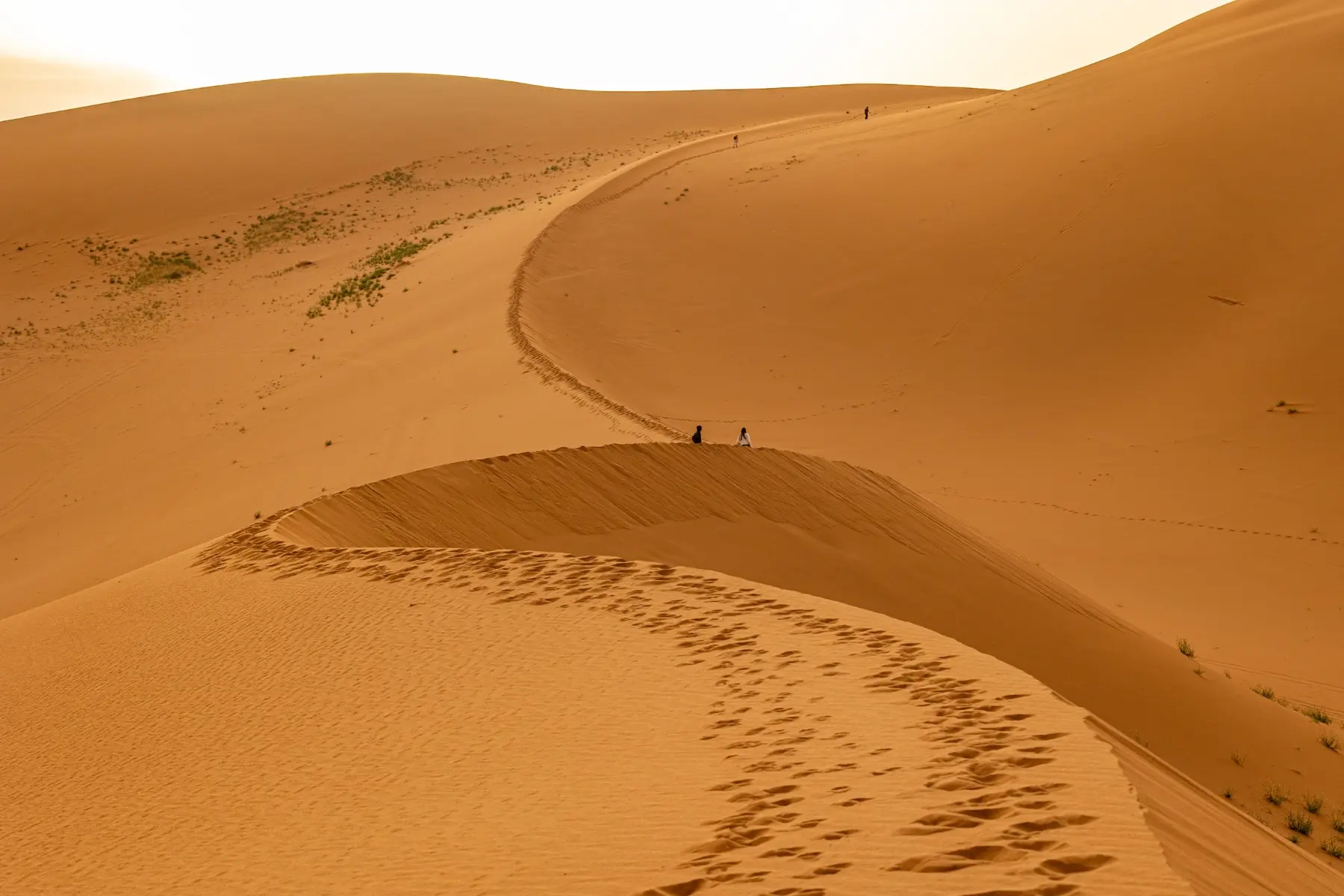
The postcard dunes: a compact, spectacular sand sea about 22 kilometres long and up to roughly 150 metres high, next to the village of Merzouga in the east. Its great advantage is access — tarmac runs to the edge of the sand, so camps are reached by a short camel ride or a ten-minute 4x4 transfer. Its disadvantage is popularity: this is where most desert traffic goes, and on a busy evening you will see other groups on the ridgelines.
Choose Erg Chebbi if your time is tight, if you are travelling with children or older parents, if you want the classic tall-dune landscape, or if you are arriving from Fes. Our 4-day Fes to Marrakech desert route and the 7-day Marrakech circuit both sleep here.
Erg Chigaga
The wild one. Far larger — roughly 40 kilometres of dunes — and much harder to reach: two to two and a half hours of off-road driving beyond M'Hamid, itself the end of the road south of the Draa valley. There is no tarmac, no village at the dunes, and no passing traffic. Camps are scattered and small. The silence at Chigaga is a different order of thing.
Choose Erg Chigaga if you have at least four days, if you are travelling from Marrakech, if remoteness matters more to you than convenience, and if a rough desert drive sounds like part of the adventure rather than an ordeal. Our Erg Chigaga journey is built for exactly that traveller, and our comparison piece, Erg Chigaga or Erg Chebbi, goes deeper into the trade-off.
Zagora
Honest answer: Zagora's dunes are modest, and the "desert" here is mostly stony plain with low sand. It exists in the market because it is the closest overnight to Marrakech — the basis of nearly every two-day budget tour. If you have only two days, a night near Zagora is better than no desert at all. If you have three, go further.
Getting to the Sahara: realistic driving times
Distances in southern Morocco are long, and the roads are mountain roads. These are honest private-vehicle timings with normal stops:
- Marrakech to Merzouga (Erg Chebbi) — roughly 9 to 10 hours over Tizi n'Tichka, through Ouarzazate, the Dades or Todra gorges and the Ziz valley. Nobody should do this in one day; two days with an overnight in Dades or Todra is the standard, and it is the better journey anyway.
- Fes to Merzouga — roughly 7 to 8 hours across the Middle Atlas cedar forests, Azrou, Midelt and the Ziz gorges. Long but manageable in a day, and often done as one.
- Marrakech to M'Hamid (for Erg Chigaga) — roughly 8 to 9 hours via Ouarzazate, Agdz and the Draa valley, plus the two-hour off-road crossing to the dunes.
- Marrakech to Zagora — roughly 6 to 7 hours over the pass and down the Draa.
- Merzouga to Marrakech via the gorges — the same two-day route in reverse, which is why circular itineraries take one road out and another back.
There are flights from Casablanca and Marrakech to Errachidia and Ouarzazate, and a small airport at Errachidia puts you within two hours of Merzouga. They are useful for travellers short on time, but they skip the valleys, and the valleys are half the journey.
How many days do you actually need?
The single most common mistake is buying too little desert and too much driving.
- Two days, one night — only realistic to Zagora from Marrakech. Twelve hours of driving for one short evening. We do not recommend it, but we understand it.
- Three days, two nights — the minimum honest Erg Chebbi trip from Marrakech: a night in Dades or Todra, a night in the dunes, and a long return. Popular and workable.
- Four days — the sweet spot. Either Marrakech–Erg Chebbi with a proper gorge day, or Fes to Marrakech across the desert, which wastes no kilometre by backtracking. This is the version most travellers wish they had chosen.
- Five to seven days — Erg Chigaga with time to reach it, or Erg Chebbi with two nights in the sand, the Draa valley, Skoura's palm groves and Aït Ben Haddou on the way home.
- Two nights in the dunes — the upgrade we push hardest. The first night is astonishment; the second is when the desert actually becomes quiet.
All of these can sit inside a longer route: see our Morocco tour packages for how the desert folds into a two-week itinerary with Fes, Marrakech and the coast.
What a desert camp is really like
"Desert camp" covers everything from a mattress in a woollen tent to a suite with plumbing, so it is worth being precise.
Standard camps
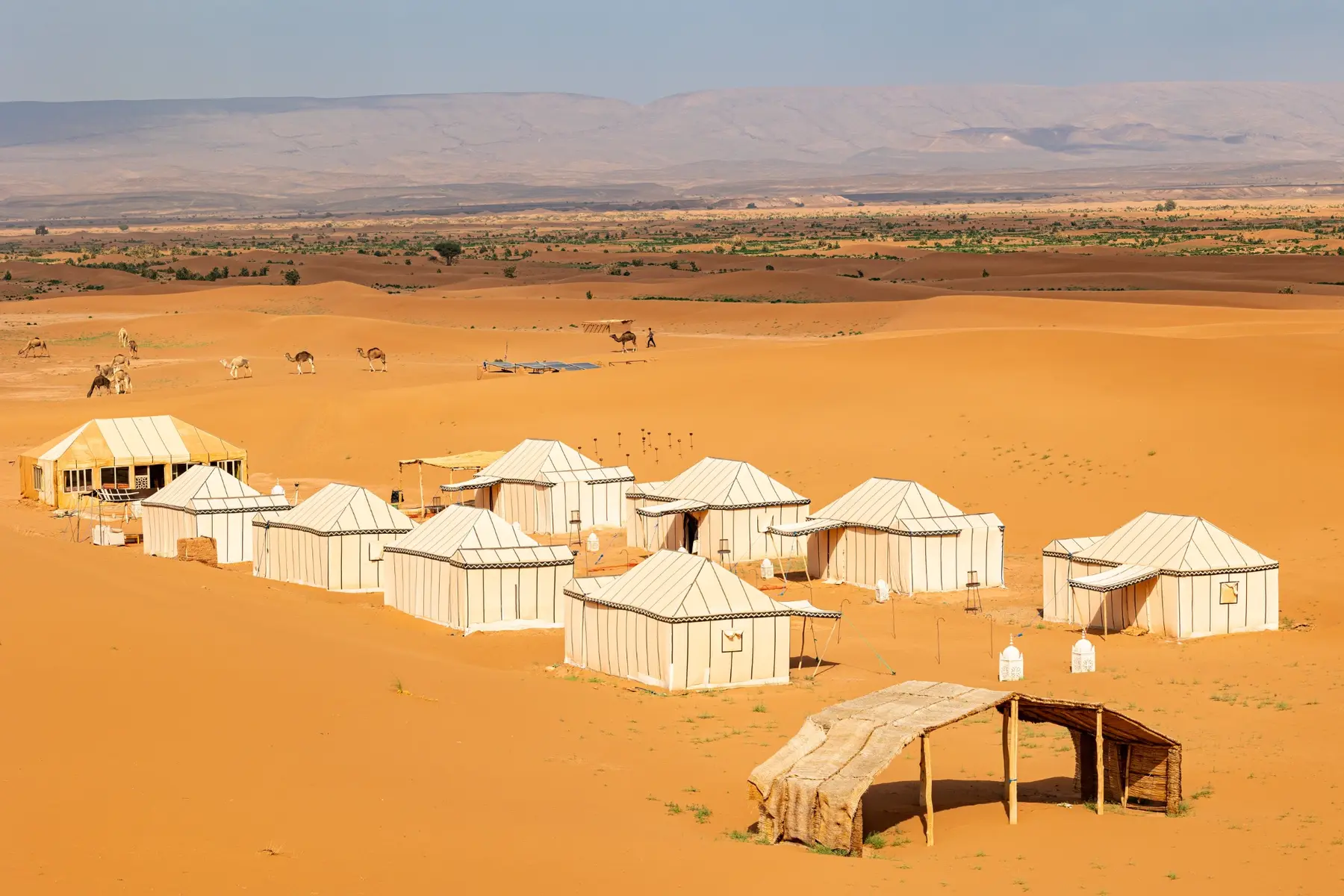
Shared washing facilities, simple beds in a nomad-style tent, a communal dinner and a fire. Warm, sociable, and entirely sufficient for one night.
Comfort and luxury camps
Private tents with a proper bed, an en-suite bathroom with a hot shower and a flushing toilet, rugs, lanterns, solar power and often a dedicated dining tent. At the top end, camps are furnished with serious care — this is the level most of our guests choose, and it is what makes a desert night work for travellers who would not otherwise camp.
Private camps
For families and small groups, whole camps can be taken privately — which changes the experience completely, because the silence is then genuinely yours.
The evening, hour by hour
You arrive in late afternoon, in time to climb a dune for sunset. Tea is poured when you come back down. Dinner is a tagine or a couscous, cooked on-site, served late by lantern light. Afterwards there are drums — sometimes a real gnaoua session, sometimes just the camp staff and whoever wants to join — and then most people walk out of the firelight to look up. In the dry desert air, with no town within an hour, the Milky Way is a solid band. Dawn is quieter and, to us, better: the light comes up pink on the ridgelines and there is nobody about.
Camel trekking, 4x4s and everything else
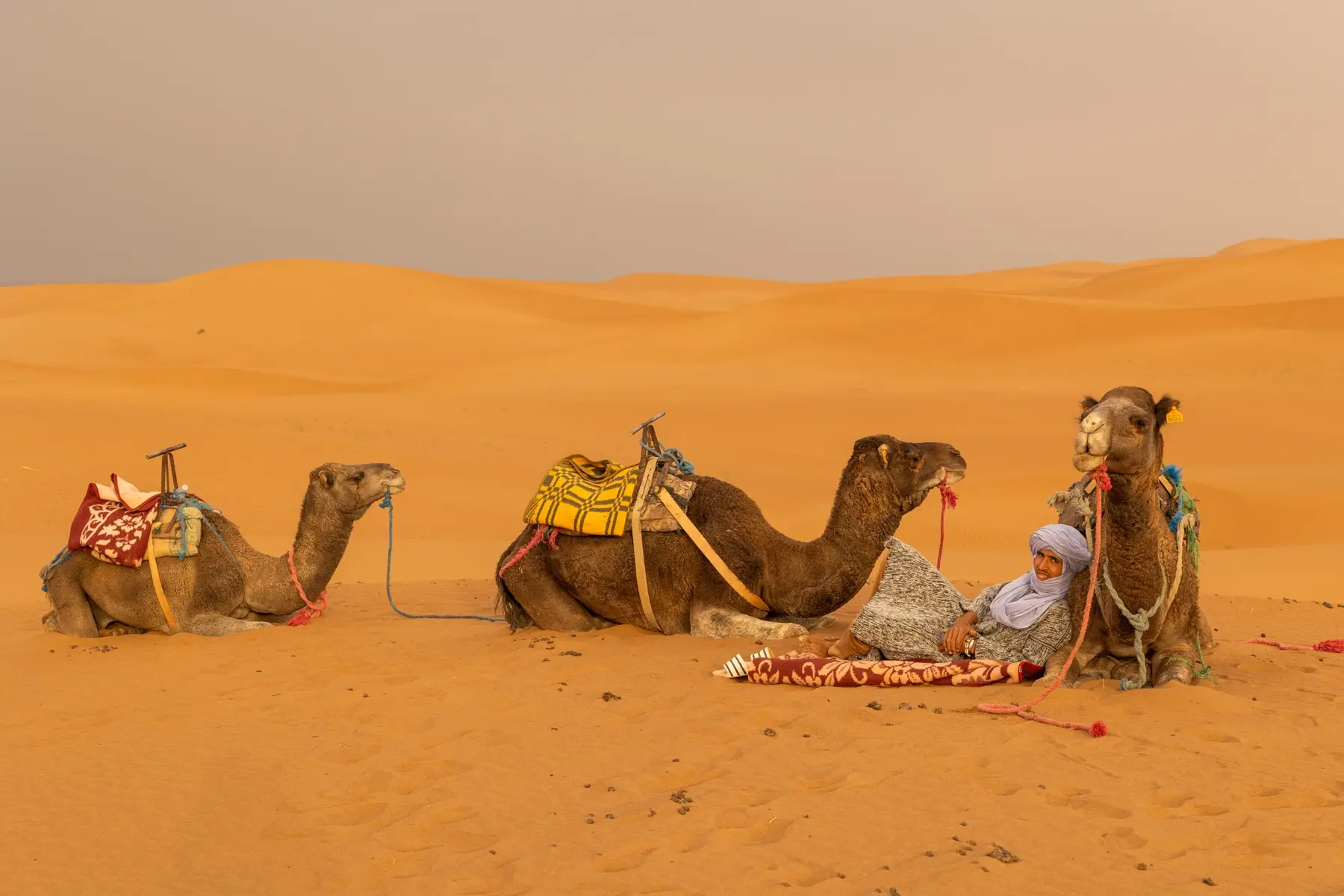
The camel — properly a dromedary — is the classic arrival, and around an hour on the sand at sunset is the amount most people genuinely enjoy. It is slower and bumpier than it looks, and it asks something of your back and knees; longer treks of half a day or more are wonderful but should be chosen deliberately, not endured.
A 4x4 transfer takes ten to twenty minutes to an Erg Chebbi camp, or two hours to Erg Chigaga, and is the sensible choice for anyone with mobility concerns, small children or a late arrival. Many travellers ride a camel out at sunset and drive back in the morning, which is the best of both.
The desert also offers sandboarding, quad biking (ask for it to be kept away from the camps — the noise carries for miles), walking with a local guide, which is the most underrated of all, and, at Erg Chebbi, visits to the Khamlia village for Gnaoua music with roots in the trans-Saharan caravan trade. Dawn walks with a nomad guide to read animal tracks in the sand are, for us, the single best hour of any desert stay.
When to visit the Moroccan Sahara
- October to November — our favourite. Warm days, cool nights, stable weather and extraordinary light. Book early; everyone else likes it too.
- March to April — the other prime window. Comfortable temperatures, occasional spring wind that lifts sand into the air and softens the horizon.
- December to February — bright, clear, empty days in the low twenties, and genuinely cold nights that can approach freezing. A magnificent season if you pack for it; camps provide heavy blankets and often a brazier.
- May and September — shoulder months: hot by afternoon, still very doable with early starts.
- June to August — 45°C and above is normal at midday. Nights stay warm enough to sleep outside, which is its own experience, but daytime sightseeing in the south becomes difficult. We plan summer desert trips around dawn and dusk, or we suggest the mountains and the coast instead.
Sandstorms are rare and usually brief, most common in spring. Rain is rare but consequential: a flash flood can close a piste for a day, which is one more argument for a private driver who knows the alternatives.
What to pack for the desert
- A warm layer and something windproof — non-negotiable in every season, including July.
- Loose, light, long clothing for daytime: it protects better than shorts and t-shirts and is more respectful in villages.
- A scarf or chèche. It keeps sun off your neck, sand out of your mouth, and it is the one souvenir you will use daily.
- Sunglasses, a hat and high-factor sun protection.
- Closed shoes for the drive and the stones; sandals for the sand itself, which is easiest barefoot.
- A head torch. Camps are lit by lantern and solar power, and the paths between tents are dark.
- A power bank; charging in camp is limited and sometimes only in the dining tent.
- Cash in dirhams for tips and village purchases — there are no cash machines past Rissani or M'Hamid.
- Any medication you need, plus rehydration salts. Dehydration sneaks up on people in dry air.
- For cameras: a dust blower and a bag that seals. Change lenses inside the tent, never on a dune.
The people of the desert
The southern oases and the sand are home to Amazigh, Arab and Sahrawi communities, and to families with Gnaoua ancestry whose music came north with the caravan trade. Semi-nomadic herding families still move with goats and camels between grazing and water, in smaller numbers than a generation ago. Merzouga and M'Hamid exist because of caravan routes that once ran to Timbuktu; Rissani's market and the ruins of Sijilmassa nearby were the northern terminus of that trade.
Meeting a nomad family, where it happens naturally and is genuinely welcomed rather than staged, is the most memorable hour many of our guests spend in Morocco. Our journal piece on nomads in Morocco explains how that life works now, and why we are careful about how those visits are arranged.
Travelling the Sahara responsibly
- Water is the scarce resource. Short showers in camp, always.
- Take out everything you bring in, including wet wipes and cigarette ends. Sand hides litter for years and then gives it back.
- Ask before photographing people; a camera at a nomad tent without permission is an intrusion anywhere in the world.
- Keep motorised sport away from camps, grazing and settlements.
- Choose camps that employ people from the nearby villages and buy their food locally — ours do, and we are happy to say which.
- Do not buy fossils or minerals of uncertain origin; plenty of the trade is honest, some of it is not.
The desert with children, and with limited mobility
The Sahara is one of the best places in Morocco to travel with children: dunes are a giant sandpit, camel rides are an event, and camp nights are pure adventure. Keep the driving days broken up, bring hats and far more water than you think, and pick Erg Chebbi over Chigaga for the shorter transfers. Our family tours guide covers pacing in detail.
Travellers with reduced mobility can absolutely reach the dunes. At Erg Chebbi a 4x4 drives to the camp door, camps at the edge of the sand can be requested, and the camel section is entirely optional. Tell us in advance and we plan the whole route around it.
Frequently asked questions
Is the Sahara desert in Morocco worth visiting?
For most travellers it is the highlight of the country. The combination of the drive south through the Atlas and the valleys, a night in a camp under an undiminished sky, and dawn on the dunes is unlike anything else in Morocco.
Which is better, Erg Chebbi or Erg Chigaga?
Erg Chebbi for tall, dramatic dunes and easy access, especially on shorter trips or from Fes. Erg Chigaga for remoteness and silence, if you have four days or more and do not mind two hours off-road.
How many days do you need for a Morocco desert tour?
Three days as an absolute minimum from Marrakech to Erg Chebbi, four days for a comfortable version, and five or more to include the Draa valley, the gorges or a second night in the sand.
How long is the drive from Marrakech to the Sahara?
Around nine to ten hours to Merzouga and eight to nine to M'Hamid, which is why both are done over two days with an overnight in the Dades or Todra gorges or the Draa valley.
Can you do a Sahara trip from Fes?
Yes, and it is the shortest approach to Erg Chebbi: roughly seven to eight hours across the Middle Atlas. Many travellers travel Fes to the desert and continue to Marrakech rather than returning the way they came.
What is the best time of year to visit the Sahara in Morocco?
October and November, then March and April. Winter is excellent by day and cold at night. July and August are extremely hot, and we plan around dawn and dusk if you must travel then.
How cold does the Sahara get at night?
Desert nights are always cooler than the day, and between December and February temperatures can approach freezing. Camps supply heavy blankets, but bring a warm layer in every season.
What are desert camps like — are there bathrooms?
At comfort and luxury level, yes: private tents with en-suite bathrooms, hot showers and flushing toilets. Standard camps use shared facilities. Both are heated in winter with blankets and braziers rather than mains power.
Is a camel trek uncomfortable?
It is bumpier than it looks. About an hour at sunset suits most people; longer treks are rewarding but should be a deliberate choice. A 4x4 transfer is always available instead.
Is the Moroccan Sahara safe?
The tourist desert regions around Merzouga, Zagora and M'Hamid are safe and well travelled. The real hazards are sun, dehydration and getting lost off-piste — which is why you travel with a driver and a local guide rather than alone in the sand.
What should you wear in the Sahara?
Loose, long, light clothing by day; a warm layer and something windproof for the evening; a scarf for sun and sand; and closed shoes for the drive. Modest dress is the norm in the villages you pass through.
Can you see the stars in the Sahara?
Spectacularly, on any clear moonless night. There is effectively no light pollution around the ergs. Ask your camp to point out the Milky Way once the fire has burned down, and give your eyes twenty minutes to adjust.