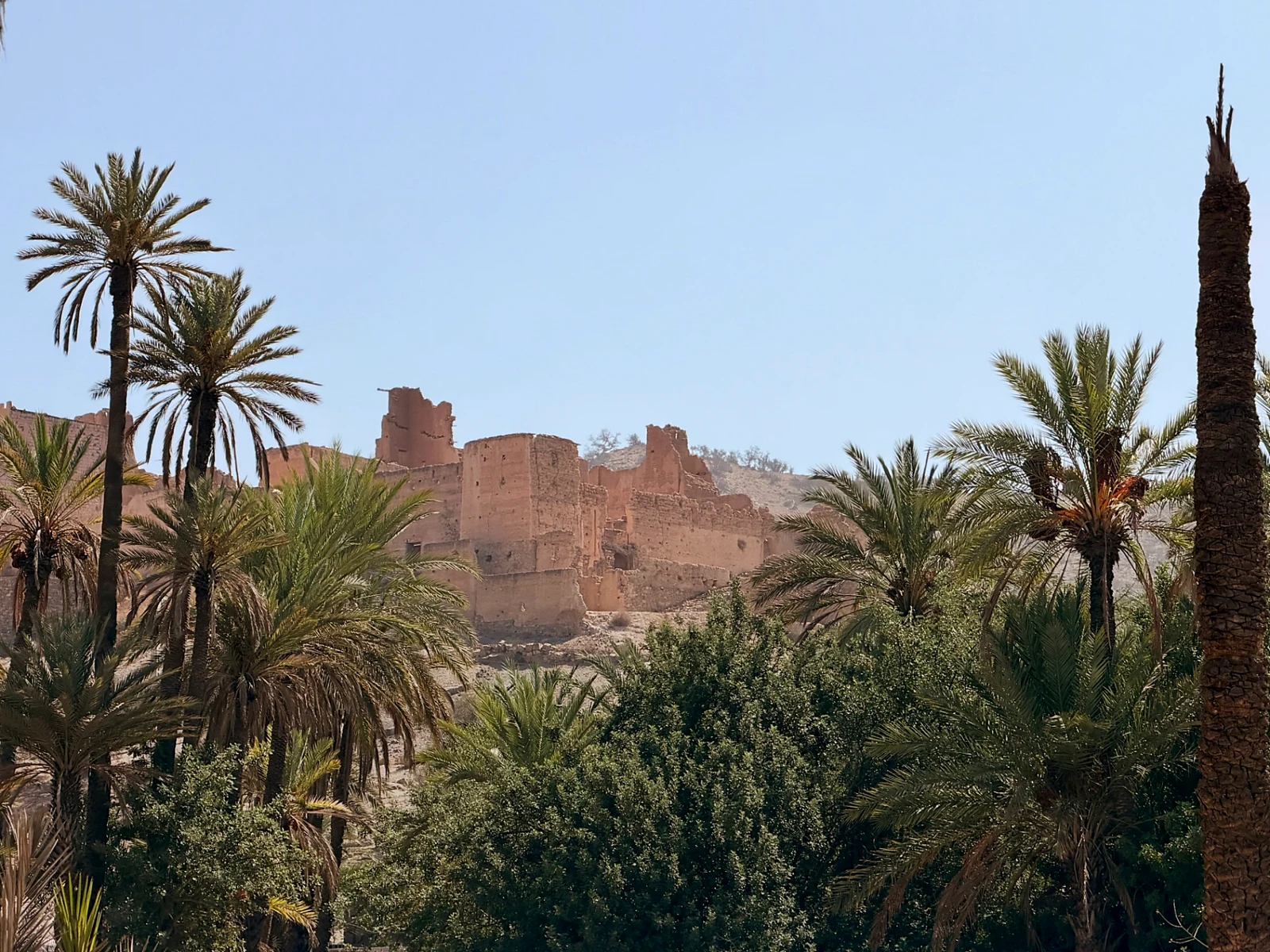
Tiout is the kind of place that makes you reconsider a one-night stop in Taroudant. From above, it is a broad sweep of palms beneath dry hills and earthen walls. On foot, it becomes something much more interesting: fruit growing in small gardens, water moving through irrigation channels, shaded paths, a working mill and people who know how this green landscape is kept alive.
I came here with my children and family during the school vacation in October 2026. We walked for about 3 hours with Mohammed, visited the palm grove and watermill, looked at the kasbah from the areas we could access, and had lunch with a local Amazigh family. It was a lovely day, but this is not only a family outing. Tiout rewards anyone curious about Morocco’s oases, agriculture, food and the quieter places between the better-known stops.
This guide brings that visit together with practical planning information: what to see in Tiout, what was actually open when we went, how to combine it with Taroudant, and why leaving an extra day can make a southern Morocco journey feel less hurried.
Where is Tiout, and why does it fit with Taroudant?
Tiout lies southeast of Taroudant in Morocco’s Souss-Massa region, where the cultivated Souss countryside meets the drier landscapes of the Anti-Atlas. Distances vary with the starting point and route: regional tourism sources describe it as about 30 kilometres away, while Morocco’s national tourism office gives 37 kilometres. Think of it as a nearby countryside excursion rather than another distant destination.
You may see the name written Tiout, Tioute or Tiyut. We use Tiout here. When booking a guide or arranging transport, specify the oasis near Taroudant and agree on the exact meeting place. Different spellings should not send you looking for different attractions.
Taroudant and Tiout complement one another. In the city, the interest is in ramparts, gates, souks and everyday market life. In the oasis, it is in shade, cultivation and water. Seeing both gives a fuller picture of the region than a late arrival, a quick look at the walls and an early departure the next morning.
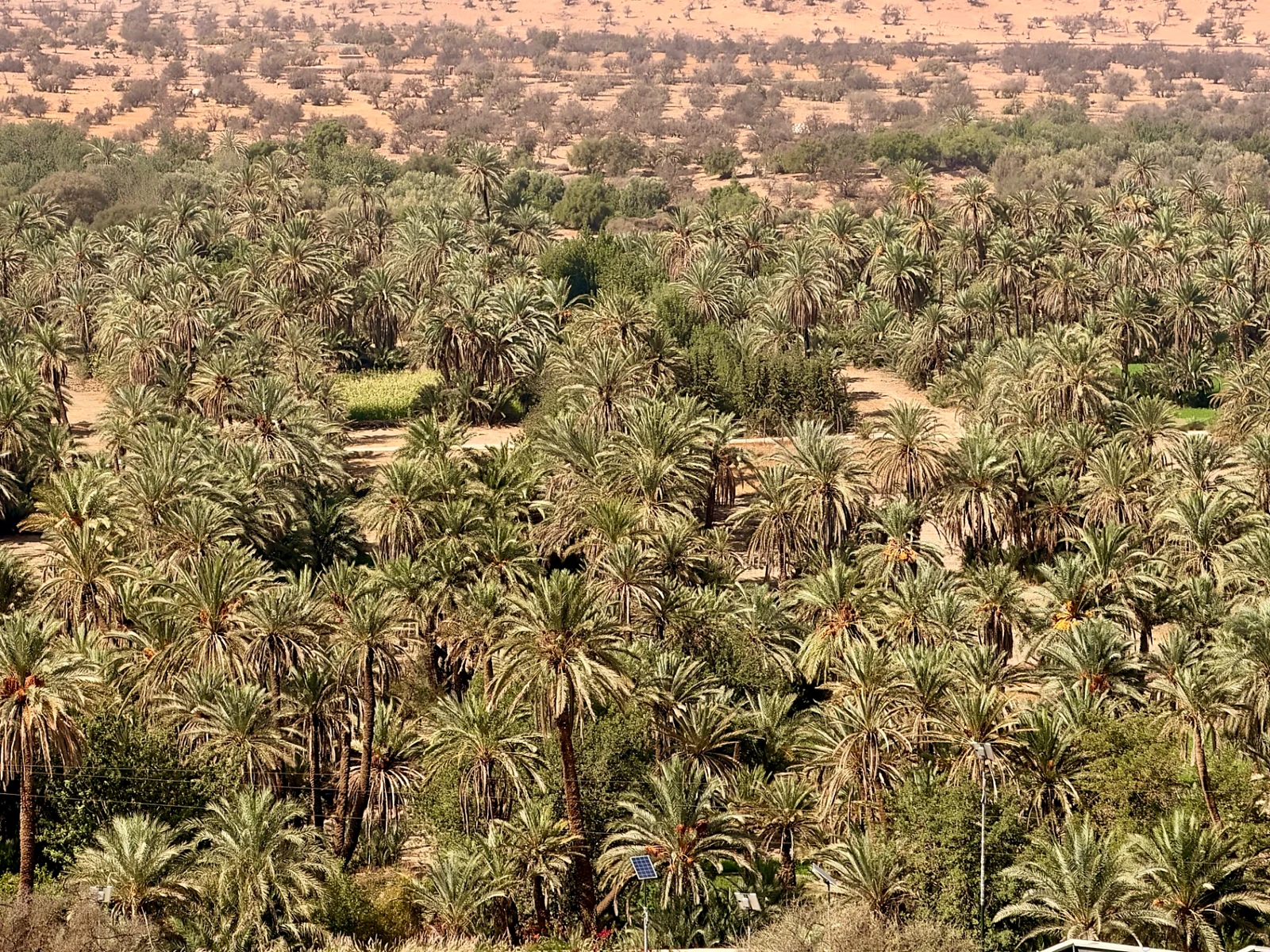
Walking through the Tiout palm grove
The palm grove is the heart of the visit. From the hilltop, the trees seem to make one continuous canopy; inside, the landscape breaks into paths, garden boundaries, small plots and irrigation channels. A walk lets you notice what a photograph from above cannot show: which plants grow beneath the palms, where water enters a garden, and how work and movement fit into the shade.
Our walk took about three hours, with time to stop and look rather than maintain a hiking pace. That is a description of our day, not a mandatory circuit or a promise that every route takes the same time. A good guide can adapt the walk to your interests and the weather: more attention to agriculture, photography or water, or a shorter outing when heat or mobility makes that sensible.
Do not assume that a broad path means the whole grove is step-free. Smaller paths, channel crossings, uneven surfaces and the climb toward the kasbah can change the effort involved. Discuss mobility needs before arranging the day, and wear shoes that are comfortable on dirt and uneven ground.
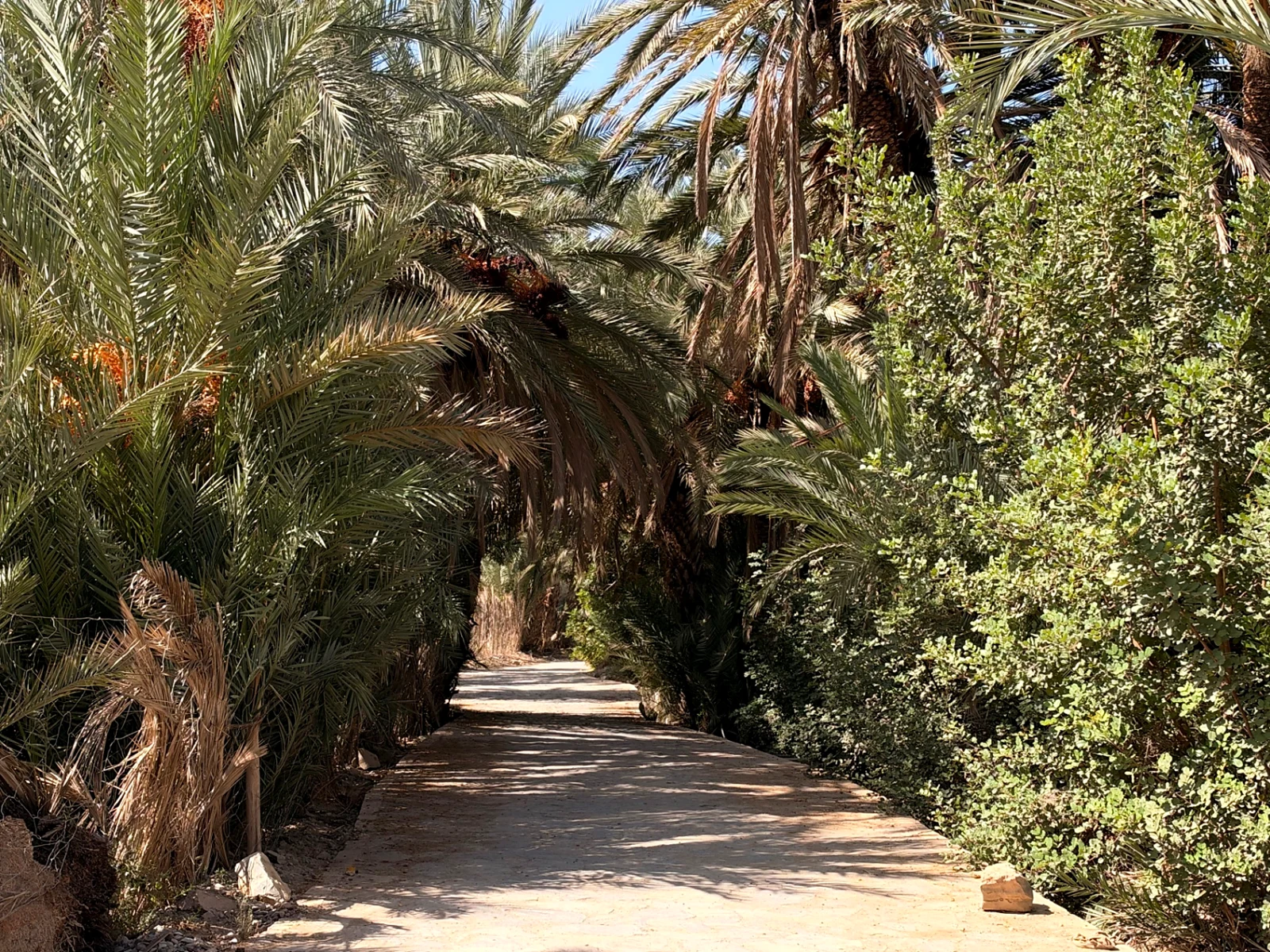
Why local guiding makes a difference
Mohammed was our guide, and he was excellent. The value was not only knowing which path to take. Local context connects what you see: the plants, springs, channels, mill and places where it is appropriate to stop. Without that, a beautiful walk can remain just a beautiful walk; with it, you begin to understand how an oasis works.
Mohammed is the person we would ask to guide a Tiout visit, subject to his availability. If you would like to walk with him, we can discuss the arrangements as part of your private journey. Guiding, lunch and transport should be agreed beforehand, including what is included and where the walk starts. There is no fixed departure or shared-group programme implied by this guide.
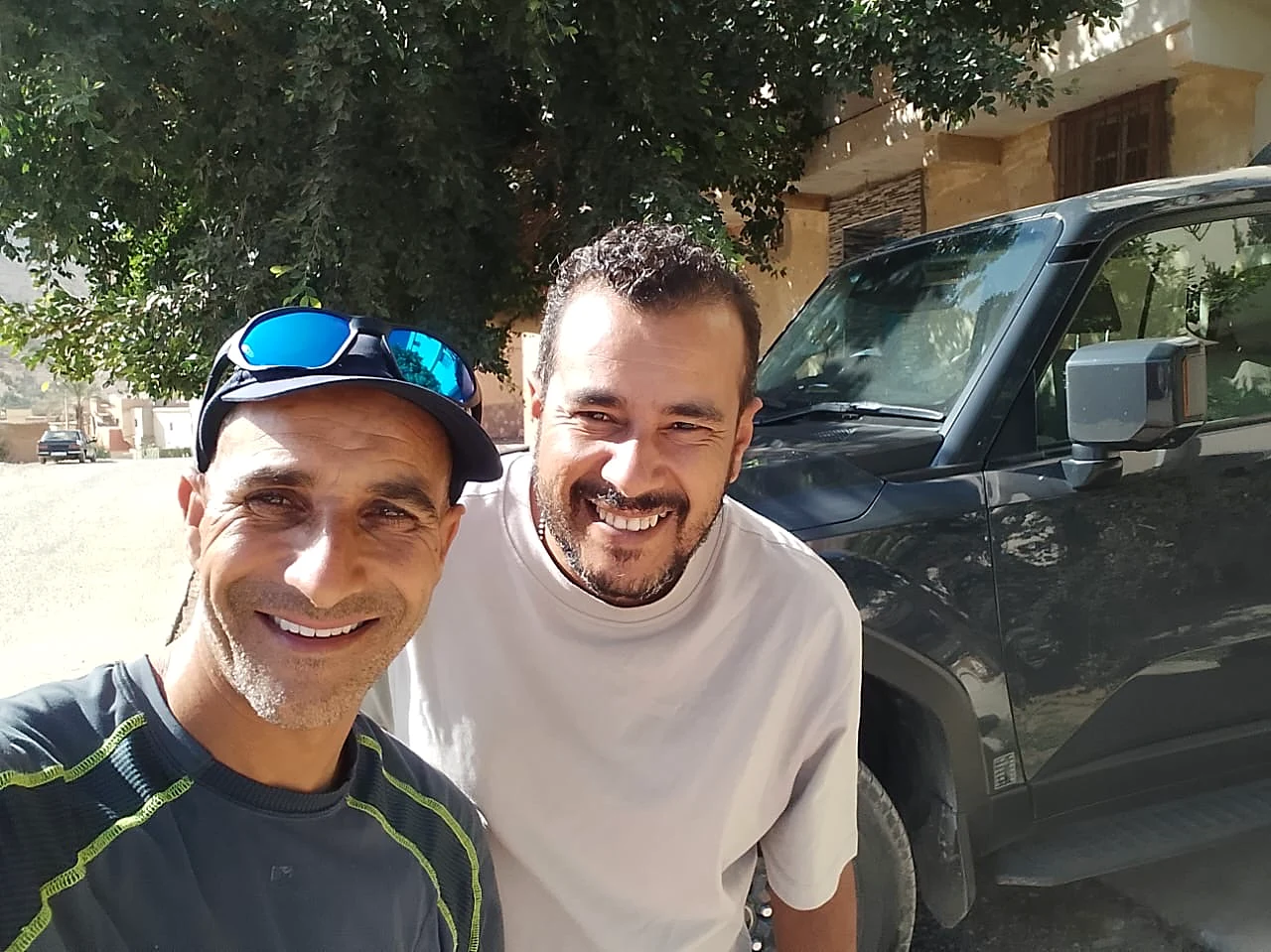
Fruit trees and gardens: the living oasis
One of the pleasures of Tiout is looking beyond the palms. We photographed papayas and other fruit growing during our October visit. The contrast is striking: dry slopes outside the grove, then leaves, fruit and small cultivated spaces within it. The oasis is not a single crop or an ornamental garden.
Morocco’s national tourism office describes Tiout’s agriculture as including barley, wheat and carob. What you see in any particular garden depends on the season, the plot and the farmer. A photograph of ripe fruit is a record of a moment, not a year-round harvest calendar. Ask your guide about the plants in front of you rather than expect every garden to match a list.
The arrangement of palms, smaller trees and cultivated ground helps explain the oasis landscape. Taller vegetation provides shade, while water and careful use of space allow other plants to grow below. It is tempting to describe this as a naturally effortless abundance; in reality, it depends on work, maintenance and access to water.
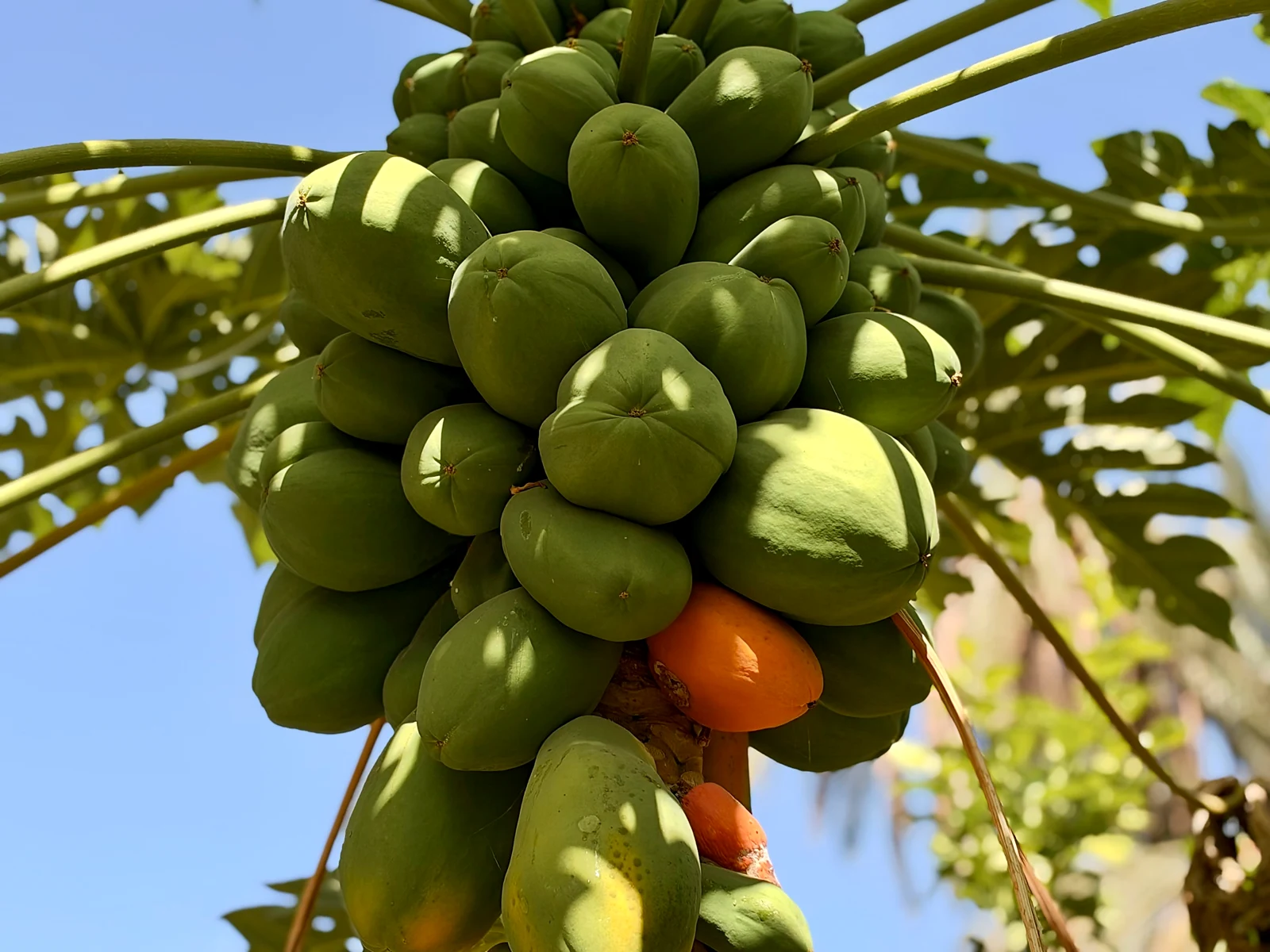
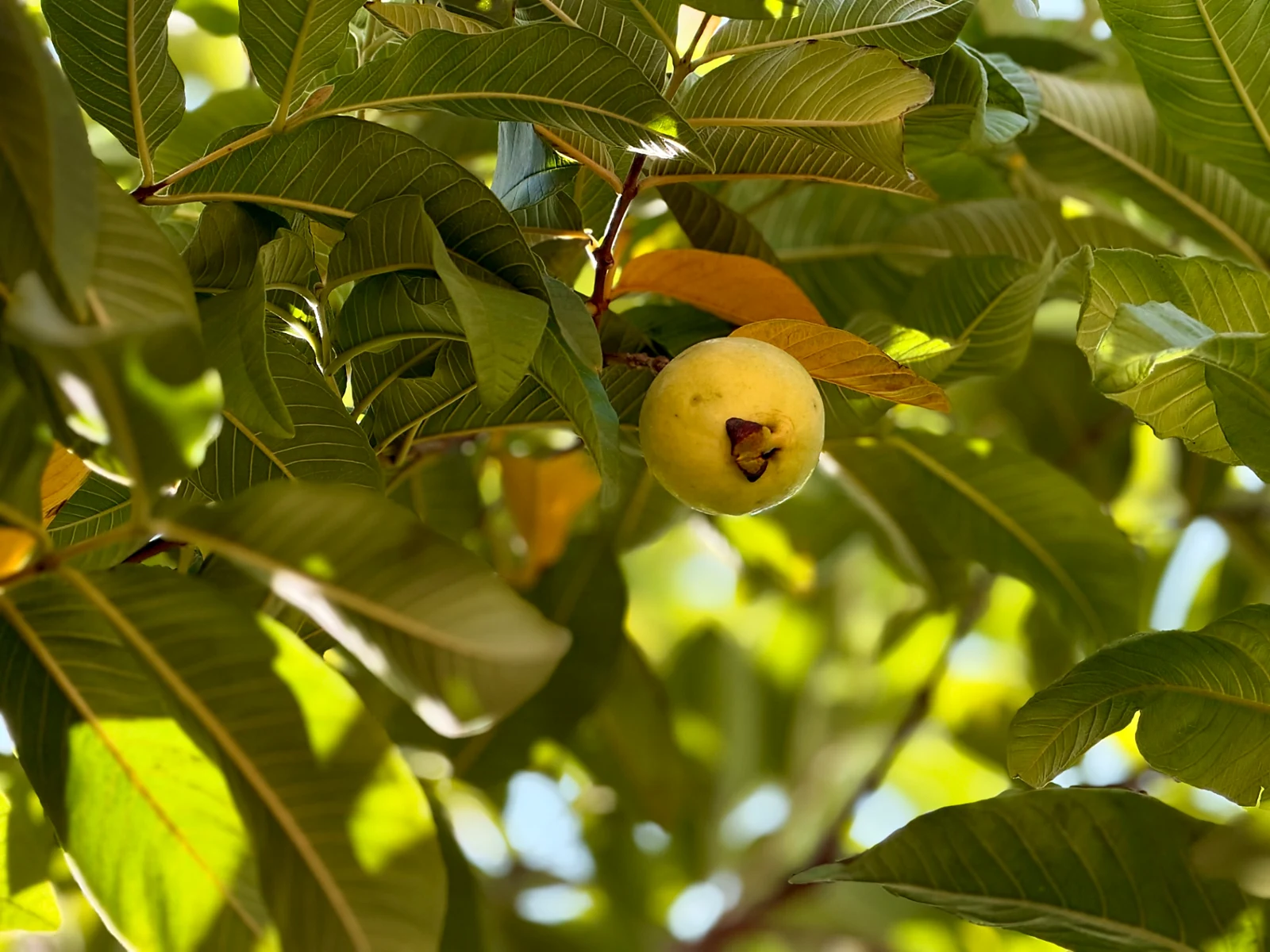
Stay on permitted paths and ask before entering cultivated plots. Do not pick fruit because it hangs near a walkway, and do not use a garden as a photography set. These are working places and somebody’s livelihood. A guide can help ask whether a closer look or a tasting is welcome, without turning either into an entitlement.
Springs and irrigation: following the water
Water is the thread that ties Tiout together. Regional tourism descriptions identify a spring upstream of the grove and a network of channels carrying water into cultivated land. During our walk we saw springs, irrigation systems and the way water was directed through the oasis.
The channels are often called seguias. Their importance is practical rather than decorative: they move water to places where crops need it. Look at the route of a channel, the small changes in level and the points where water is directed toward a plot. Those details make the relationship between the green grove and the surrounding dry countryside much clearer.
Water distribution involves local knowledge and arrangements. It would be misleading to invent a universal timetable or claim that every channel is supplied in the same way. Ask how the system works where you are standing. Equally, do not expect all channels to be flowing whenever you visit; rainfall, water availability, maintenance and the day’s distribution can affect what is visible.
Keep out of channels and do not move stones, boards or controls to create a better photograph. Avoid treating springs or irrigation water as drinking water unless its safety has been established. Bring your own drinking water, especially for a longer walk.
The watermill in Tiout
We saw a working watermill, one of the most memorable details of the day. It gives a tangible connection between the oasis’s water and the processing of food: not just water reaching crops, but water also providing power. Watching the moving mechanism makes that connection easier to understand than any general explanation of “traditional life.”
A local association’s 2023 account also describes historical watermills supplied by the irrigation network, with one operating at that time. Our October 2026 visit confirms what we personally saw, but neither account guarantees that a mill will be operating when you arrive. Ask Mohammed or your local guide about current access and whether a visit can be arranged.
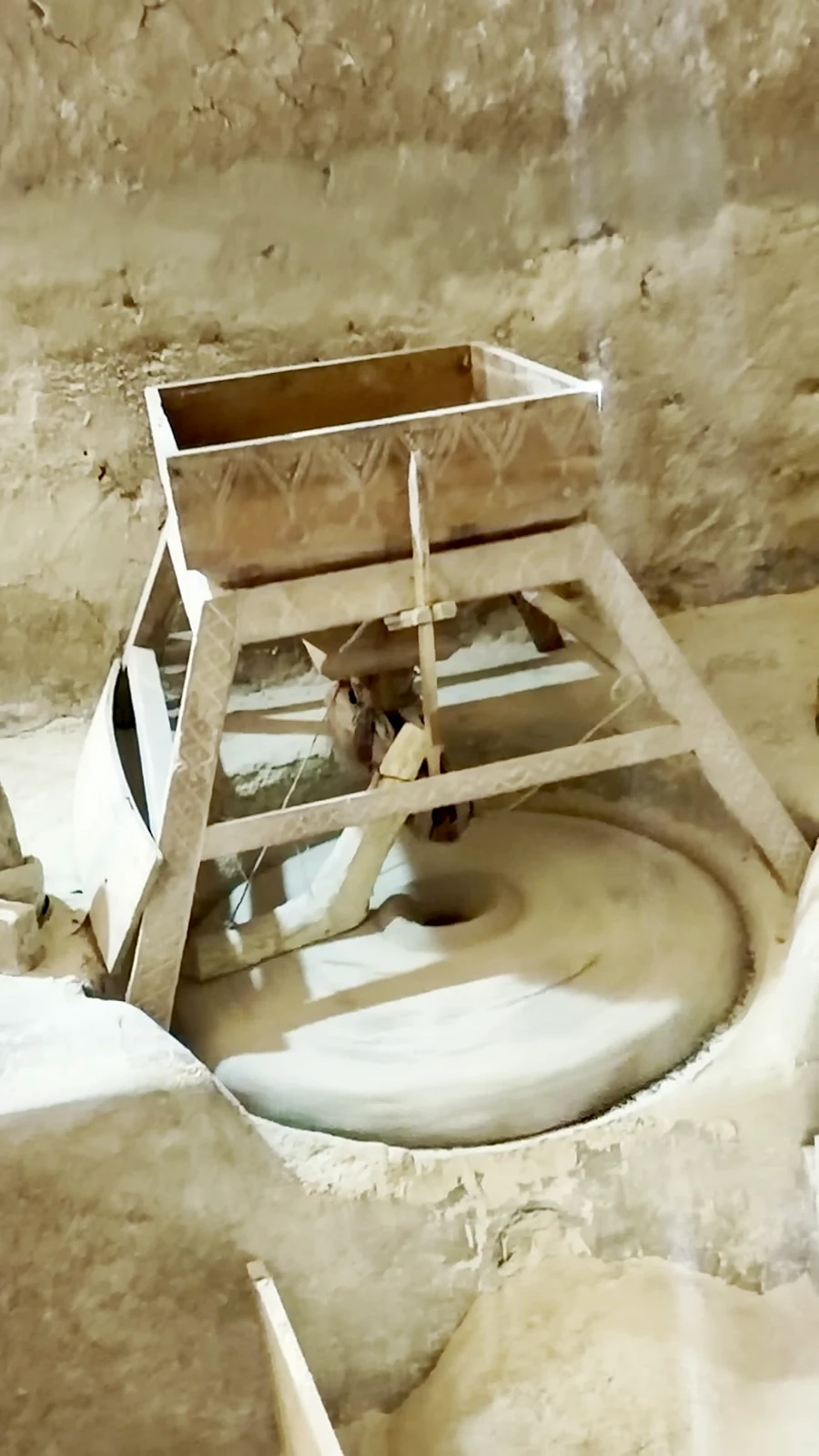
Follow the operator’s instructions, keep hands and loose clothing away from the mechanism, and ask before filming. A working mill is a place of activity rather than a display to touch. If it is closed or not running, the irrigation walk still offers an excellent way to understand the oasis.
Tiout kasbah: history, views and the reality of access
The kasbah occupies the higher ground above the palm grove. Regional tourism sources associate it with the 16th-century Saadian period and describe it as a former caid’s residence. Its position makes sense when you see the landscape: earthen walls overlooking cultivated land, settlement and the approaches from the surrounding hills.
That history is useful context, but a visit today needs a separate access explanation. On 18 October 2026, the kasbah itself was closed. We did not tour an open fortress interior. We saw ruins at the back and took photographs from the areas available to us. The restaurant was still open. These are different things, and a guide should not sell an interior visit simply because lunch can be served nearby.
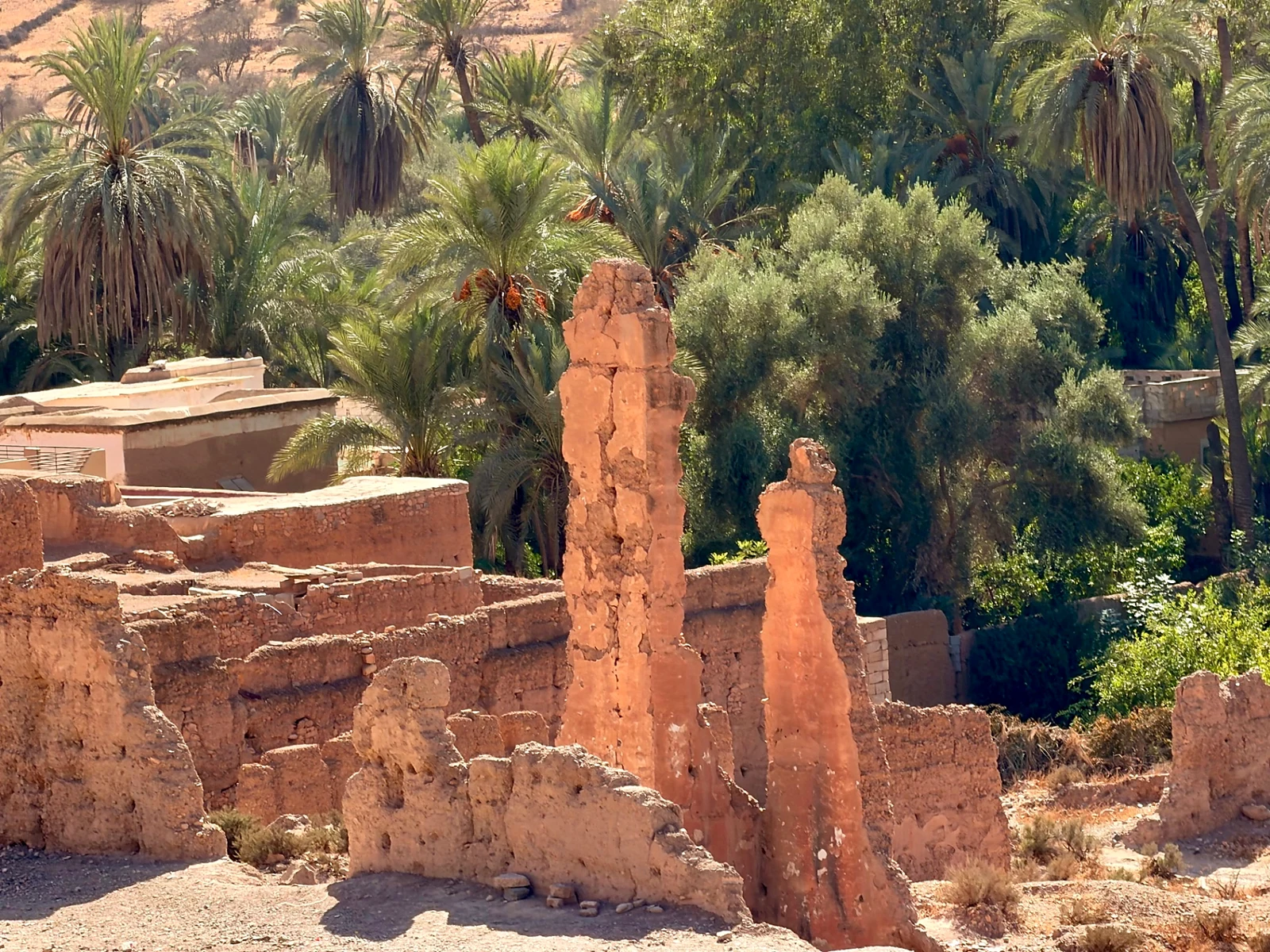
Earthen structures can be fragile, particularly where walls or roofs have deteriorated. Do not climb broken masonry, squeeze through closed openings or stand under unsupported sections for a photograph. Ask what is safe and permitted on the day, and follow the answer even if an older online article suggests wider access.
The hilltop views can be rewarding even without an interior visit. They show how the palm grove sits inside its wider landscape, with greenery giving way to dry ground. Combine that overview with the walk below: one explains the scale, the other explains the life within it.
Lunch in Tiout: a local family or the kasbah restaurant
We had lunch with a local Berber, or Amazigh, family. It was part of what made the day feel connected to the place rather than a series of stops. We are keeping the family’s identity private; hospitality does not require turning somebody’s home or face into a public attraction.
If this interests you, ask us about arranging a similar meal in advance. A family lunch depends on a willing host, availability and agreed arrangements. It is not something to assume you can request at a stranger’s door. Discuss dietary requirements early, including allergies and whether vegetarian or other preferences can be accommodated; do not presume that a particular menu is always available.
A restaurant is a perfectly good alternative. The restaurant at the kasbah was open during our visit and can make sense if you prefer a more conventional meal stop or if a family lunch is not available. Confirm opening, reservations, the meal and the price locally. The view is part of the appeal, but restaurant access must not be confused with access to closed parts of the kasbah.
Birds, goats and donkeys: notice without disturbing
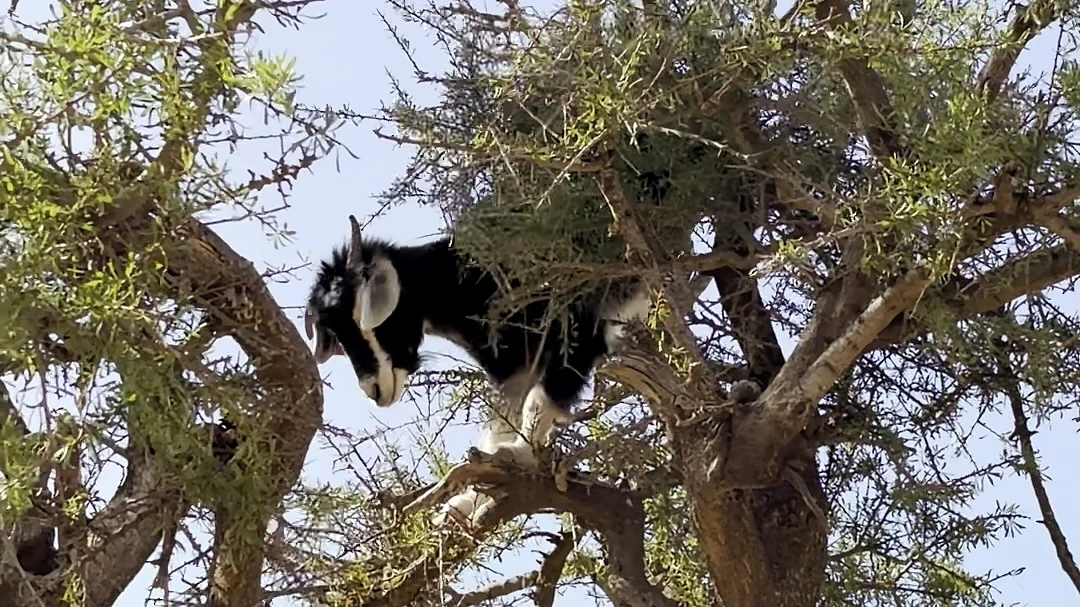
Our photographs include a stork, goats in a tree and the everyday movement around the grove. They add to the memory of the day, but none should be treated as a guaranteed performance for visitors. Look quietly, keep a respectful distance and allow animals to move away.
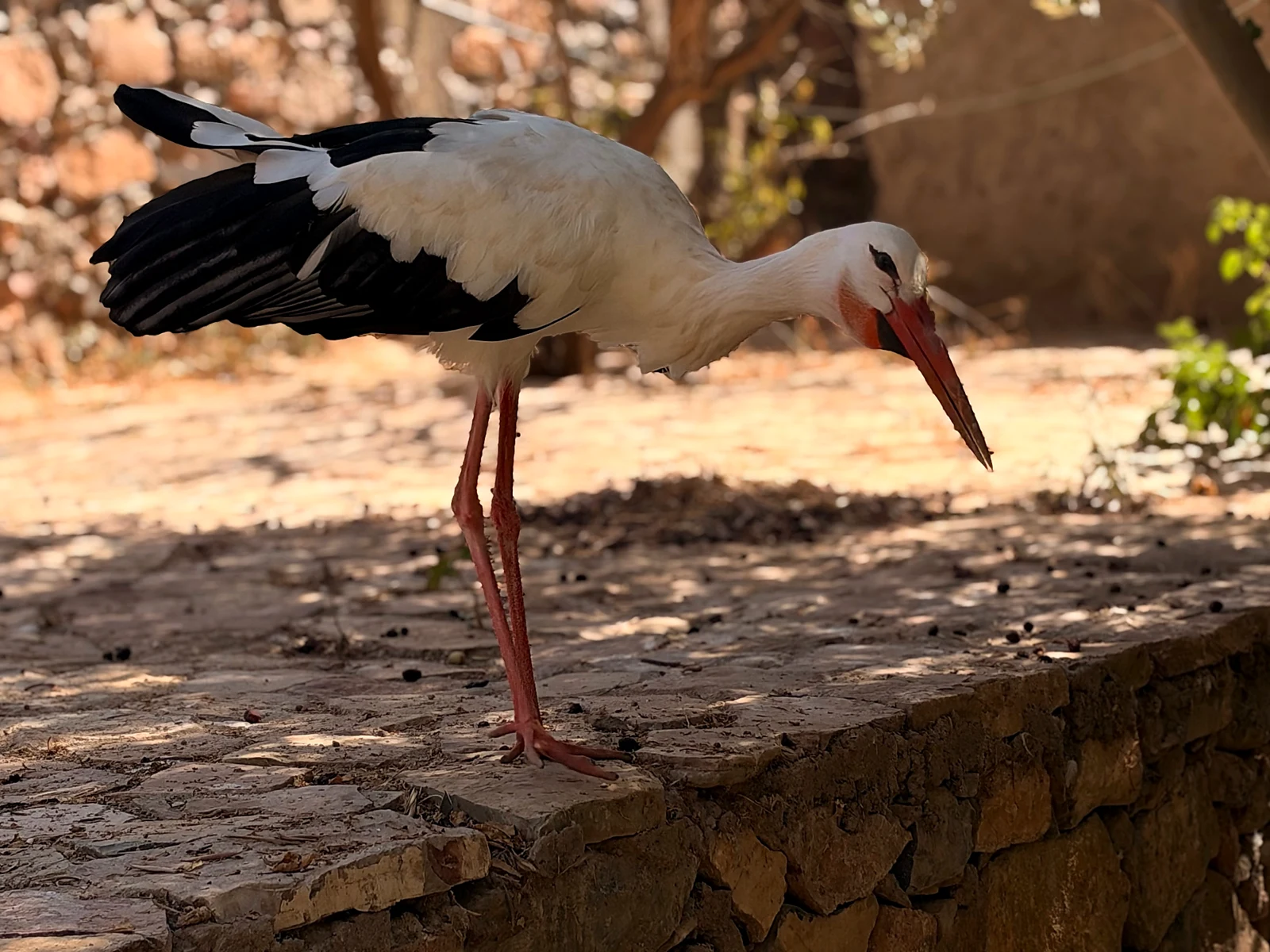
The wider Souss countryside is associated with argan trees, and goats can climb into their branches to browse. A roadside sight should not become a request to place an animal in a tree for a photograph. Avoid staged encounters, feeding and any handling that appears distressing. If wildlife is a particular interest, our bird-watching guide to Morocco offers broader ideas without promising sightings here.
Donkey rides feature in some descriptions of Tiout, but they are not necessary to explore it. We walked. Being on foot makes it easy to pause at gardens and channels, and you can choose a route suited to your comfort. If considering a ride, look carefully at the animal’s condition, load and handling and decline anything that raises welfare concerns. Ask permission before photographing people, whether they are walking, riding or working.
A relaxed Tiout day from Taroudant
There is no need to turn the outing into a rigid tour schedule. The useful sequence is simple: reach the oasis with enough time for an unhurried walk, arrange lunch, and leave room for views and the mill if access permits. Heat and the availability of your guide and host should shape the order.
- Morning: leave Taroudant after agreeing the meeting point. Begin the palm-grove walk early enough to avoid the hottest part of the day.
- During the walk: pause for gardens, fruit trees, springs and irrigation. Include the mill only where it is accessible and operating; our three-hour walk is a useful reference, not a fixed duration.
- Lunch: enjoy a prearranged family meal or a confirmed restaurant booking, allowing time to sit rather than treating it as a transfer break.
- Views and return: see the kasbah surroundings from permitted areas and return to Taroudant with time to rest. Do not force the sequence if weather or access suggests another order.
Agree what the day includes: transport, guiding, lunch and any locally payable access costs. We have not published guessed entrance fees or a fixed day-trip price because arrangements and availability matter. Your confirmed proposal should make those details clear before you commit.
Why we recommend a second night in Taroudant
One night in Taroudant can be enough for a transit stop. It is less satisfying if you want both the city and its surroundings. Arriving late, walking the walls briefly and leaving the next morning gives you little time for the souks, much less a three-hour oasis walk and lunch.
Two nights create one full day between arrival and departure. You can use that day for Tiout, with city time around it according to when you arrive and leave. If both Taroudant and the oasis are important, allow enough additional time rather than trying to see everything in one crowded day.
Think of Taroudant as its own place, not merely a “little Marrakech.” Its earthen ramparts and market life make a worthwhile urban counterpart to Tiout’s agriculture. Neither needs to compete with an imperial-city visit elsewhere in your journey. Their appeal comes from a different pace and the chance to see the Souss more closely.
Getting to Tiout from Taroudant or Agadir
From Taroudant
Private transport is the simplest way to combine the oasis, a walk and a confirmed lunch without worrying about the return. The distance is roughly 30–37 kilometres depending on your departure point and route. Regional directions approach via the N10 and R109 toward Igherm, then the Tiout turn-off. Use current directions from your guide rather than rely on an unverified shortcut through the countryside.
If travelling independently, agree the fare and return arrangements before leaving. Do not assume there is frequent onward transport from the grove at the moment you finish lunch. Confirm where you will be collected and how to contact your driver.
From Agadir
Tiout can be visited from Agadir. Regional tourism guidance gives an indicative distance of around 115 kilometres and a journey of about two hours each way; your hotel location, route and road conditions can change that. A combined Taroudant-and-Tiout day therefore involves substantial driving as well as sightseeing.
If you only have one day from the coast, choose a realistic focus rather than promise a complete city visit, a long palm walk, the mill, lunch and every viewpoint. An overnight stay in Taroudant can make the trip more enjoyable. From Marrakech, Tiout is better treated as part of a southern route with a Taroudant stay rather than a casual short excursion.
When to visit and what to bring
Inland conditions differ from the milder Atlantic coast. Cooler periods generally make a longer walk more comfortable; in hot weather, start early and shorten the outing if needed. The grove has shade, but the approaches and higher viewpoints can be exposed. Check the actual forecast, not only a broad seasonal description. Our best time to visit Morocco guide helps with the wider route.
- Comfortable walking shoes: suitable for uneven paths, dust and channel crossings.
- Water, a hat and sun protection: shade does not remove the need to prepare for heat.
- A light layer in cooler weather: especially for an early start or the return after sunset.
- A charged phone or camera: keep equipment secure and respect requests not to photograph.
- Locally useful cash: for agreed payments where card facilities are not confirmed; clarify fees before the day.
- Your dietary and mobility needs: share them before booking so the route and lunch can be planned honestly.
Do not promise yourself a particular harvest, a flowing channel or an animal sighting from a photograph. The grove changes with cultivation, water and weather. Those changes are part of visiting a living oasis, not a reason to regard a day as incomplete.
Adding Tiout to a private southern Morocco journey
Several of our existing routes already pass through Taroudant. Tiout can be discussed as a tailored addition where the itinerary allows, often by adding a second night rather than compressing an existing travel day. It is not automatically included in the published itineraries below.
- Southern Morocco Photography Tour: a natural match for oasis landscapes and earthen architecture, with Taroudant already on the route toward Tafraout and the Anti-Atlas.
- Atlas Trekking and Erg Chigaga Tour: passes through Taroudant before Igherm, Aït Kine and Tata. Ask about extra time for Tiout rather than replacing the route’s onward travel.
- Morocco Sahara Desert Tour: connects Erg Chigaga, Taroudant and the southern Atlantic; a slower Taroudant stay can add a different oasis perspective.
- Southern coastal tour from Marrakech to Mirleft: includes Taroudant on the inland return. An additional night can separate the city and Tiout from the drive back.
- Agadir and Western Sahara journey: already allows two Taroudant nights in its suggested route, making Tiout worth discussing for the surrounding-countryside day.
For more southern context, read about Aït Kine’s living collective granary near Tata and travelling off the beaten track in Morocco. They are different visits, not nearby stops to squeeze into a Tiout day. Longer Anti-Atlas routes need their own careful pacing.
If you would like Tiout to be part of your trip, tell us your dates and the route you have in mind. We can discuss time in Taroudant, guiding with Mohammed where available, and lunch arrangements within a journey created just for your party. Any extra night, guiding or meal is confirmed in your personalised proposal, not assumed from this article.
Frequently asked questions about Tiout and Taroudant
Where is Tiout oasis in Morocco?
Tiout is near Taroudant in the Souss-Massa region of southwestern Morocco, roughly 30–37 kilometres southeast of the city. It is an inland agricultural oasis at the edge of the Anti-Atlas, not a Sahara dune destination.
Is Tiout the same place as Tioute or Tiyut?
These spellings are used for the same oasis near Taroudant. This guide uses Tiout. When arranging transport, specify Tiout near Taroudant and check the meeting point rather than relying only on a spelling.
Is Tiout worth visiting?
Yes, especially if you enjoy walking, cultivated landscapes, irrigation, local food and earthen architecture. The rewarding visit is a slow palm-grove walk with local context, rather than only a brief kasbah photo stop.
How long should you spend in Tiout?
Oualid’s guided walk with Mohammed lasted about three hours on his October 2026 visit. Allow more time for lunch, the hilltop views, the watermill where accessible and transport. A shorter walk can be discussed according to heat, mobility and interests.
Can you visit Tiout kasbah?
During Oualid’s visit on 18 October 2026, the kasbah interior was closed, while its restaurant remained open. He saw ruins behind the kasbah. These are dated observations: confirm current access locally and do not enter unstable or closed areas.
Is the restaurant at Tiout kasbah open?
It was open during Oualid’s October 2026 visit. Opening, meal availability and reservations should be confirmed before travelling; the restaurant being open does not mean the kasbah interior is accessible.
Does Tiout have a working watermill?
Oualid saw a working watermill during his October 2026 visit. Ask your guide whether it is operating and accessible on your day; water levels, maintenance and local arrangements can affect what you see.
Can you have lunch with a local family in Tiout?
Oualid had lunch with an Amazigh/Berber family. A similar lunch can be requested in advance, subject to a willing host and availability. It is not a guaranteed walk-in attraction; a restaurant meal is another option.
Can you visit Tiout from Agadir?
Yes. Regional tourism guidance puts the drive at roughly 115 kilometres and around two hours each way, depending on the starting point, route and traffic. Combine Tiout with Taroudant carefully so the walk and lunch are not squeezed between long transfers.
Do you have to ride a donkey to explore Tiout?
No. Oualid explored the palm grove on foot with a local guide. Walking lets you stop for plants, irrigation and conversation. If considering an animal ride, assess welfare and conditions first; it is not necessary for the visit.
When is the best time to visit Tiout?
Cooler months are generally more comfortable for a long walk inland. In hot weather, begin early, carry water and adjust the route. Fruit, flowing channels and wildlife vary with season and conditions, so do not expect every detail in the photographs on every visit.
Should you stay two nights in Taroudant?
Two nights are a useful choice when you want time for Taroudant’s walls and souks as well as a relaxed Tiout day. An existing private tour can be adapted where practical; an extra night changes the duration and confirmed proposal rather than becoming an automatic inclusion.
Sources, visit notes and photography
The walk, Mohammed’s guiding, family lunch, working mill and kasbah access notes come from Oualid’s visit on 18 October 2026. Historical and regional context draws on the sources below. Online tourism descriptions are not live opening notices: check locally before arranging access or meals.
- Moroccan National Tourist Office: nature around Taroudant — location and agricultural context.
- Visit Agadir: oasis of Tiout — spring, cultivation and kasbah history.
- Souss-Massa regional tourism development: Tiout palm grove — irrigation and regional context; development proposals are not treated here as completed facilities.
- Explore Agadir Souss-Massa: Tiout kasbah — restaurant context and indicative road directions.
- ABA-VBA, August 2023: Tiout and agricultural tourism — historical watermill account, not current opening confirmation.
All photographs are from Oualid’s own October 2026 visit, including two video stills. Only restrained photographic adjustments have been applied; people, wildlife and landscapes have not been replaced or reconstructed.