Dakhla is one of the few places in Morocco where the country's relationship with the Atlantic is impossible to ignore. A long, thin peninsula reaches south-west into the ocean; on one side lies a shallow, sheltered lagoon, on the other the open Atlantic with its cold current, swell and wind. Between the two sits a working port town where fishing is not a tourist activity bolted onto a resort but the reason the settlement exists at all.
This guide is written for travellers who are curious about fishing and coastal life around Dakhla and want an accurate picture before they plan anything: the geography, the difference between lagoon and ocean, the broad styles of fishing practised here, how seasons behave, what the port tells you about the local economy, and the responsible and regulatory questions that matter. It deliberately avoids promising catches, quoting prices or naming operators, because none of those things stay true for long.
Where Dakhla is, and why the geography defines everything
Dakhla sits far down Morocco's Atlantic seaboard, well south of Agadir, Tan-Tan and Laâyoune, on a narrow spit of land that runs parallel to the mainland. That single geographic fact creates two entirely different bodies of water within a few hundred metres of each other, and almost every question about fishing here resolves into "which side of the peninsula are we talking about?"
The lagoon
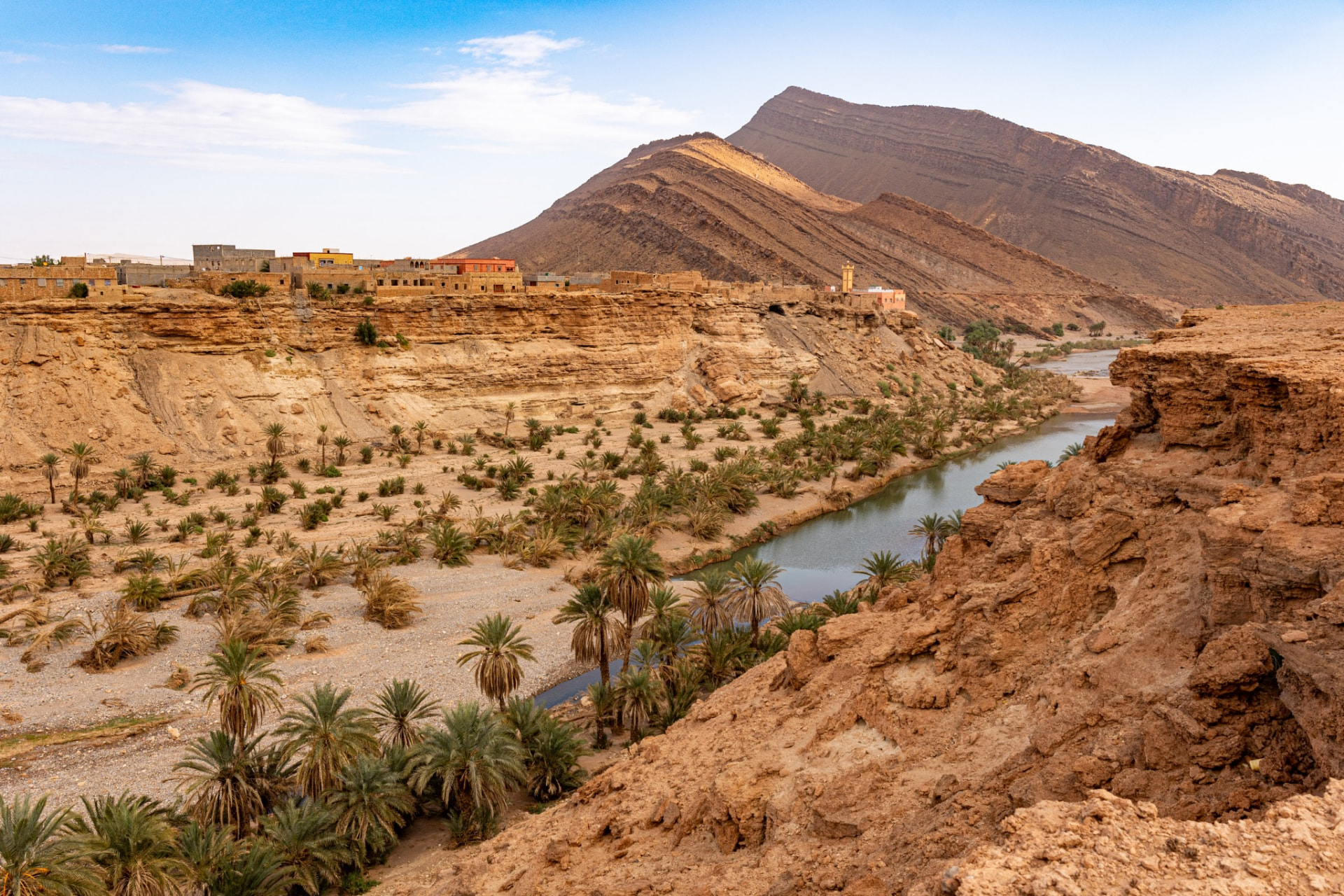
The lagoon is a broad, shallow, largely protected body of water between the peninsula and the mainland. It is tidal, with wide sand and mudflats exposed at low water, and it warms and calms in a way the open ocean never does. Because it is sheltered, it is where the kitesurfing camps cluster, where small boats can operate on days when the ocean is unworkable, and where shallow-water species and juvenile fish find shelter. Depths are modest and conditions change quickly with the tide — a channel that carries a boat comfortably at high water can be a sandbank three hours later.
The open Atlantic
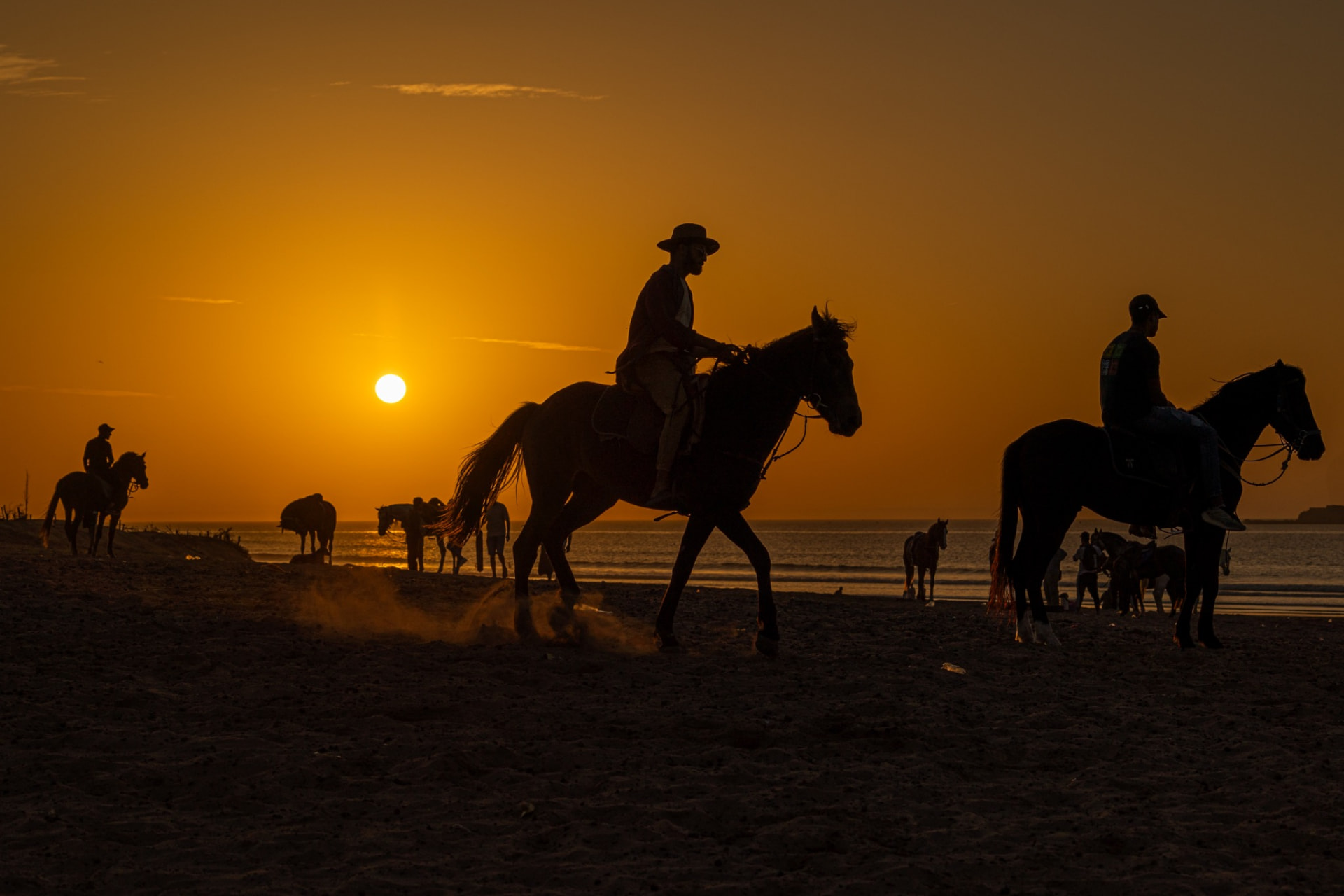
On the seaward side, the picture reverses. The Canary Current brings cool, nutrient-rich water up against the coast, and seasonal upwelling drives one of the more productive fishing zones in the eastern Atlantic. Swell arrives from the north-west, wind is a near-constant factor, and the coastline alternates between beach, low cliff and rocky point. This side is the domain of commercial fleets, of surfcasting from the shore, and of offshore boats when sea state allows.
The practical consequence: the lagoon offers accessibility and calm; the ocean offers scale and unpredictability. A day around Dakhla usually involves choosing between them based on wind, tide and swell rather than preference.
Fishing styles around Dakhla, at a high level
Because Dakhla's waters are so varied, several distinct traditions coexist. Understanding them in outline helps you ask better questions when you plan, and keeps expectations realistic.
- Shore and surfcasting. Long rods worked from beaches and rocky points on the Atlantic side. It suits travellers who want space, quiet and long horizons, and it depends heavily on tide state and swell rather than on the calendar.
- Lagoon and flats fishing. Light tackle in shallow, clear, sheltered water, often on foot or from a small boat, and closely tied to tidal movement. The appeal here is the setting and the sight-fishing character of the water rather than volume.
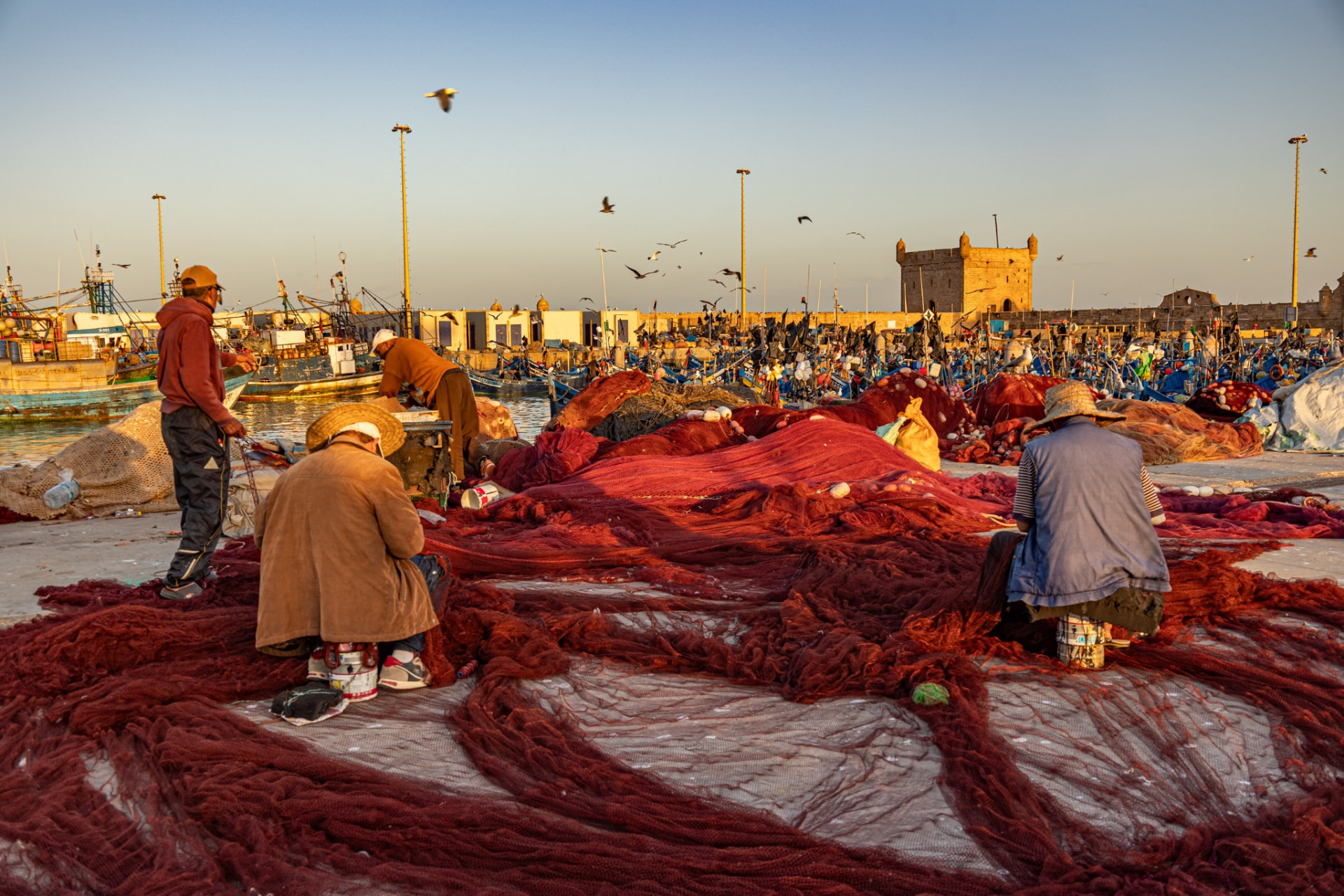
- Small-boat inshore fishing. Local barques working close to the coast. This is the backbone of the artisanal fishery and the most visible activity in the port.
- Offshore fishing. Larger craft heading out into deeper Atlantic water. Weather-dependent, longer in duration, and subject to the sea state rather than to a schedule.
- Commercial fishing. The industrial and semi-industrial fleets that supply Morocco's processing and export trade. Travellers do not join these, but their presence explains the town's rhythm, its infrastructure and its working population.
Species composition varies with season, water temperature and depth, and any honest account has to leave it there. The Atlantic coast of Morocco supports pelagic, demersal and shellfish fisheries, and local markets show that range clearly. What is caught on any given day is not something a guide, a website or an operator can promise in advance.
Seasonality — patterns, not guarantees
Dakhla's climate is desert-meets-ocean: dry, mild by Moroccan standards, and windy. The ocean moderates the temperature extremes that inland Saharan towns experience, which is why the town can be visited comfortably across much of the year. Wind, however, is the defining variable. The same reliable breeze that made Dakhla a kitesurfing destination is what closes down small-boat plans and flattens or churns fishing conditions.
Some fair generalisations:
- Wind tends to be strongest and most persistent through the warmer months, which favours watersports and shore fishing over small-boat work.
- Calmer windows are more common in the cooler months, though they are windows, not seasons — they can last a morning.
- Tide governs the lagoon more than the calendar does. Access to flats, channels and launch points changes hour by hour.
- Water on the Atlantic side stays cool year-round because of the current; this is not warm tropical water regardless of air temperature.
We do not publish "best months to catch X" tables for Dakhla, and we would treat any source that does with caution. A responsible plan builds in flexibility: two or three days in the area rather than one, and a willingness to switch between lagoon, shore and town depending on what the morning looks like.
The port and the town: reading local context
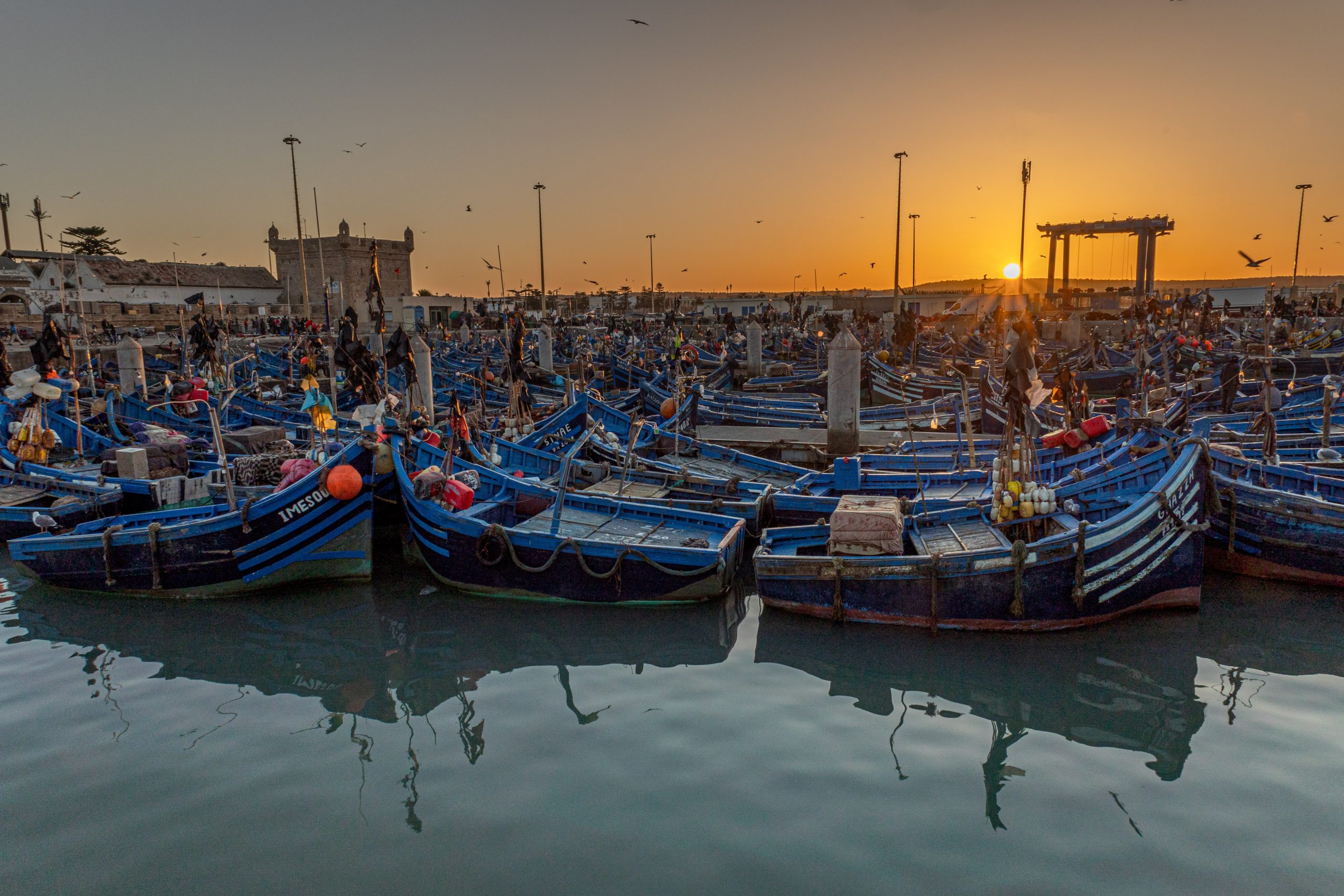
Dakhla's port is the most informative place to spend an hour. Boats are hauled, painted and repaired in the open; nets are stacked, mended and re-coiled; ice, crates and fuel move constantly. The scale of the activity makes clear that fishing here is an industry employing thousands, with processing, transport, chandlery and repair trades built around it.
Two points of etiquette matter. First, a working port is a workplace: keep out of the way of vehicles, winches and loading, and do not climb on boats or gear. Second, people are working, not performing. Ask before photographing anyone, accept a refusal without argument, and be prepared to spend a few minutes in conversation rather than treating the encounter as a transaction. A local guide who is known at the port makes this dramatically easier and more interesting, because they can explain what you are actually looking at.
Away from the port, the town's character is shaped by the Sahara meeting the ocean: broad streets, low buildings, dust and salt, seafood in the cafés, and long empty coastline in both directions. Oyster farming in the lagoon has become a visible part of the local food economy, and the seafood served locally is generally very fresh and very simple.
Permits, regulations and legal caveats
This is the section where guesswork is most damaging, so it is deliberately conservative. Fishing in Morocco is regulated, and rules covering recreational fishing, licences, protected species, size limits, closed areas, spearfishing and the use of boats can vary by region and change over time. Commercial fishing operates under a separate and much stricter framework.
What we can say safely:
- Assume that any organised fishing activity should be arranged through a licensed local operator who holds the relevant permissions and can explain current rules for the specific water you will fish.
- Do not assume that shore fishing is unregulated, or that rules you have encountered elsewhere in Morocco apply identically here.
- Verify current requirements close to your travel dates rather than relying on any article, including this one. Morocco's Department of Maritime Fisheries is the appropriate official starting point.
- Drone use, protected-area access and photography near port infrastructure may all carry restrictions. Ask locally before assuming.
When we arrange a coastal journey that includes fishing interest, we work with local partners who hold the necessary licences and we confirm arrangements at the time of planning, not from a template.
Equipment and practical preparation
Even if you are not fishing yourself, the coast here demands preparation. Wind, sun, salt and long distances between services are the constants.
- Wind protection. A proper windproof layer matters more than a warm one. Cool, fast-moving air off the Atlantic makes still-air temperature readings misleading.
- Sun protection. High-factor sunscreen, a hat that survives wind, polarised sunglasses. Reflected glare off water and sand is intense.
- Footwear. Shoes you can soak. Flats, slipways and rocky points are wet, sharp and slippery in turn.
- Tackle. Serious anglers usually bring their own rods, reels and terminal tackle; specialist replacements should not be assumed to be available locally. Check airline rules for rod tubes before you travel.
- Water and food. Carry more than you think for any day away from town.
- Cash. Card acceptance is inconsistent outside larger businesses.
- Time. Dakhla is a long way from everywhere. Build in buffer days rather than tight connections.
Responsible practice on this coast
Morocco's Atlantic waters are productive but heavily worked, and small choices matter more here than in a resort setting.
- Take only what will genuinely be eaten; release fish you do not need, handling them wet-handed, quickly and gently.
- Respect size limits and any closed species or seasons your operator identifies, even when enforcement is invisible.
- Never leave line, hooks, lead or plastic on beaches or flats — discarded monofilament is one of the most damaging forms of coastal litter for birds.
- Keep well back from roosting and feeding birds on the flats. Flushing flocks repeatedly costs them energy they need.
- Drive only on established tracks. Tyre damage to salt flats, dunes and sabkha crusts lasts for years.
- Buy locally — from the market, from small cafés, from local guides — so the value of your visit stays in the town.
How Dakhla fits into a wider Morocco journey
Dakhla is not a stop you add to a two-week loop of Marrakech, Fes and the desert. It sits far down the Atlantic coast, and the honest options are either to fly in and treat it as a distinct segment of a longer trip, or to travel the coast overland with the time that genuinely requires.
Travellers who love this stretch of coast usually love the whole southern Atlantic — the emptiness, the light, the lack of a tourism industry telling them what to look at. If that is the appeal, the coastal journeys in our Atlantic coast collection follow the same logic further north, and the southern route through Mirleft and the Souss-Massa coast is the natural entry point to that landscape. For a broader southern circuit that combines the coast with the deep south, see our Agadir and Western Sahara journey. Travellers who want the inland counterpart — dunes rather than ocean — can look at the Sahara collection.
Nearby on the same coastline, Khnifiss National Park offers the lagoon-and-desert combination in its most protected form, and is a natural companion read if the ecology of this coast interests you as much as the fishing.
Frequently asked questions
Is Dakhla mainly a fishing destination or a kitesurfing one?
Both, and they use the same geography differently. The lagoon's steady wind built the kitesurfing scene; the Atlantic's productivity built the fishing economy. Many visitors come for one and leave interested in the other.
Can I fish from the shore without a boat?
Shore fishing is a well-established practice along this coast, but you should confirm current rules and any licence requirements locally before you start. Do not treat the absence of signage as permission.
What will I catch?
No one can tell you honestly. Conditions, season, tide and location all matter, and the ocean does not cooperate on schedule. Plan the trip around the place, and treat the fishing as a reason to be there rather than a guaranteed outcome.
When is the best time to visit?
The climate is workable across much of the year; the variable is wind. Cooler months bring more frequent calm windows, warmer months bring more reliable wind. Our guide to the best time to visit Morocco sets this in a national context.
Do I need a guide?
For the port, the lagoon and any organised fishing, yes — for access, for language, for safety and for knowing which rules currently apply. For walking the town and its beaches, no.
How long should I stay?
At least two or three nights. One day gives the wind a single chance to cooperate, and that is not enough.