On Monday, 2 August 2027, the Moon's shadow will cross northern Morocco, bringing one of astronomy's most extraordinary sights to the country: a total solar eclipse.
For travellers in the right part of the north, daylight will briefly disappear as the Moon completely covers the Sun. Tangier and much of the Tangier–Tetouan region lie within the path of totality, with Tangier expected to experience close to five minutes of darkness in the middle of the morning.
For anyone already considering Morocco in summer 2027 — or travelling specifically for the eclipse — geography matters. Totality will not be experienced equally across the country, weather can never be guaranteed, and a few kilometres can separate a total eclipse from a partial one. This guide explains what will happen, where totality crosses Morocco, the most practical northern bases, approximate timings, weather, eye safety and how the eclipse can fit naturally into a wider journey.
What happens in Morocco on August 2, 2027?
A solar eclipse happens when the Moon passes directly between the Earth and the Sun. Across a wide area, the Moon covers only part of the Sun — a partial eclipse. Within a narrow corridor, roughly 230–240 kilometres wide as it crosses Morocco, the Moon covers the Sun completely. That corridor is the path of totality, and inside it the sky darkens, the brightest stars and planets appear, and the Sun's outer atmosphere — the corona — becomes visible.
This is why being inside the path matters so much. A 99% eclipse is still daylight: the remaining sliver of Sun is intensely bright, and you still need eye protection the whole time. Only at 100% does the character of the event change. Rabat, for example, will see around 98.6% of the Sun covered — dramatic, but not totality.
NASA's eclipse predictions, prepared by Fred Espenak, show the path coming in from the Atlantic, crossing the Strait of Gibraltar between southern Spain and northern Morocco, and continuing east across Algeria, Tunisia, Libya, Egypt, Saudi Arabia and Yemen before ending in the Indian Ocean.
Why the 2027 eclipse is exceptional
Globally, this is an unusually long total eclipse. NASA's calculations put the maximum totality at about 6 minutes 23 seconds — but that maximum occurs in southern Egypt, near Luxor, not in Morocco.
Morocco does not receive the global maximum. In Tangier, totality is expected to last about 4 minutes 51 seconds. That distinction matters, and you will see it blurred in some headlines. Even so, nearly five minutes is a remarkably long totality: most total eclipses offer two or three minutes, and the eclipse that crossed northern Spain in August 2026 gave less than two minutes in most places.
Where will the 2027 eclipse be total in Morocco?
In Morocco, the path of totality covers the far north. NASA's path tables place its southern limit at roughly latitude 34.6° N across the country — which means Tangier, Asilah, Larache, Tetouan, Chefchaouen, Al Hoceima and Nador are inside, while Kenitra, Rabat and Fes fall just outside. At the eastern end, Oujda lies very near the southern edge and receives only about a minute of totality.
The central line — where totality is longest — runs close to the northern coast, passing near Tangier and Tetouan. The further south you are within the band, the shorter totality becomes, falling to zero at the edge. That is why "northern Morocco" is not a precise enough answer: you need to be inside the path, and ideally not near its edge.
Is Tangier a good place to see the 2027 eclipse?
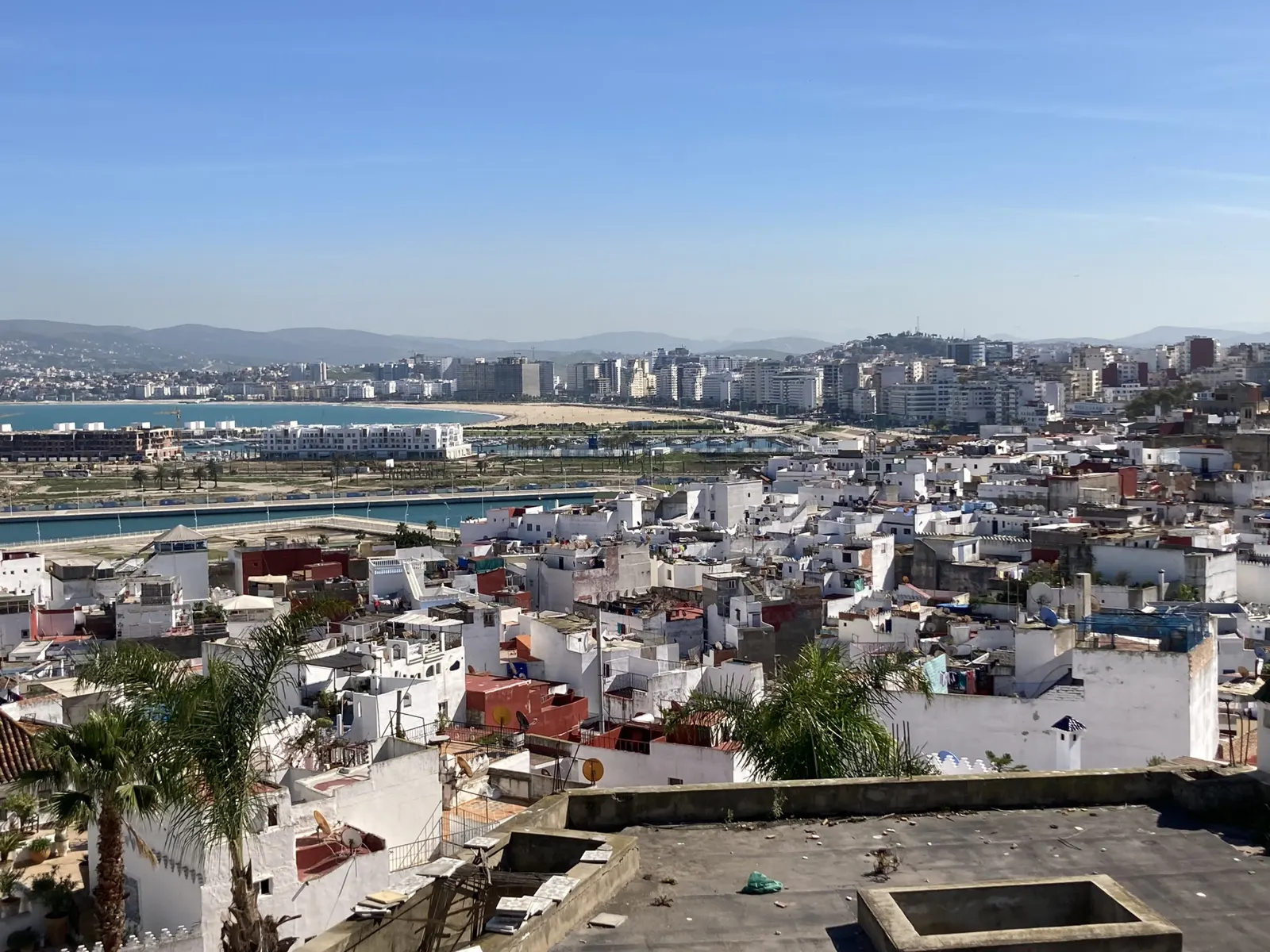
Tangier is the obvious and most practical base. It lies well inside the path, with about 4 minutes 51 seconds of totality. It has an international airport, the high-speed rail line from Casablanca and Rabat, motorway links, a large range of accommodation and, within a short drive, both Atlantic and Mediterranean landscapes. It also combines naturally with the rest of northern Morocco.
But a good base is not automatically the best observing site. Dense streets and buildings limit the view, and coastal cloud or haze can sit over one stretch of shore while another is clear. The sensible approach is to sleep in or near Tangier and choose the final viewing spot — perhaps in open countryside or along the coast outside the city — according to the forecast, the horizon and road access in the days before. Standing on the Strait of Gibraltar, with Spain on the far side of the water also under the shadow, will make for a memorable setting either way.
What about Tetouan?
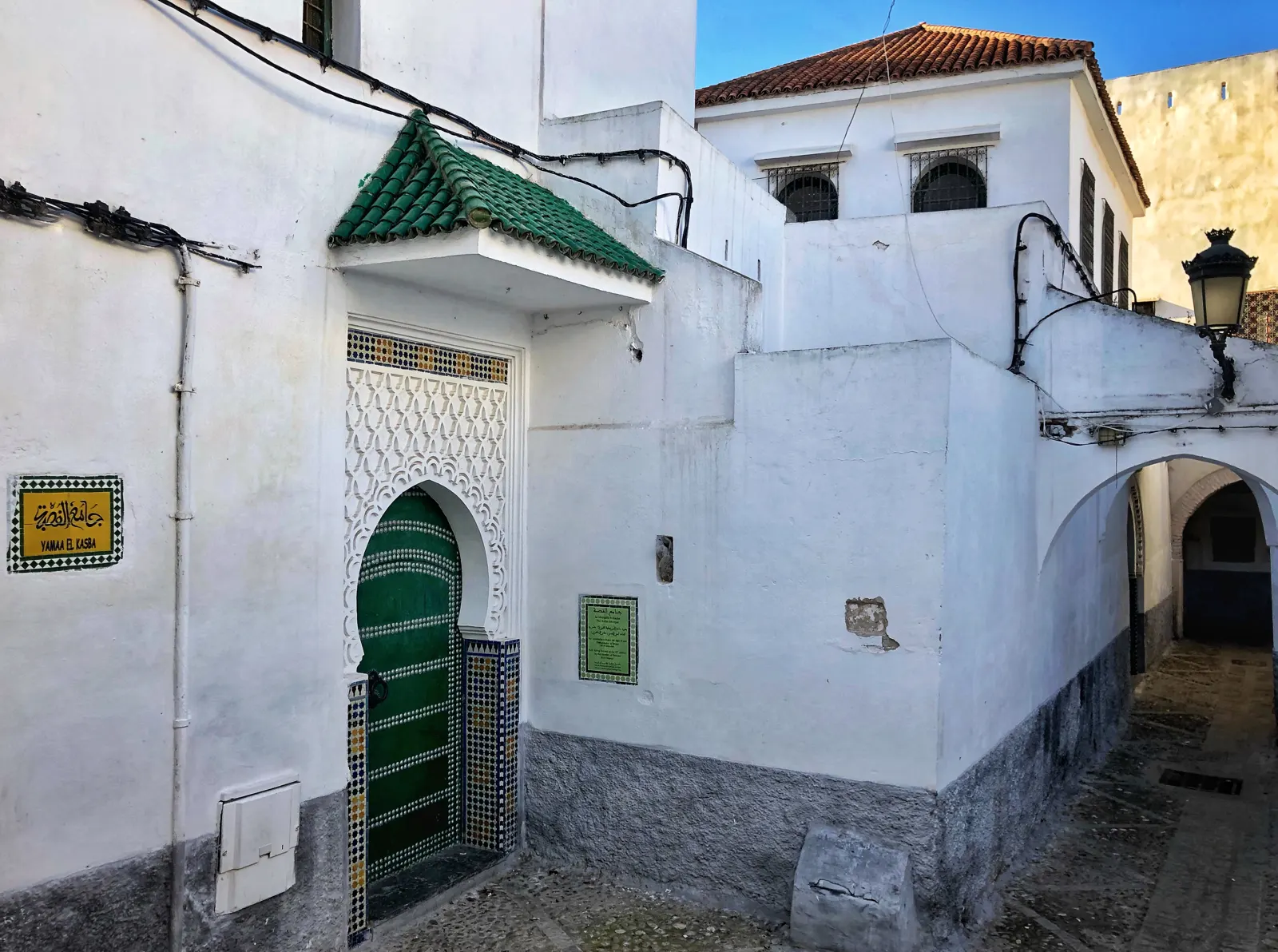
Tetouan is an excellent alternative. It lies close to the central line, with roughly the same totality as Tangier — about 4 minutes 51 seconds, maximum around 09:47. Its whitewashed, Andalusian-influenced medina is one of the most beautiful in the country, the Mediterranean beaches of Martil and M'diq are minutes away, and the foothills of the Rif rise behind the city.
The same principle applies: Tetouan is a base. On eclipse morning you might watch from the coast, from open ground inland, or from the city itself, depending on where the sky looks clearest.
What about Chefchaouen?
Chefchaouen is inside the path. Timeanddate.com calculates about 4 minutes 13 seconds of totality in the town, with maximum around 09:47 — shorter than on the coast, because Chefchaouen lies further from the central line. Totality also varies noticeably across the Rif as you move north or south.
It is a wonderful part of any northern journey, and seeing totality there would be unforgettable. But choose where to watch the eclipse on astronomy and weather rather than on which town is prettiest. Chefchaouen's steep lanes, limited rooms and mountain roads make it less flexible on the day than a coastal base.
Tangier vs Tetouan vs the surrounding countryside
| Location | Totality? | Approx. maximum | Approx. totality | Why stay there | What to consider |
|---|---|---|---|---|---|
| Tangier | Yes | 09:47 | 4 min 51 s | Airport, rail, wide choice of hotels, Atlantic and Mediterranean both within reach | Busiest base; coastal cloud or haze possible; city buildings limit horizons |
| Tetouan | Yes | 09:47 | 4 min 51 s | Close to the central line, UNESCO medina, quick access to the Mediterranean coast and Rif foothills | Smaller hotel stock; coast resorts nearby fill in August |
| Chefchaouen | Yes | 09:47 | 4 min 13 s | Mountain town many travellers already plan to visit | Shorter totality than the coast; steep terrain, very limited rooms, narrow access roads |
| Countryside near the path's centre | Yes | ≈ 09:46–09:48 | Close to 4 min 50 s | Open horizons, freedom to move with the forecast | Needs a private vehicle, local knowledge and legal access to land |
| Rabat / Fes | No — partial (Rabat ≈ 98.6% of the Sun covered) | ≈ 09:45 | — | Good places to be before or after | Drive north beforehand to see totality |
Timings from timeanddate.com local calculations, Moroccan clock time (UTC+1). Rounded; verify for your exact coordinates.
For serious eclipse viewing, flexibility is worth more than choosing one exact spot many months ahead. A comfortable base, a vehicle and a willingness to move an hour in either direction will usually beat a fixed plan.
What time is the Morocco eclipse?
Morocco keeps UTC+1 for most of the year, including August. For Tangier, approximate local circumstances are:
- 09:40 — partial eclipse begins (08:40 UTC)
- about 09:45 — totality begins
- 09:47 — maximum eclipse, mid-totality (08:47 UTC)
- about 4 minutes 51 seconds of totality
- 11:00 — partial eclipse ends (10:00 UTC)
These are approximate Tangier figures; exact contact times shift by seconds to minutes depending on your coordinates. Many international sites quote the same times in UTC, so check which clock you are reading. The Sun will be fairly low in the east-southeast, around 35–40° above the horizon.
What will totality actually feel like?
The numbers do not quite explain totality. A 99% eclipse remains daylight. During totality, the last direct sunlight disappears and for a few minutes the familiar morning landscape changes completely.
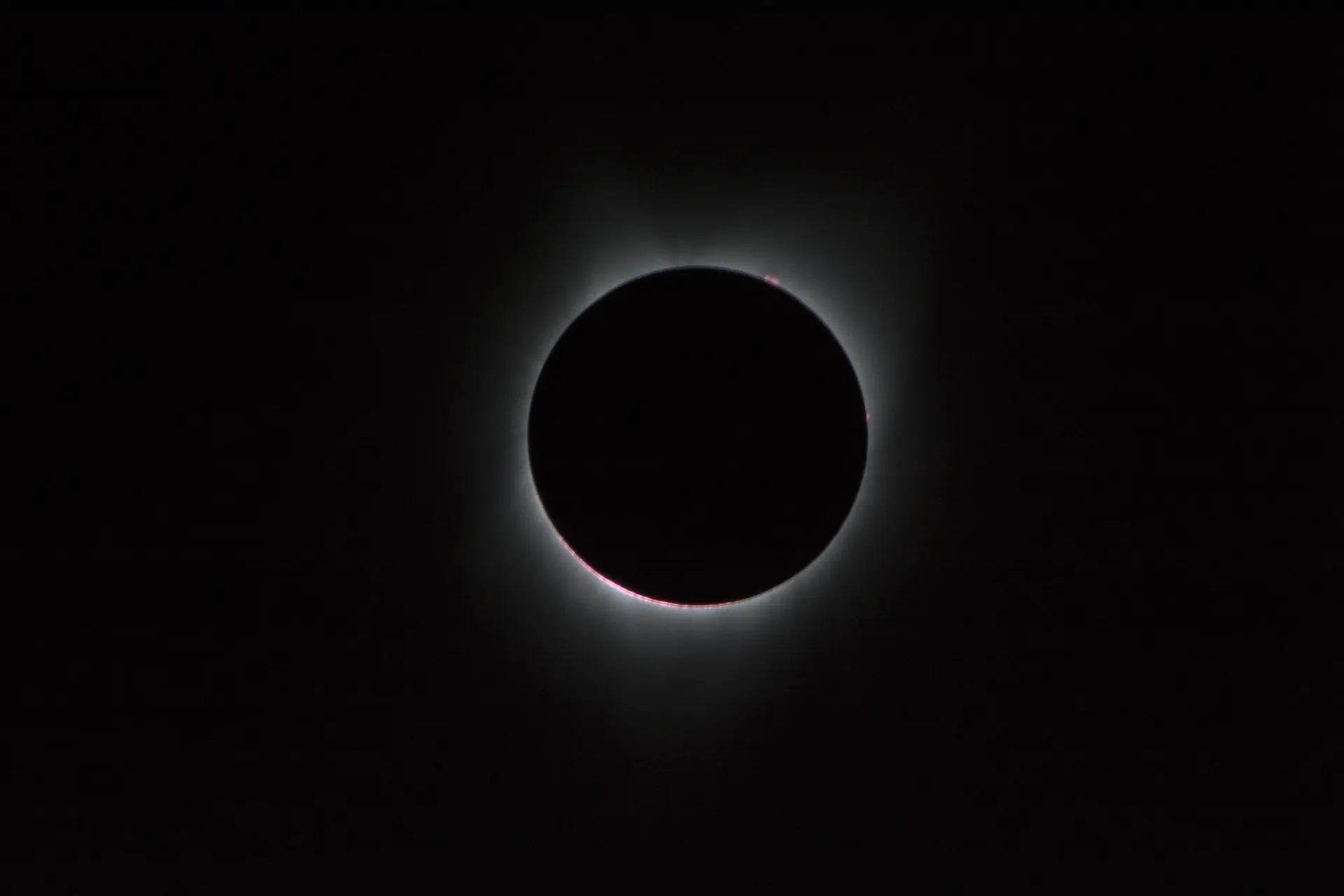
In the final minutes before, the light turns strange — sharper shadows, a flattened, metallic quality. The air may feel noticeably cooler. Then the darkness arrives quickly, often visible as a shadow sweeping in from the west. The sky overhead becomes a deep twilight blue, while the horizon all around keeps a band of sunset colour, because beyond the shadow it is still day. Venus and other bright points appear. And where the Sun was, the pale, feathered corona surrounds a black disc — something no photograph fully captures.
Will the weather be clear?
Honestly: nobody knows yet. August in northern Morocco is generally dry and sunny, but the north coast is not the Sahara. Morning marine cloud, sea haze and localised cloud over the Strait are all possible.
For context, timeanddate.com reports that, historically, 2 August in Tangier was cloudy around 42% of the time since 2000. That is a historical average, not a forecast, and it says nothing certain about 2 August 2027. Useful forecasts only become possible a few days before the event.
This is why a flexible plan helps. Coastal cloud and inland conditions can differ; a morning marine layer may cover one shore and not another. With a private vehicle and a driver who knows the roads, you can move towards clearer skies early on eclipse morning rather than hoping the sky above your hotel cooperates. No one can honestly guarantee clear skies.
Choosing a viewing location
- Be inside the path of totality — and preferably well away from its southern edge.
- Check the Sun's direction. At mid-morning it will sit to the east-southeast, about 35–40° high.
- Find an unobstructed view in that direction — no hills, buildings or trees in the way.
- Use safe, legal access — no private land without permission, no military or restricted zones.
- Allow enough space for your group and any equipment.
- Avoid unnecessary obstructions in cities; darkness is not the concern, sightlines are.
- Make sure there is road access and somewhere safe to park.
- Follow the forecast in the final days.
- Avoid remote viewpoints that depend on long drives on narrow mountain roads that morning.
- Arrive early — well before the partial phase begins.
The best location may not be knowable until close to 2 August. Plan the base early; choose the spot late.
How early should you arrive?
This will be a major international astronomical event, and northern Morocco will almost certainly receive many additional visitors on top of normal August crowds. We would recommend:
- arriving in northern Morocco at least one day — ideally several days — beforehand;
- never planning to drive from Marrakech or Casablanca on eclipse morning;
- reserving accommodation early;
- leaving for your final viewing site well before the partial phase begins;
- expecting traffic near obvious viewing areas and main roads.
Eclipse eye safety — extremely important
Except during the brief period of complete totality, it is unsafe to look directly at the Sun without proper solar viewing protection. That applies throughout the long partial phases before and after, including the last seconds before totality and the first seconds after.
Only when the Sun's bright face is completely hidden can you look at the eclipse with the naked eye. As soon as any bright part of the Sun reappears, put your protection back on. Cameras, binoculars and telescopes concentrate sunlight and need dedicated solar filters mounted over the front of the optics; eclipse glasses do not make it safe to look through them. Buy viewers from reputable suppliers well in advance.
Photographing the 2027 eclipse in Morocco
A few principles go a long way, without turning this into an astrophotography manual:
- Use a sturdy tripod and practise with your exact setup beforehand, ideally on the uneclipsed Sun with a filter.
- Keep a proper solar filter on the lens during the partial phases.
- Remove it only once totality has begun, and replace it as soon as sunlight returns.
- Wide-angle compositions can include the Moroccan landscape, the darkened sky and the horizon glow.
- Telephoto images of the corona need appropriate solar photography equipment.
- Never look through unfiltered optical equipment at the partially eclipsed Sun.
And spend at least part of totality simply watching. Nearly five minutes feels long on paper; it disappears fast when you are troubleshooting a camera.
Getting to northern Morocco for the eclipse
- Tangier Ibn Battouta Airport — the most direct gateway, with European connections.
- High-speed train — Al Boraq links Casablanca and Rabat with Tangier in a couple of hours.
- By road — motorways connect Tangier with Rabat, Casablanca and Fes; Tetouan and Chefchaouen are a short drive further.
- Ferries across the Strait link Tangier with southern Spain, itself partly inside the path.
- Fes — an easy connection if the eclipse is part of a wider itinerary.
Schedules will change before 2027, so check current timetables when you book.
Where should you stay?
Tangier is the best overall logistical base. Tetouan is an excellent alternative and a lovely cultural base in its own right. Chefchaouen is a beautiful addition to a northern itinerary, inside the path but with shorter totality. The surrounding coast and countryside can work well depending on your viewing strategy. Whatever you choose, book early: this is a fixed-date event in peak season. See our notes on choosing a riad in Morocco.
Building the eclipse into a Morocco journey
For most travellers coming from overseas, it would be a shame to fly to Morocco for a few minutes of totality and see nothing of the country around it. Northern Morocco lends itself particularly well to a journey built around 2 August:
Tangier → eclipse viewing in northern Morocco → Tetouan → Chefchaouen → Volubilis & Moulay Idriss → Fes
From Fes, you could continue south towards the Sahara, or west towards Rabat and Casablanca, depending on time. Our 12-day journey from Tangier to Marrakech follows exactly this northern start, and the northern Morocco tour focuses on the region alone. Read our Volubilis guide for the Roman city along the way, and when to visit Morocco for what summer means across the country.
Morocco Shiny Days creates private journeys rather than fixed group eclipse departures, so the viewing location can stay flexible until weather and logistics are clearer.
Our advice if you are coming to Morocco for the eclipse
"If the eclipse is the reason you are travelling, I would not build the plan around one exact roadside viewpoint a year in advance. I would secure a good base in northern Morocco, arrive early, keep the morning flexible and decide where to go once we can see the forecast. A car, a driver who knows the roads and an early start are worth more than any single perfect spot.
If you are already planning to visit Morocco around 2 August, we can build the rest of the journey around the eclipse rather than forcing it into an itinerary that does not make geographic sense." — Oualid Naciri
Sources and updates
Path and global data: eclipse predictions by Fred Espenak, NASA GSFC. Local timings and historical cloud: timeanddate.com. Safety: NASA. Calculations can be refined; we will update this page with logistics, weather outlooks and any official announcements as August 2027 approaches. Last updated: September 2026.
Frequently asked questions
When is the 2027 solar eclipse in Morocco?
Monday, 2 August 2027, in the morning. In Tangier the partial phase begins around 09:40 Moroccan time, totality is centred on about 09:47 and the partial phase ends around 11:00.
Will the August 2, 2027 eclipse be total in Morocco?
Yes, but only in the far north. The path of totality crosses the Tangier–Tetouan region, the Rif and the Mediterranean coast towards Oujda. The rest of the country sees a partial eclipse.
Where is the best place to see the 2027 eclipse in Morocco?
Near the central line in the Tangier–Tetouan region, where totality lasts close to 4 minutes 51 seconds. The best exact spot depends on the weather forecast, horizon and access in the final days.
Will Tangier see totality in 2027?
Yes. Tangier lies inside the path of totality.
How long will totality last in Tangier?
About 4 minutes 51 seconds, according to timeanddate.com calculations. The global maximum of about 6 minutes 23 seconds occurs far to the east, in Egypt, not in Morocco.
Will Tetouan see the total eclipse?
Yes. Tetouan is close to the central line, with roughly 4 minutes 51 seconds of totality.
Can I see the eclipse from Chefchaouen?
Yes. Chefchaouen is inside the path, with about 4 minutes 13 seconds of totality — shorter than on the coast because it lies further from the central line.
Can I see the total eclipse from Marrakech?
No. Marrakech is well south of the path and will see only a partial eclipse. You would need to travel to northern Morocco, ideally several days in advance.
Can I see the total eclipse from Casablanca?
No. Casablanca sees a partial eclipse only. Even Rabat, further north, stays just outside totality with roughly 98.6% of the Sun covered.
What time is the eclipse in Tangier?
Approximately 09:40 (start), 09:47 (maximum and mid-totality) and 11:00 (end), Moroccan clock time (UTC+1). That is 08:40, 08:47 and 10:00 UTC.
Is August a good time to visit northern Morocco?
It is warm, dry and busy. The north coast is milder than the interior but is peak season for Moroccan and European holidaymakers, so accommodation fills early.
Will it be cloudy in Tangier?
Nobody can know yet. Historically, timeanddate.com reports 2 August in Tangier as cloudy about 42% of the time since 2000. That is climate, not a forecast; reliable forecasts only exist a few days before.
Do I need eclipse glasses?
Yes, for every moment except complete totality. Use viewers certified to ISO 12312-2; ordinary sunglasses are not safe.
Can I photograph the eclipse?
Yes, with a tripod, practice and a proper solar filter for the partial phases. Remove the filter only during totality and replace it as soon as sunlight returns.
Should I book accommodation early?
Yes. The date is fixed, August is already high season in the north, and eclipse travellers will add demand.
Can I combine the eclipse with Chefchaouen and Fes?
Easily. Chefchaouen is inside the path and Fes is a natural next stop, with Volubilis and Moulay Idriss between them.
Can Morocco Shiny Days arrange travel around the eclipse?
Yes. We do not run a fixed eclipse package; we build private journeys and can plan a northern base, flexible viewing logistics and the rest of your trip around 2 August.