Each year, the Taragalte Festival brings musicians, poets, artists, nomadic communities and travelers together in the desert near M’Hamid El Ghizlane. Set at the end of the Draa Valley, where the road gives way to Saharan tracks, the festival is both a cultural gathering and a meeting point between Morocco, the Sahara and the wider Sahel. The 2026 dates have not yet been officially announced, but this guide explains what the festival is, what travelers can expect and how to plan a meaningful journey around it.
Taragalte Festival 2026: current dates and information
The official dates for the Taragalte Festival 2026 have not yet been published. Recent editions have taken place around the end of October and beginning of November, but travelers should not book flights or fixed arrangements based on an expected weekend alone. We will update this article as soon as the organizers confirm the 2026 dates, ticket options and program.
For announcements directly from the organizers, consult the official Taragalte Festival website. Morocco Shiny Days can also design a flexible southern Morocco itinerary and finalize the festival days once the program is released.
What is the Taragalte Festival?
Taragalte is a desert cultural festival held near M’Hamid El Ghizlane in southeastern Morocco. Its program generally brings together Saharan and African music, poetry, storytelling, dance, traditional knowledge, environmental discussions, workshops and encounters between communities from different parts of the Sahara and Sahel.
The name Taragalte is closely associated with the historic desert region around M’Hamid. For centuries, this area stood along caravan routes connecting the Draa Valley with destinations farther south. The festival draws on that history of movement and exchange without treating nomadic culture as a static display.
Concerts are an important part of the event, but Taragalte is broader than a music festival. Daytime conversations, exhibitions, craft traditions and informal meetings around tea give context to the evening performances. The setting also matters: the festival takes place within a living desert region rather than inside a conventional urban venue.
Where does the festival take place?
The festival is held outside M’Hamid El Ghizlane, the last town on the paved route through the Draa Valley. M’Hamid lies southeast of Zagora and serves as the principal gateway to Erg Chigaga. Festival arrangements typically include a welcome or information point in the village and transport toward the desert site, but the exact system should be confirmed for the 2026 edition.
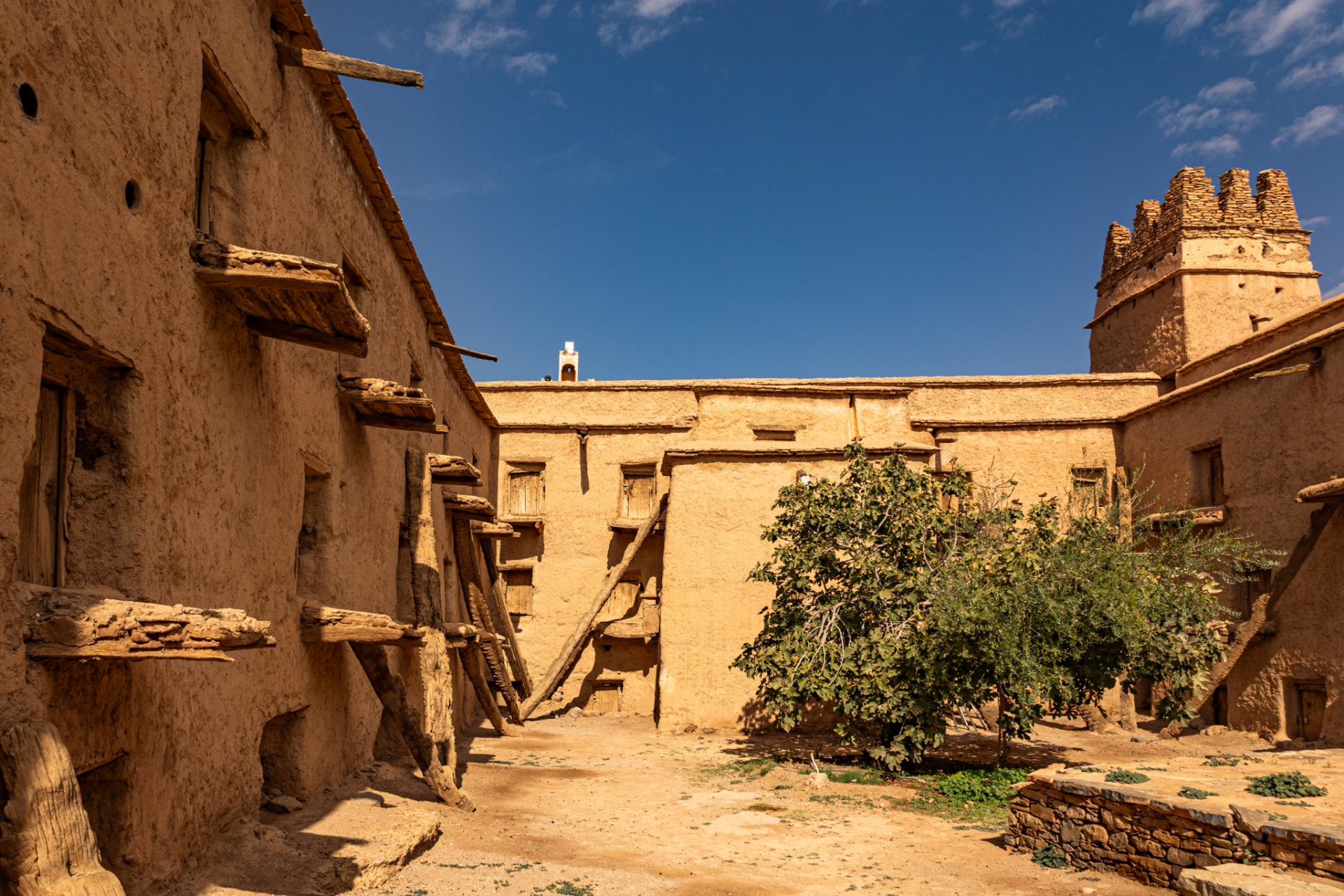
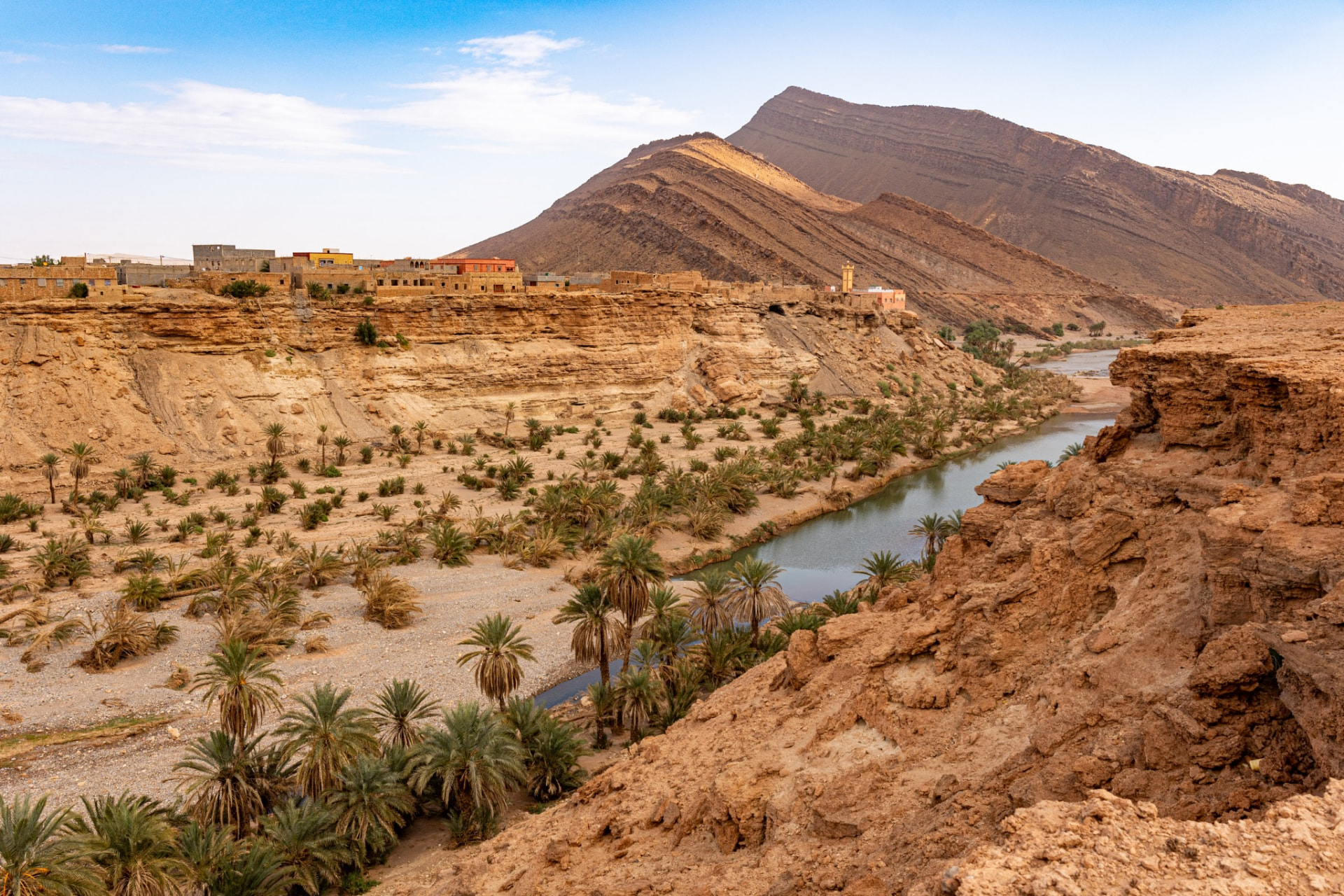
Reaching M’Hamid is part of the experience. From Marrakech, the route crosses the High Atlas and continues through Ouarzazate or Agdz before following the Draa Valley through palm groves, earthen villages and old kasbahs. It is a substantial journey, so we recommend treating the festival as part of a wider southern itinerary rather than rushing there and back.
Our guide to the Draa Valley explains the landscapes and settlements along this historic route.
What to expect at Taragalte
The final 2026 program will only be known after the official announcement, but previous editions offer a useful picture of the festival’s rhythm. Visitors can generally expect a combination of live music, poetry, dance, storytelling, cultural discussions, workshops, exhibitions and activities connected with desert heritage and environmental responsibility.
Evening concerts often bring Moroccan performers together with artists from other Saharan and West African traditions. During the day, the atmosphere is more conversational. Travelers move between talks, demonstrations, art, tea tents and meetings with participants from M’Hamid and beyond.
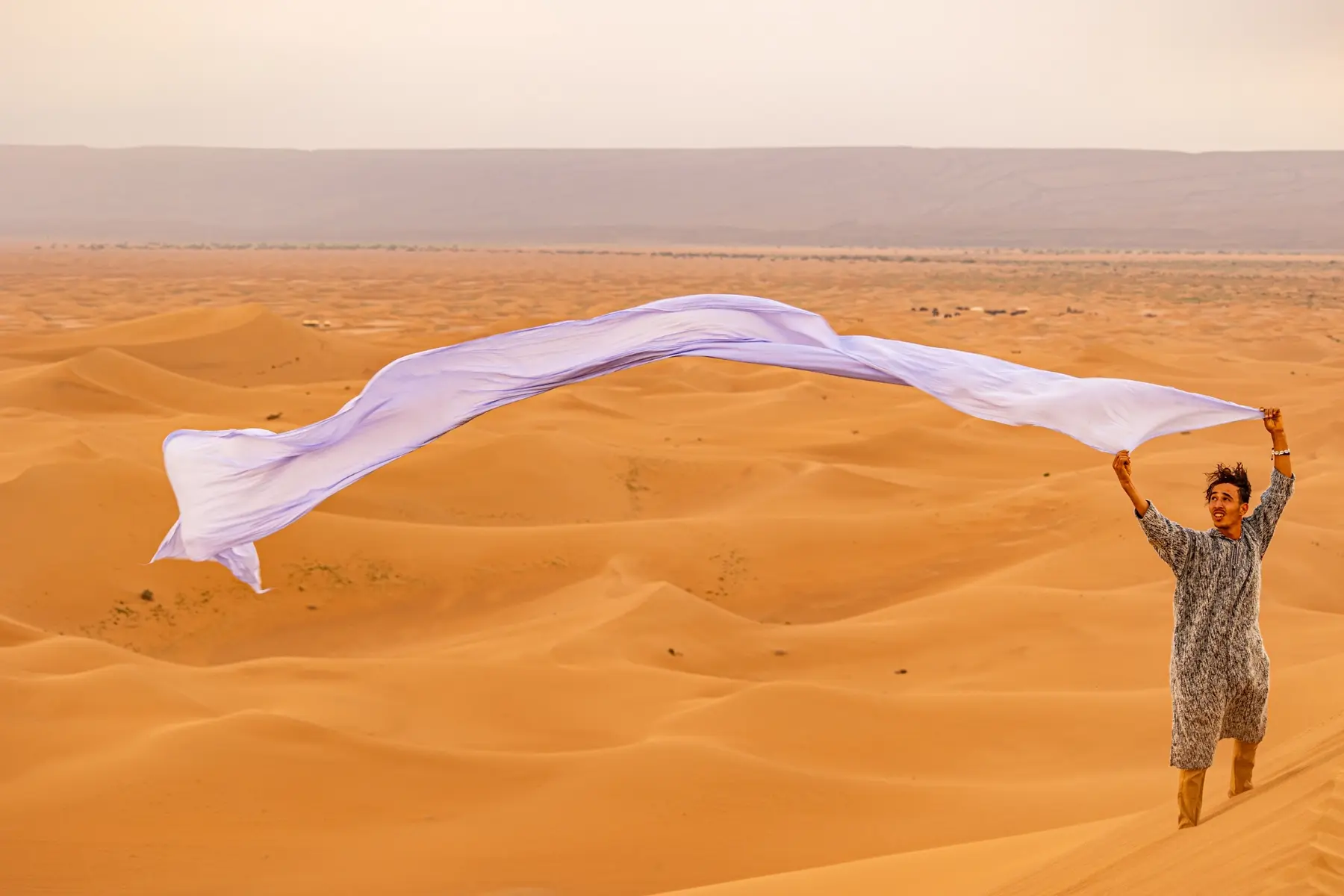
The desert setting means visitors should arrive prepared for warm daytime sun, colder nights, dust and walking on uneven ground. Comfortable shoes, layered clothing, sun protection and a reusable water bottle are more useful than formal festival clothing.
Music, nomadic culture and the Caravan for Peace
Taragalte has developed around the idea that cultural exchange can preserve connections across borders. Music from Morocco, the Sahara and the Sahel meets poetry, oral history and contemporary artistic expression. The festival has also been associated with the Cultural Caravan for Peace, an initiative connecting desert festivals and communities through shared cultural work.
For visitors, the most rewarding approach is to listen before trying to interpret everything. Nomadic and Saharan identities are diverse, and the people taking part are not performing a single simplified version of desert life. The festival is strongest when understood as an active conversation between heritage, present realities and the future of the region.
How to reach M’Hamid El Ghizlane
M’Hamid can be reached by road from Marrakech, Ouarzazate, Zagora and Agadir, but travel times are longer than the map may suggest. From Marrakech, a private journey normally includes an overnight stop before the festival rather than attempting the complete drive and attending an evening program on the same day.
The most natural route follows the High Atlas toward Ouarzazate or Agdz and then continues through the Draa Valley to Zagora and M’Hamid. Travelers arriving through Ouarzazate can shorten the road journey, depending on flight schedules. The nearest practical airports and transfer options should be reviewed once the official festival dates are released.
Where to stay during the festival
Accommodation usually includes festival camping packages, desert bivouacs, guesthouses and small hotels around M’Hamid. Availability becomes limited once dates are confirmed. The right option depends on whether you want to stay at the festival site, prefer a quieter property outside the main activity or plan to continue toward Erg Chigaga.
Before booking, check what the package actually includes: festival entry, meals, transfers from M’Hamid, bedding, private or shared facilities and the walking distance between the accommodation and performance areas. Premium comfort in the desert is possible, but expectations should reflect the temporary nature of a festival site.
Combining Taragalte with Erg Chigaga
For many travelers, the festival becomes more meaningful when combined with time beyond M’Hamid. Erg Chigaga is reached by an extended 4x4 drive across changing desert terrain. A carefully paced route can continue through the wider Saharan landscape, include a night at a desert camp and return toward Marrakech through Lake Iriki, Foum Zguid and Taznakht.
Explore our private five-day Erg Chigaga journey and our neutral comparison of Erg Chigaga and Erg Chebbi. During festival periods, the sequence may need adjusting around ticket times, camp availability and road conditions.
How many days should you allow?
A realistic journey from Marrakech should allow at least five or six days if the festival and the southern route are both important. More time creates space for Agdz, the Draa Valley, Zagora, M’Hamid and Erg Chigaga without turning every day into a long transfer.
Travelers with seven or more days can build a more complete circuit through Lake Iriki, Foum Zguid, Taznakht and Ait Ben Haddou. Those continuing elsewhere in Morocco should consider the festival’s location before adding Fes, Chefchaouen or the Atlantic coast immediately afterward.
Weather and what to pack
Late October and early November are usually comfortable periods in southern Morocco, with warm days and noticeably cooler desert nights. Conditions can still vary, and wind may bring dust or sand. Pack light daytime clothing, a warm layer for evenings, a scarf, closed walking shoes, sun protection, personal medication and a small torch.
Our guide to the best time to visit Morocco provides broader seasonal advice for the desert and the rest of the country.
Responsible attendance
Taragalte takes place in a fragile desert environment and a community that continues its daily life before, during and after the festival. Use designated waste points, avoid unnecessary single-use plastics, ask before photographing people and support local businesses thoughtfully.
Visitors should also remember that festival access does not make every nearby home, palm grove or private gathering open to the public. A knowledgeable local team helps travelers understand where they are welcome and how to participate respectfully.
Frequently asked questions
When is the Taragalte Festival 2026?
The official 2026 dates have not yet been announced. The festival is often held around late October or early November, but this remains an expectation—not a confirmed schedule. We will update the guide when the organizers publish the dates.
Is Taragalte suitable for families?
It can be, depending on the child’s age, the chosen accommodation and the evening schedule. Families should plan for desert temperatures, walking, music and later performance times. Official ticket conditions for children should be checked for 2026.
Do I need festival tickets in advance?
Advance booking is strongly recommended once official passes are released. Accommodation and transport should be coordinated with the confirmed ticket dates rather than booked separately without checking the complete plan.
Can Morocco Shiny Days arrange the full journey?
Yes. We can design private transport, accommodation, the Draa Valley route, festival logistics and an Erg Chigaga extension around your dates and preferred comfort level.
Plan a Taragalte Festival journey
Taragalte is most rewarding when it forms part of a considered journey through southern Morocco. The music and cultural program may bring travelers to M’Hamid, but the Draa Valley, local relationships and surrounding Sahara give the experience its wider meaning.
Once the Taragalte Festival 2026 dates are officially confirmed, we will update this page. In the meantime, contact Morocco Shiny Days to discuss a flexible private route through M’Hamid and Erg Chigaga.